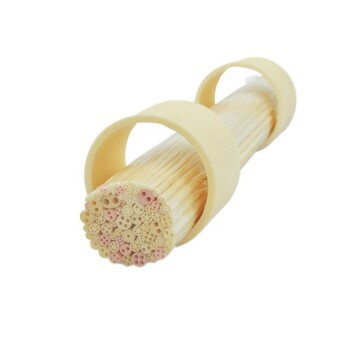
High-purity alumina tube furnaces are the industry standard for oxidation studies because they provide a chemically inert and thermally stable environment. They allow researchers to precisely control complex atmospheres—such as high-humidity steam—without the furnace material reacting with the metal supports or introducing impurities. This isolation ensures that all measured mass changes are strictly a result of the metal's oxidation kinetics, providing a clean baseline for performance evaluation.
The core advantage of a high-purity alumina tube furnace is its ability to maintain environmental purity and thermal uniformity at extreme temperatures. This allows for the precise measurement of oxidation mass gain and oxide scale stability without interference from the furnace hardware.
Achieving Chemical Integrity in Aggressive Atmospheres
Superior Inertness Under High Humidity
High-purity alumina exhibits exceptional chemical stability even in aggressive environments, such as those with a 90:10 steam-to-hydrogen ratio. Unlike lower-grade materials, it does not react with reaction gases at temperatures reaching 800°C to 1100°C, ensuring the atmosphere remains uncontaminated.
Prevention of Sample Cross-Contamination
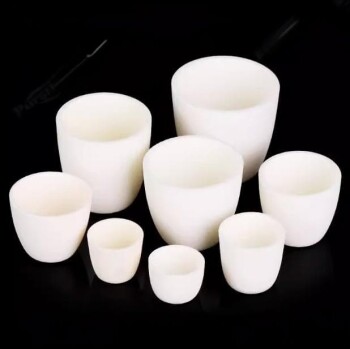
The furnace tube and associated high-purity alumina crucibles do not react with metal specimens like ferritic stainless steel or TiAl alloys. This prevents the migration of impurities from the furnace into the sample, which is critical for maintaining the integrity of the material's microstructure during long-term exposure.
Precision Control of Thermal and Gas Environments
Uniform Heating for Reliable Kinetics
Tube furnaces are designed to provide a long uniform heating zone, often spanning 10 cm or more. This allows multiple samples to experience a consistent thermal field simultaneously, which is essential for the reproducibility of cyclic oxidation tests that may last over 1,000 hours.
Sealing for Accurate Gas Simulation
The sealed structure of a tube furnace allows for the precise control of process gas components. This enables the accurate simulation of actual operating environments, such as those found in electrolysis cells or high-temperature fuel cells, where oxygen partial pressure and humidity must be strictly maintained.
Ensuring Data Accuracy for Mass Gain Analysis
Gravimetric Reliability and Mass Gain Accuracy
Because high-purity alumina does not undergo weight changes or chemical reactions at high temperatures (up to 1350°C), it is ideal for gravimetric methods. Any weight change measured after an experiment is derived solely from the oxidation of the metal support and the formation of the oxide scale.
Collection of Spalled Oxide Scale
High-purity alumina crucibles used within the tube furnace act as both a support and a collection vessel. If the oxide scale peels or "spalls" off the metal support during cooling, the crucible catches the debris, ensuring that the total mass gain data remains accurate and comprehensive.
Understanding the Trade-offs and Limitations
Vulnerability to Thermal Shock
While chemically superior, high-purity alumina is a ceramic material sensitive to rapid temperature fluctuations. To prevent the furnace tube from cracking, heating and cooling rates must be strictly controlled, typically limited to around 10°C/min.
Cost and Material Fragility
High-purity alumina components are more expensive than quartz or standard refractory materials. Additionally, the tubes are brittle and require careful handling and precise mechanical support to avoid structural failure during high-temperature cycles.
Selecting the Setup for Your Oxidation Study
How to Apply This to Your Project
To maximize the effectiveness of your oxidation evaluation, tailor your furnace configuration to your specific analytical goals:
- If your primary focus is precise kinetic data: Use high-purity alumina crucibles to ensure every milligram of oxide scale is accounted for, even if spallation occurs.
- If your primary focus is simulating electrolysis environments: Leverage the sealed tube structure to maintain specific steam-to-hydrogen ratios without gas leakage or atmospheric dilution.
- If your primary focus is high-throughput testing: Utilize the long uniform constant-temperature zone to expose multiple metal supports to identical thermal conditions in a single run.
By maintaining a pristine chemical environment and a stable thermal field, the high-purity alumina tube furnace remains the most reliable tool for quantifying the lifespan and durability of metal supports.
Summary Table:
| Feature | Advantage in Oxidation Studies | Research Impact |
|---|---|---|
| High Purity Alumina | Chemically inert up to 1350°C | Prevents sample cross-contamination |
| Sealed Tube Design | Precise control of gas/humidity | Accurate operating environment simulation |
| Uniform Heating Zone | Long (10cm+) constant-temp area | Ensures reproducible kinetic data |
| Alumina Crucibles | Collects spalled oxide scales | Guarantees comprehensive mass gain data |
Precision Thermal Solutions for Your Research
Elevate your material science experiments with KINTEK, your expert partner in high-performance laboratory equipment. We specialize in a comprehensive range of high-temperature furnaces—including tube, muffle, vacuum, and atmosphere models—engineered to provide the chemical integrity and thermal stability your oxidation studies demand.
Beyond furnaces, KINTEK offers essential high-purity alumina tubes, crucibles, and ceramics, alongside advanced high-pressure reactors, hydraulic presses, and milling systems. Whether you are evaluating metal supports for fuel cells or conducting complex atmospheric research, our tools are built for accuracy and long-term durability.
Ready to achieve superior heat treatment results? Contact KINTEK today to find the perfect equipment for your lab!
References
- Fengyu Shen, Michael C. Tucker. Oxidation of porous stainless steel supports for metal-supported solid oxide electrolysis cells. DOI: 10.1016/j.ijhydene.2022.11.235
This article is also based on technical information from Kintek Solution Knowledge Base .
Related Products
- High Temperature Alumina (Al2O3) Furnace Tube for Engineering Advanced Fine Ceramics
- 1700℃ Laboratory High Temperature Tube Furnace with Alumina Tube
- 1400℃ Laboratory High Temperature Tube Furnace with Alumina Tube
- High Temperature Aluminum Oxide (Al2O3) Protective Tube for Engineering Advanced Fine Ceramics
- High Purity Alumina Granulated Powder for Engineering Advanced Fine Ceramics
People Also Ask
- What is the primary function of an Alumina (Al2O3) tube in LLZTO sintering? Optimize Your Thermal Processing
- What role does a high-alumina furnace tube play in high-temperature nickel slag reduction? Ensure 1400°C Precision
- How does an alumina tube furnace with a controlled atmosphere simulate conditions in CSP environments? Master Accuracy.
- How do you clean an alumina tube furnace? Extend Tube Life with Proper Maintenance
- How to clean an alumina tube furnace? Extend Tube Life and Ensure Experimental Purity