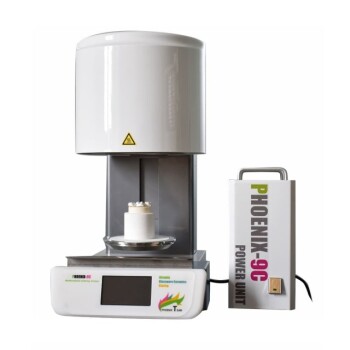
Modern dental ovens represent a significant shift toward digital integration. To answer your question directly, the primary features found in these contemporary devices are intuitive touchscreen controls, extensive libraries of pre-set programs, and the hardware capability to connect to the internet.
The evolution of dental firing technology is no longer just about heat; it is about workflow efficiency. The combination of touch interfaces, automation, and connectivity allows laboratories to minimize manual errors and standardize results.
Enhancing Usability and Consistency
The core value of modern dental ovens lies in how they simplify complex firing procedures. Manufacturers have moved away from manual dials and analog gauges in favor of digital precision.
Touchscreen Interfaces
The most visible update in modern ovens is the replacement of physical buttons with touchscreen controls.
This offers a cleaner, more intuitive user interface similar to a smartphone or tablet. It allows for easier navigation through menus and real-time visualization of firing cycles.
Automated Pre-set Programs
Modern units are designed to reduce the variable of human error. They come equipped with pre-set programs tailored for specific materials and procedures.
Instead of manually calculating ramp rates or hold times, a technician can simply select the specific ceramic or material being processed. This ensures consistent firing outcomes regardless of the operator's experience level.
The Role of Connectivity
Beyond the immediate physical controls, the architecture of these machines has changed to support external communication.
Internet Integration
A defining feature of the current generation of ovens is the ability to connect to the internet.
This connectivity transforms the oven from a standalone tool into a networked device. It facilitates easier software updates and ensures the unit stays current with the latest firing protocols without requiring physical hardware changes.
Understanding the Trade-offs
While these features offer significant advantages, they introduce new considerations that were not present in analog models.
Complexity vs. Reliability
The shift to touchscreen controls and software-driven operation introduces a level of complexity. Unlike robust mechanical switches, digital screens can be sensitive to lab environments if not specifically ruggedized.
Dependency on Infrastructure
Utilizing internet connectivity requires a stable network environment within the laboratory.
If your workflow relies heavily on cloud-based updates or remote monitoring, network instability could become a bottleneck. Furthermore, connecting lab equipment to the internet introduces the need for basic cybersecurity hygiene.
Making the Right Choice for Your Goal
When evaluating a new dental oven, consider which of these modern features aligns best with your laboratory's operational needs.
- If your primary focus is consistency across staff: Prioritize a unit with a robust library of pre-set programs to standardize results regardless of who operates the machine.
- If your primary focus is ease of training: Look for a high-quality touchscreen interface, as the intuitive nature of these controls reduces the learning curve for new technicians.
- If your primary focus is future-proofing: Ensure the oven has reliable internet connectivity, allowing you to receive firmware updates and new material parameters as they are released.
Selecting the right oven is about balancing advanced feature sets with the practical reliability your daily workflow demands.
Summary Table:
| Feature | Benefit | Technical Impact |
|---|---|---|
| Touchscreen Interface | Intuitive navigation and real-time visualization | Replaces manual dials; simplifies operation |
| Pre-set Programs | Guaranteed consistency across different materials | Reduces human error; standardizes firing cycles |
| Internet Connectivity | Future-proof hardware through remote updates | Enables firmware upgrades and cloud-based protocols |
| Digital Calibration | Precise temperature management | Ensures material integrity for ceramics and prosthetics |
Elevate Your Laboratory Precision with KINTEK
Are you looking to modernize your workflow with the latest in dental firing technology? KINTEK specializes in high-performance laboratory equipment, offering a sophisticated range of dental ovens, muffle furnaces, and vacuum systems designed for the most demanding clinical and technical standards.
Our solutions go beyond heating; we provide the digital precision and reliability needed to ensure consistent, high-quality results for every material. From advanced dental ceramics processing to comprehensive crushing, milling, and pelletizing systems, KINTEK is your partner in laboratory excellence.
Ready to upgrade your lab's capabilities? Contact our experts today to find the perfect equipment tailored to your specific research or production needs.
Related Products
- Dental Porcelain Zirconia Sintering Ceramic Furnace Chairside with Transformer
- Dental Porcelain Zirconia Sintering Ceramic Vacuum Press Furnace
- Vacuum Dental Porcelain Sintering Furnace
- High Temperature Muffle Oven Furnace for Laboratory Debinding and Pre Sintering
- Laboratory Scientific Electric Heating Blast Drying Oven
People Also Ask
- What is the price of zirconia sintering furnace? Invest in Precision, Not Just a Price Tag
- What is the shrinkage of zirconia during sintering? Mastering the 20-25% Dimensional Change
- What is the sintering temperature of zirconia ceramic? Mastering the 1400°C-1600°C Thermal Profile
- What does sintering do to zirconia? Unlock Its Full Strength and Aesthetic Potential
- What is the effect of different sintering process on flexural strength of translucency monolithic zirconia? Optimize Strength vs. Efficiency