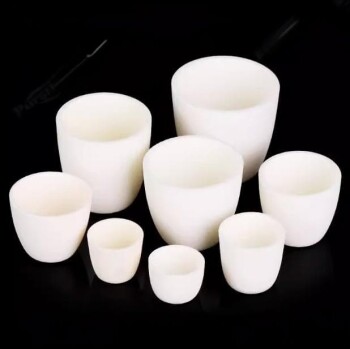
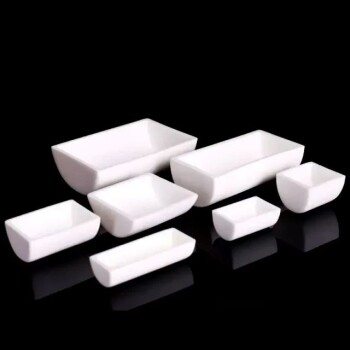
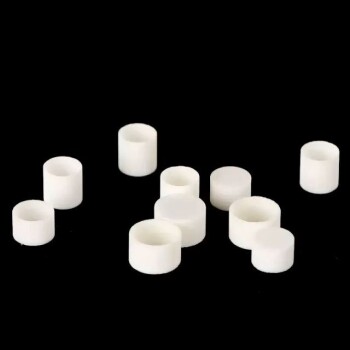
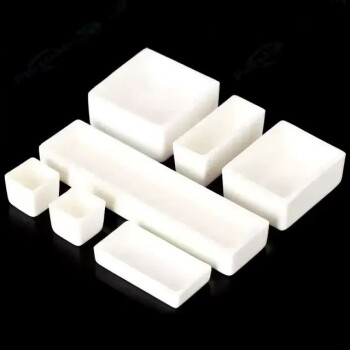
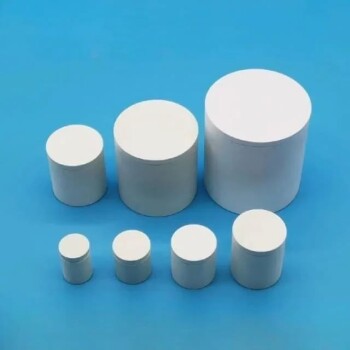
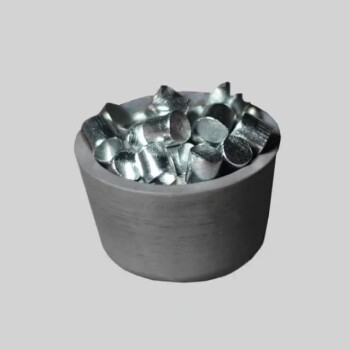
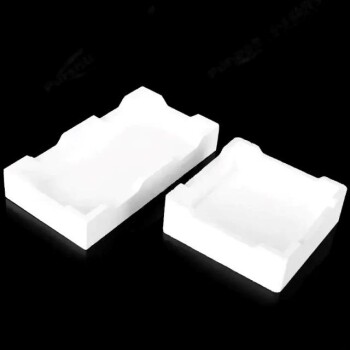
Alumina ($Al_2O_3$) crucibles are the preferred choice for V-Se-Te analysis because they offer exceptional chemical inertness and high-temperature stability. At temperatures up to 1100°C, alumina does not react with vanadium, selenium, tellurium, or the highly reactive chalcogen vapors generated during heating. This ensures that the data captured by Simultaneous Thermal Analysis (TGA/DSC) reflects the sample’s true phase transitions and mass changes without interference from the container.
Core Takeaway: Alumina crucibles provide a chemically neutral environment that prevents "container-effect" errors, ensuring that all measured heat flow and mass loss signals originate solely from the V-Se-Te sample's internal transitions and decomposition.
Chemical Inertness in Reactive Environments
Resistance to Chalcogen Vapors
V-Se-Te samples release volatile selenium and tellurium vapors when heated. Alumina is uniquely capable of resisting these corrosive chalcogen gases, which would otherwise attack or alloy with metallic crucibles like platinum.
Prevention of Vanadium Oxide Interaction
Vanadium oxides can be highly reactive with many materials under oxidative conditions. High-purity alumina ensures no chemical interaction occurs with vanadium species, preserving the integrity of the sample's stoichiometric measurements during TGA.
Signal Purity and Accuracy
Because the crucible does not react with the analytes, the DSC endothermic and exothermic signals are derived exclusively from the sample. This eliminates systematic errors and ensures the thermodynamic data, such as melting points or enthalpy of transition, is precise.
Thermal Performance and Stability
High Thermal Conductivity
Alumina possesses excellent thermal conductivity, which is critical for DSC accuracy. It ensures that heat from the furnace is transferred rapidly and uniformly to the interior of the V-Se-Te sample, maintaining strict synchronization between temperature recording and mass loss.
Mass Stability at High Temperatures
Unlike some materials that may oxidize or gain weight, alumina maintains absolute mass stability throughout the heating program. This allows for the precise determination of volatile release patterns and final residual yields in the TGA curve.
Refractoriness and Structural Integrity
With an extremely high melting point, alumina crucibles withstand the thermal stress of cycles up to and exceeding 1100°C without deforming. This high-temperature refractoriness is essential for studying the full decomposition or carbonization profiles of complex inorganic samples.
Protecting the Analytical Equipment
Sensor Contamination Mitigation
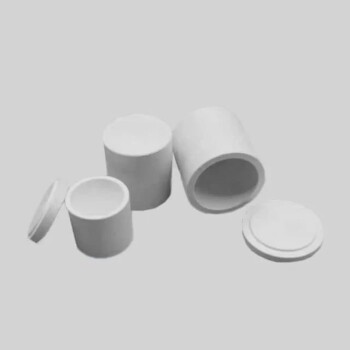
Using alumina crucibles, particularly when paired with vented lids, helps contain the sample while allowing gas escape. This configuration protects the sensitive TGA/DSC heat-flux sensors from being coated or damaged by volatile selenium or tellurium deposits.
Consistent Experimental Geometry
Alumina crucibles are manufactured to tight tolerances and do not warp under heat. Maintaining a consistent contact area between the crucible base and the sensor is vital for repeatable heat flow measurements across multiple experimental runs.
Understanding the Trade-offs
Thermal Shock Sensitivity
While alumina is thermally stable, it is a ceramic and can be sensitive to rapid temperature changes. Cooling the furnace too quickly or removing a hot crucible to a cold surface can cause the material to crack.
Potential for Sample Adhesion
Some V-Se-Te melt products may adhere strongly to the ceramic surface after cooling. Because alumina is porous at a microscopic level (depending on purity), complete cleaning and reuse can be difficult, often making these crucibles semi-disposable in high-precision research.
Influence of Purity Levels
Lower-grade alumina may contain trace impurities like silica, which can react with vanadium at high temperatures. To ensure the advantages listed above, high-purity (99.7% or higher) alumina is required to avoid unexpected catalytic effects or side reactions.
How to Apply This to Your Project
Making the Right Choice for Your Goal
- If your primary focus is precise phase transition temperatures: Use high-purity alumina crucibles to ensure high thermal conductivity and zero baseline drift from container reactions.
- If your primary focus is protecting expensive DSC sensors: Always pair your alumina crucible with a vented lid to channel reactive chalcogen vapors away from the sensor electronics.
- If your primary focus is kinetic modeling of decomposition: Utilize alumina's uniform heat distribution to ensure that the sample temperature accurately matches the furnace program.
By leveraging the chemical neutrality and thermal efficiency of alumina, you ensure that your TGA/DSC data is a true reflection of the V-Se-Te material's intrinsic properties.
Summary Table:
| Key Feature | Benefit for V-Se-Te Analysis | Importance for Data Accuracy |
|---|---|---|
| Chemical Inertness | Resists corrosive selenium and tellurium vapors | Prevents container-effect errors and alloys |
| High Thermal Conductivity | Ensures uniform heat transfer to the sample | Maintains sync between temperature and mass |
| Mass Stability | Zero weight change at high temperatures | Accurate determination of volatile release |
| Refractoriness | Withstands temperatures up to 1100°C+ | Maintains integrity during full decomposition |
| Equipment Protection | Prevents sensor coating/contamination | Extends the lifespan of expensive DSC sensors |
Achieve Unmatched Precision in Your Thermal Analysis
Precision in material science starts with the right environment. KINTEK specializes in high-purity alumina and ceramic crucibles designed to protect your TGA/DSC sensors and ensure absolute data integrity for complex samples like V-Se-Te.
Beyond high-performance consumables, our comprehensive portfolio includes:
- High-Temperature Furnaces: Muffle, vacuum, tube, and atmosphere furnaces for every application.
- Sample Preparation: Precision hydraulic presses, crushing, and milling systems.
- Advanced Reactors: High-temperature high-pressure reactors and autoclaves.
- Lab Essentials: ULT freezers, cooling solutions, and specialized PTFE products.
Ready to eliminate systematic errors and protect your analytical equipment? Contact KINTEK today to consult with our experts and find the perfect laboratory solutions for your research goals.
References
- Sophia Kurig, Richard Dronskowski. Exploring the Structure and Properties of VwSeyTe2−y Mixed Crystals in the VTe2–VSe2 System. DOI: 10.3390/inorganics11120481
This article is also based on technical information from Kintek Solution Knowledge Base .
Related Products
- Arc-Shaped Alumina Ceramic Crucible High Temperature Resistant for Engineering Advanced Fine Ceramics
- Alumina Al2O3 Ceramic Crucible Semicircle Boat with Lid for Engineering Advanced Fine Ceramics
- Engineering Advanced Fine Ceramics Alumina Al2O3 Crucible With Lid Cylindrical Laboratory Crucible
- Engineering Advanced Fine Ceramics Alumina Crucibles (Al2O3) for Thermal Analysis TGA DTA
- Engineering Advanced Fine Alumina Al2O3 Ceramic Crucible for Laboratory Muffle Furnace
People Also Ask
- Why Use Alumina Crucibles & Powder Burial for NaSICON? Ensure Phase Purity and Prevent Elemental Volatilization
- What is the primary purpose of using alumina crucibles for LLTO ceramics? Optimize Your High-Temperature Sintering
- Why are alumina crucibles and mother powder essential for LATP sintering? Optimize Your Solid Electrolyte Performance
- Why are high-purity alumina crucibles used for liquid lead corrosion experiments? Ensure Data Accuracy at 550°C
- Primary considerations for choosing alumina crucibles and quartz tubes in indium intercalation: Ensure Material Purity