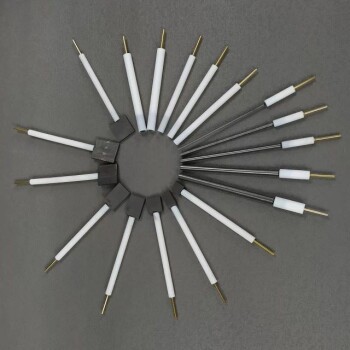
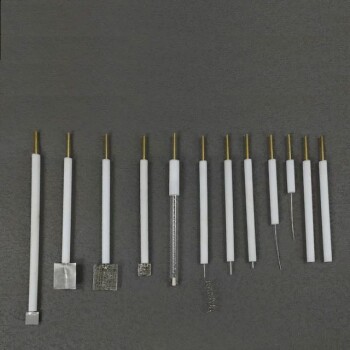
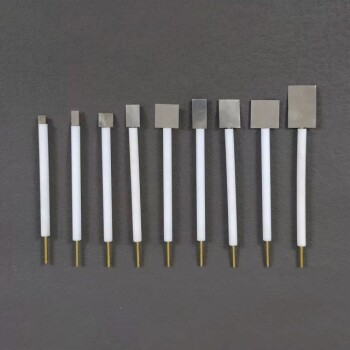
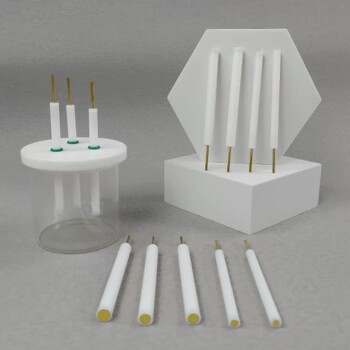
High-purity graphite electrodes are the preferred cathode choice in micro-arc oxidation (MAO) systems because they provide a critical balance of electrical conductivity and chemical inertness. These electrodes enhance the process by maintaining stability within strong alkaline electrolytes and enduring high-frequency pulse currents, which prevents the release of contaminants that would otherwise compromise the coating quality.
Core Takeaway: The use of high-purity graphite is not just about conductivity; it is a contamination-control strategy. By resisting degradation in harsh environments, these electrodes guarantee the purity and consistency of the resulting titanium dioxide ceramic layer.
The Foundations of Process Stability
To achieve a high-quality micro-arc oxidation coating, the experimental setup must remain electrically and chemically stable. High-purity graphite addresses the deep need for a controlled environment where variables are minimized.
Superior Electrical Conductivity
Graphite offers excellent electrical conductivity, which is essential for the MAO process.
The process relies on establishing a reliable electrical circuit through the electrolyte. Graphite facilitates the efficient transfer of energy required to sustain the micro-arc discharges.
Resilience in High-Frequency Environments
MAO typically utilizes high-frequency pulse currents to modify surface properties.
Graphite electrodes remain stable under these dynamic electrical stresses. They do not degrade or exhibit inconsistent performance when subjected to the rapid switching typical of pulsed power supplies.
Ensuring Chemical Purity
The most significant advantage of high-purity graphite is its inert nature. The quality of the final ceramic layer is directly dependent on the purity of the electrolyte bath.
Resistance to Alkaline Electrolytes
The electrolytes used in MAO are often strong alkaline solutions, which can be corrosive to many metals.
High-purity graphite is chemically inert in these aggressive fluids. It resists corrosion, ensuring the cathode does not dissolve or break down during the oxidation process.
Preventing Electrolyte Contamination
Because the graphite remains stable, it does not introduce impurity ions into the electrolyte.
This is critical for research and precision manufacturing. Any degradation of the cathode would release foreign particles, altering the chemical composition of the bath and the coating.
Consistency of the Ceramic Layer
The ultimate goal of the MAO process is a consistent surface layer, specifically for materials like titanium dioxide.
By eliminating the variable of cathode degradation, high-purity graphite ensures the surface performance and purity of the ceramic layer remain consistent across experiments or production runs.
Understanding the Trade-offs
While high-purity graphite is the superior technical choice, it is important to understand the limitations regarding material selection.
The "High-Purity" Requirement
The benefits discussed are strictly tied to the purity level of the graphite.
Standard or low-grade graphite contains binders and ash that can leach into the electrolyte. Using lower-grade material negates the primary advantage of chemical inertness, potentially ruining the coating's purity.
Application Specificity
The reference specifically highlights these benefits in the context of experimental setups and titanium dioxide layers.
While versatile, the choice of graphite is driven by the specific need for a contaminant-free environment. In industrial applications where absolute purity is less critical than cost, other factors might influence the decision, but for high-performance ceramics, purity is non-negotiable.
Making the Right Choice for Your Project
When designing a micro-arc oxidation setup, your cathode selection dictates the upper limit of your coating quality.
- If your primary focus is Coating Purity: Select high-purity graphite to eliminate the risk of impurity ions entering your titanium dioxide layer.
- If your primary focus is Process Stability: Rely on graphite to withstand the dual stresses of strong alkaline electrolytes and high-frequency pulse currents without degradation.
Choosing the right cathode material is the first step toward ensuring reproducible, high-quality ceramic coatings.
Summary Table:
| Feature | Advantage in MAO Process | Impact on Quality |
|---|---|---|
| Electrical Conductivity | Facilitates efficient energy transfer for micro-arc discharges | Stable and uniform coating formation |
| Chemical Inertness | Resists corrosion in strong alkaline electrolytes | Prevents bath contamination and impurity ions |
| Thermal/Electrical Stability | Withstands high-frequency pulse currents without degradation | Consistent performance across production runs |
| High Purity Grade | Eliminates binders and ash leaching | Ensures purity of the titanium dioxide ceramic layer |
Elevate Your Material Research with KINTEK
Precision in Micro-Arc Oxidation starts with the right components. KINTEK specializes in high-performance laboratory equipment, providing the high-purity graphite electrodes and electrolytic cells necessary for flawless ceramic coating production.
Whether you are developing advanced titanium dioxide layers or managing complex battery research, our comprehensive range—from high-temperature furnaces and vacuum systems to precision crushing and milling equipment—is designed to meet the most rigorous scientific standards.
Ready to ensure the purity and consistency of your coatings?
Contact KINTEK Today to Consult with Our Experts
References
- Jiang Wu, Guoliang Zhang. The Preparation of a GO/ZnO/nHAp Composite Coating and the Study of Its Performance Optimization for Pure Titanium Implants. DOI: 10.3390/mi16060637
This article is also based on technical information from Kintek Solution Knowledge Base .
Related Products
- High Purity Pure Graphite Crucible for Electron Beam Evaporation
- High Purity Pure Graphite Crucible for Evaporation
- Graphite Disc Rod and Sheet Electrode Electrochemical Graphite Electrode
- High Purity Gold Platinum Copper Iron Metal Sheets
- High Purity Zinc Foil for Battery Lab Applications
People Also Ask
- What is the container that holds the metal source material called in e-beam evaporation? Ensure Purity and Quality in Your Thin-Film Deposition
- What role do high-purity graphite crucibles play in molten salt corrosion research? Ensure Reactor-Grade Precision
- Why is a high-purity graphite crucible ideal for nitrogen-doped graphene at 1500 °C? Maximize Purity and Stability
- What dual roles do high-purity graphite crucibles play? Expert Insights into Fluoride Salt Testing
- What role does a high-purity graphite crucible play in CaO-MgO-Al2O3-SiO2 system equilibrium experiments? Maximize Accuracy