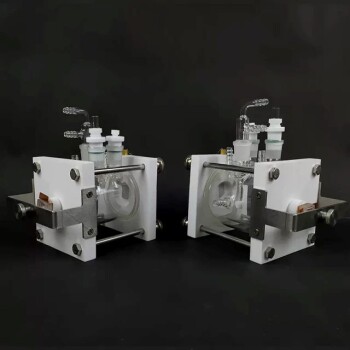
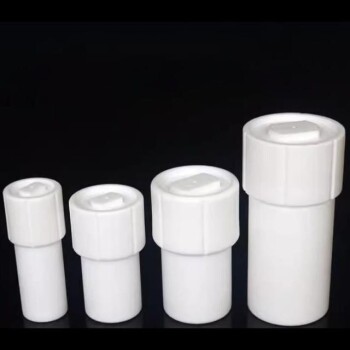
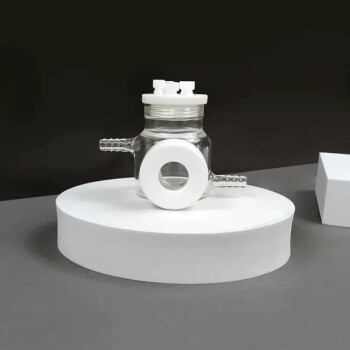
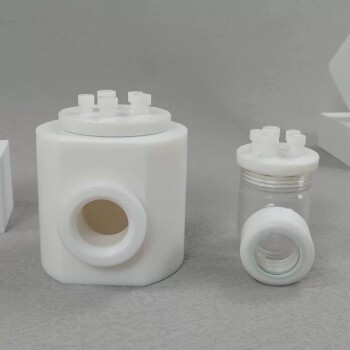
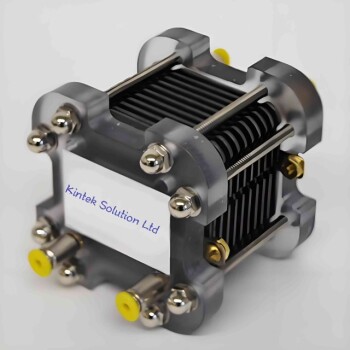
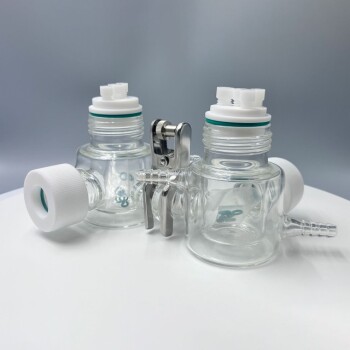
The primary advantage of using industrial-grade Polytetrafluoroethylene (PTFE) in electrochemical reactor cells is its exceptional chemical inertness and corrosion resistance. In the context of dye degradation, this material withstands aggressive oxidative environments and extreme pH levels that would degrade standard materials. This resilience is critical for preventing structural failure and ensuring the purity of the reaction environment.
By utilizing industrial-grade PTFE, you ensure the structural stability of the reactor while eliminating the risk of secondary contamination from material leaching. This guarantees that degradation efficiency metrics remain accurate and that water sample characterization reflects the true chemical process, not equipment byproducts.
Chemical Resistance in Aggressive Environments
Withstanding Strong Oxidizers
Electrochemical dye degradation processes generate highly reactive agents to break down pollutants. Industrial-grade PTFE is specifically capable of withstanding the aggressive environment created by strong oxidizing radicals, such as hydroxyl radicals.
Resistance to Active Chlorine Species
In addition to hydroxyl radicals, these processes often produce active chlorine species. PTFE maintains its integrity against these corrosive elements, preventing material breakdown that occurs in less robust polymers or metals.
Stability in Extreme pH Conditions
Dye degradation often requires operating under varying pH levels to optimize reaction kinetics. PTFE offers superior resistance to both extreme acidic and alkaline conditions, allowing for versatile reactor operation without material degradation.
Ensuring Experimental and Process Integrity
Preventing Secondary Contamination
A critical challenge in chemical analysis is interference from the reactor vessel itself. Utilizing industrial-grade PTFE prevents leaching of the reactor material into the solution. This eliminates "secondary contamination," ensuring that the substances detected in the water are actual byproducts of the dye, not the reactor.
Maintaining Degradation Efficiency
Because the material does not degrade or react with the solution, the electrochemical energy is directed solely toward the dye degradation process. This ensures that the degradation efficiency remains high and consistent throughout the operation.
Accuracy in Sample Characterization
Reliable data is the foundation of any electrochemical study. By ensuring the reactor remains inert, PTFE guarantees the accuracy of dye water sample characterization, providing confidence that results are statistically significant and reproducible.
Understanding the Trade-offs
The Necessity of "Industrial-Grade"
It is vital to distinguish between generic PTFE and industrial-grade PTFE. The benefits regarding structural stability and inertness are predicated on using the high-quality industrial grade specified. Lower-quality variations may not offer the same density or purity, potentially leading to unexpected leaching or reduced lifespan under aggressive conditions.
Making the Right Choice for Your Goal
When selecting materials for electrochemical reactors, align your choice with your specific technical priorities:
- If your primary focus is Data Accuracy: Choose industrial-grade PTFE to eliminate material leaching and ensure that water sample characterization is not compromised by secondary contamination.
- If your primary focus is Equipment Longevity: Rely on PTFE to maintain structural stability despite constant exposure to hydroxyl radicals, active chlorine species, and extreme pH fluctuations.
Select industrial-grade PTFE to transform your reactor from a consumable variable into a reliable constant.
Summary Table:
| Feature | Industrial-Grade PTFE Benefit | Impact on Dye Degradation |
|---|---|---|
| Chemical Inertness | Resists strong oxidizers & active chlorine | Prevents vessel corrosion and structural failure |
| pH Versatility | Stable in extreme acidic and alkaline conditions | Allows flexible operating parameters without degradation |
| Material Purity | Zero leaching into the reaction medium | Eliminates secondary contamination for accurate data |
| Thermal Stability | Maintains integrity under reaction-generated heat | Ensures long-term equipment reliability and safety |
Elevate Your Electrochemical Research with KINTEK
Maximize the precision of your dye degradation studies by choosing high-performance materials. KINTEK specializes in premium laboratory equipment, offering high-quality electrolytic cells, electrodes, and industrial-grade PTFE consumables designed to withstand the most aggressive oxidative environments.
Our comprehensive portfolio—ranging from high-temperature high-pressure reactors to precision crushing and milling systems—ensures your lab is equipped for excellence. Don't let material leaching compromise your results; partner with KINTEK for durable, inert, and reliable solutions tailored to your specific research needs.
Ready to optimize your reactor setup? Contact our experts today to find the perfect solution!
References
- B. Chirsabesan, M. Vijay. MEMBRANE ASSISTED ELECTRO CHEMICAL DEGRADATION FOR QUINOLINE YELLOW, EOSIN B AND ROSE BENGAL DYES DEGRADATION. DOI: 10.34218/ijdmt.4.2.2013.30320130402003
This article is also based on technical information from Kintek Solution Knowledge Base .
Related Products
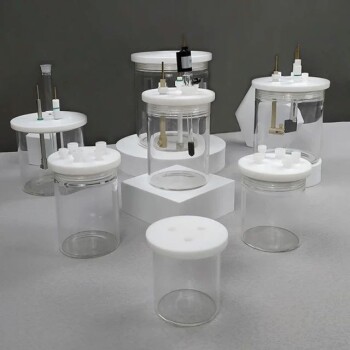
- PTFE Electrolytic Cell Electrochemical Cell Corrosion-Resistant Sealed and Non-Sealed
- Custom PTFE Teflon Parts Manufacturer for Hydrothermal Synthesis Reactor Polytetrafluoroethylene Carbon Paper and Carbon Cloth Nano-growth
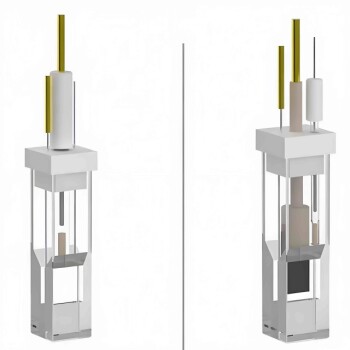
- Thin-Layer Spectral Electrolysis Electrochemical Cell
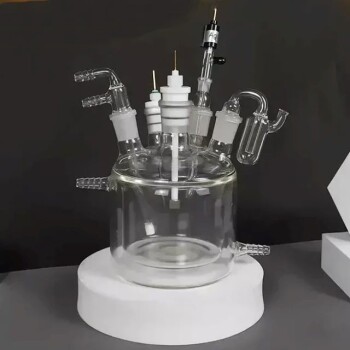
- Double Layer Five-Port Water Bath Electrolytic Electrochemical Cell
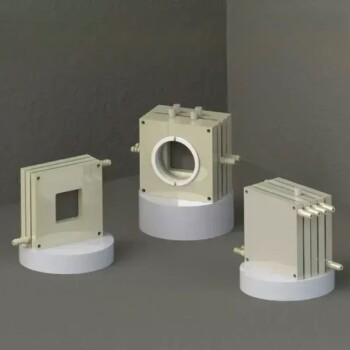
- Electrolytic Electrochemical Cell Gas Diffusion Liquid Flow Reaction Cell
People Also Ask
- What is the necessity of selecting a PTFE electrolytic cell? Ensure Precise Graphene Corrosion Testing Accuracy
- What is the proper method for cleaning the surface of an all-PTFE electrolytic cell? Ensure Accurate Results with a Pristine Surface
- How should an all-PTFE electrolytic cell be stored after use? Expert Maintenance Tips for Long-Lasting Performance
- What is the proper cleaning method for an all-PTFE electrolytic cell? Essential Tips for Surface Integrity
- What are the standard opening specifications for all-PTFE electrolytic cells? A Guide to Sealed vs. Non-Sealed Ports