Knowledge What are the advantages of using rotary reactors or rotary kilns in chemical looping? Optimize CO2 Separation Efficiency
Author avatar

Tech Team · Kintek Solution

Updated 1 day ago

What are the advantages of using rotary reactors or rotary kilns in chemical looping? Optimize CO2 Separation Efficiency


Rotary reactors optimize chemical looping for carbon dioxide separation by utilizing mechanical rotation to create a simulated moving bed environment, ensuring superior gas-solid contact compared to static alternatives. This dynamic approach allows for high mass transfer efficiency and the processing of large volumes of solids, while crucially maintaining the physical stability of adsorbents even during high-temperature regeneration.

Core Takeaway The primary value of the rotary kiln lies in its ability to balance high-throughput processing with delicate material handling. By preventing particle degradation during high-temperature calcination, it significantly enhances the overall economic efficiency of the capture process.

Optimizing Gas-Solid Interactions

Simulating Moving Bed Operations

Traditional equipment often struggles with uniform distribution. Rotary reactors use mechanical rotation to simulate moving bed operations. This continuous movement ensures that the solid adsorbents are constantly agitated and exposed to the gas phase.

Maximizing Contact Area

The rotation mechanism guarantees an excellent contact area between the solid material (such as limestone or mineral carbonates) and the gas. This prevents channeling, a common issue in static beds where gas bypasses the solids, reducing efficiency.

Enhancing Mass Transfer Efficiency

Because of the improved contact area and continuous mixing, mass transfer efficiency is significantly boosted. This ensures that the chemical reaction required for CO2 separation occurs more rapidly and completely.

Material Handling and Stability

Suitability for High Temperatures

Rotary kilns are particularly effective for high-temperature calcination and regeneration. They are engineered to withstand the thermal intensity required to regenerate mineral carbonates, a critical step in the chemical looping cycle.

Preserving Particle Integrity

A major challenge in chemical looping is the physical breakdown of adsorbents over time. Rotary reactors ensure that physical properties of adsorbent particles remain stable after regeneration. This reduces the need to frequently replace expensive bed materials.

Handling Large Volumes

Unlike some batch-processing equipment, rotary reactors are designed to handle large volumes of solid materials. This makes them highly suitable for industrial-scale operations where throughput is a priority.

Understanding the Operational Trade-offs

Mechanical Dependency

The system's efficiency relies entirely on active mechanical rotation. Unlike passive fixed beds, this equipment requires continuous kinetic energy input to maintain the simulated moving bed effect and achieve the desired mass transfer rates.

Complexity of Scale

While capable of handling large volumes, the equipment must be robust enough to manage the physical weight and abrasion of the solids. The economic benefits are most realized when operating at a scale that justifies the mechanical implementation.

Making the Right Choice for Your Goal

When evaluating reactor designs for chemical looping, consider your primary operational constraints:

  • If your primary focus is Economic Efficiency: Prioritize rotary reactors for their ability to handle large volumes and extend the lifespan of adsorbent materials, reducing long-term operational costs.
  • If your primary focus is Process Stability: Choose this technology to ensure consistent physical properties of adsorbents during the harsh conditions of high-temperature regeneration.

Rotary reactors provide a mechanically robust solution that transforms the economics of CO2 separation by preserving the integrity of the materials that drive the process.

Summary Table:

Feature Rotary Reactor Benefit Impact on Chemical Looping
Gas-Solid Contact Simulated moving bed via rotation Prevents channeling; maximizes mass transfer
Material Integrity Delicate agitation during calcination Preserves adsorbent stability & lifespan
Temperature Control Engineered for high-intensity heat Ideal for high-temperature regeneration
Processing Volume Continuous mechanical throughput Scalable for industrial-level CO2 capture

Maximize Your Chemical Looping Efficiency with KINTEK

Transitioning from traditional static systems to advanced rotary technology can significantly lower your operational costs and improve material longevity. At KINTEK, we specialize in providing high-performance laboratory equipment and industrial solutions, including state-of-the-art rotary kilns and high-temperature furnaces designed specifically for demanding chemical looping and carbon capture research.

Our comprehensive range of crushing and milling systems, high-pressure reactors, and specialized ceramics ensures that your laboratory or pilot plant has the robust tools needed to handle large-scale solid volumes without sacrificing particle integrity. Let our experts help you select the ideal configuration for your carbon dioxide separation goals.

Ready to optimize your high-temperature processes? Contact KINTEK today to discuss your project requirements!

References

  1. Lukas C. Buelens, Vladimir Galvita. <i>110th Anniversary</i>: Carbon Dioxide and Chemical Looping: Current Research Trends. DOI: 10.1021/acs.iecr.9b02521

This article is also based on technical information from Kintek Solution Knowledge Base .

Related Products

People Also Ask

Related Products

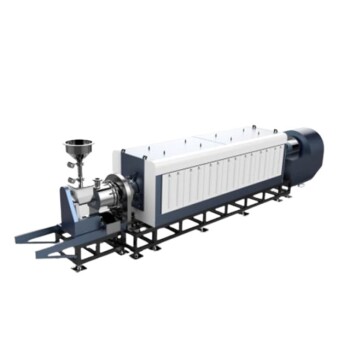
Vacuum Sealed Continuous Working Rotary Tube Furnace Rotating Tube Furnace

Vacuum Sealed Continuous Working Rotary Tube Furnace Rotating Tube Furnace

Experience efficient material processing with our vacuum-sealed rotary tube furnace. Perfect for experiments or industrial production, equipped with optional features for controlled feeding and optimized results. Order now.

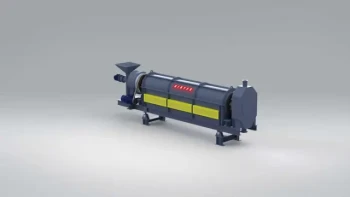
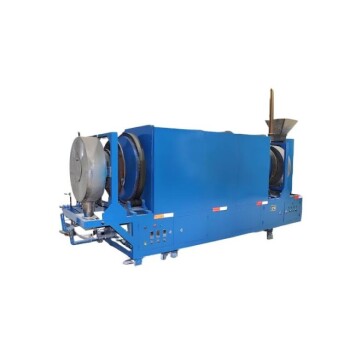
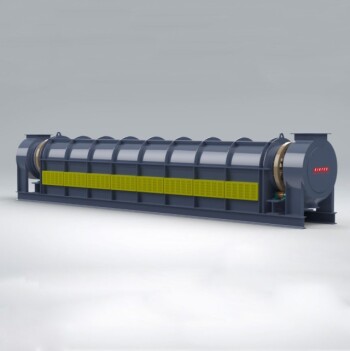
Electric Rotary Kiln Continuous Working Small Rotary Furnace Heating Pyrolysis Plant

Electric Rotary Kiln Continuous Working Small Rotary Furnace Heating Pyrolysis Plant

Efficiently calcine and dry bulk powder and lump fluid materials with an electric heating rotary furnace. Ideal for processing lithium ion battery materials and more.

Customizable Laboratory High Temperature High Pressure Reactors for Diverse Scientific Applications

Customizable Laboratory High Temperature High Pressure Reactors for Diverse Scientific Applications

High-pressure lab reactor for precise hydrothermal synthesis. Durable SU304L/316L, PTFE liner, PID control. Customizable volume & materials. Contact us!

High Pressure Laboratory Autoclave Reactor for Hydrothermal Synthesis

High Pressure Laboratory Autoclave Reactor for Hydrothermal Synthesis

Discover the applications of Hydrothermal Synthesis Reactor - a small, corrosion-resistant reactor for chemical labs. Achieve rapid digestion of insoluble substances in a safe and reliable way. Learn more now.

Visual High-Pressure Reactor for In-Situ Observation

Visual High-Pressure Reactor for In-Situ Observation

The visual high-pressure reactor uses transparent sapphire or quartz glass, maintaining high strength and optical clarity under extreme conditions for real-time reaction observation.

Laboratory Disc Rotary Mixer for Efficient Sample Mixing and Homogenization

Laboratory Disc Rotary Mixer for Efficient Sample Mixing and Homogenization

Efficient Laboratory Disc Rotary Mixer for Precise Sample Mixing, Versatile for Various Applications, DC Motor and Microcomputer Control, Adjustable Speed and Angle.

Split Chamber CVD Tube Furnace with Vacuum Station Chemical Vapor Deposition System Equipment Machine

Split Chamber CVD Tube Furnace with Vacuum Station Chemical Vapor Deposition System Equipment Machine

Efficient split chamber CVD furnace with vacuum station for intuitive sample checking and quick cooling. Up to 1200℃ max temperature with accurate MFC mass flowmeter control.

915MHz MPCVD Diamond Machine Microwave Plasma Chemical Vapor Deposition System Reactor

915MHz MPCVD Diamond Machine Microwave Plasma Chemical Vapor Deposition System Reactor

915MHz MPCVD Diamond Machine and its multi-crystal effective growth, the maximum area can reach 8 inches, the maximum effective growth area of single crystal can reach 5 inches. This equipment is mainly used for the production of large-size polycrystalline diamond films, the growth of long single crystal diamonds, the low-temperature growth of high-quality graphene, and other materials that require energy provided by microwave plasma for growth.

Microwave Plasma Chemical Vapor Deposition MPCVD Machine System Reactor for Lab and Diamond Growth

Microwave Plasma Chemical Vapor Deposition MPCVD Machine System Reactor for Lab and Diamond Growth

Get high-quality diamond films with our Bell-jar Resonator MPCVD machine designed for lab and diamond growth. Discover how Microwave Plasma Chemical Vapor Deposition works for growing diamonds using carbon gas and plasma.

Glassy Carbon Electrochemical Electrode

Glassy Carbon Electrochemical Electrode

Upgrade your experiments with our Glassy Carbon Electrode. Safe, durable, and customizable to fit your specific needs. Discover our complete models today.

Small Vacuum Heat Treat and Tungsten Wire Sintering Furnace

Small Vacuum Heat Treat and Tungsten Wire Sintering Furnace

The small vacuum tungsten wire sintering furnace is a compact experimental vacuum furnace specially designed for universities and scientific research institutes. The furnace features a CNC welded shell and vacuum piping to ensure leak-free operation. Quick-connect electrical connections facilitate relocation and debugging, and the standard electrical control cabinet is safe and convenient to operate.

Ultra-High Temperature Graphite Vacuum Graphitization Furnace

Ultra-High Temperature Graphite Vacuum Graphitization Furnace

The ultra-high temperature graphitization furnace utilizes medium frequency induction heating in a vacuum or inert gas environment. The induction coil generates an alternating magnetic field, inducing eddy currents in the graphite crucible, which heats up and radiates heat to the workpiece, bringing it to the desired temperature. This furnace is primarily used for graphitization and sintering of carbon materials, carbon fiber materials, and other composite materials.

Graphite Vacuum Furnace Bottom Discharge Graphitization Furnace for Carbon Materials

Graphite Vacuum Furnace Bottom Discharge Graphitization Furnace for Carbon Materials

Bottom-out graphitization furnace for carbon materials, ultra-high temperature furnace up to 3100°C, suitable for graphitization and sintering of carbon rods and carbon blocks. Vertical design, bottom discharging, convenient feeding and discharging, high temperature uniformity, low energy consumption, good stability, hydraulic lifting system, convenient loading and unloading.

Graphite Vacuum Furnace Negative Material Graphitization Furnace

Graphite Vacuum Furnace Negative Material Graphitization Furnace

Graphitization furnace for battery production has uniform temperature and low energy consumption. Graphitization furnace for negative electrode materials: an efficient graphitization solution for battery production and advanced functions to enhance battery performance.

Optical Water Bath Electrolytic Electrochemical Cell

Optical Water Bath Electrolytic Electrochemical Cell

Upgrade your electrolytic experiments with our Optical Water Bath. With controllable temperature and excellent corrosion resistance, it's customizable for your specific needs. Discover our complete specifications today.

Laboratory Jaw Crusher

Laboratory Jaw Crusher

Discover the small jaw crusher for efficient, flexible, and affordable crushing in labs and small mines. Ideal for coal, ores, and rocks. Learn more now!

Graphite Vacuum Continuous Graphitization Furnace

Graphite Vacuum Continuous Graphitization Furnace

High-temperature graphitization furnace is a professional equipment for graphitization treatment of carbon materials. It is a key equipment for the production of high-quality graphite products. It has high temperature, high efficiency and uniform heating. It is suitable for various high-temperature treatments and graphitization treatments. It is widely used in metallurgy, electronics, aerospace, etc. industry.

Laboratory High Pressure Horizontal Autoclave Steam Sterilizer for Lab Use

Laboratory High Pressure Horizontal Autoclave Steam Sterilizer for Lab Use

The horizontal autoclave steam sterilizer adopts the gravity displacement method to remove the cold air in the inner chamber, so that the inner steam and cold air content is less, and the sterilization is more reliable.

Vacuum Heat Treat Sintering Brazing Furnace

Vacuum Heat Treat Sintering Brazing Furnace

A vacuum brazing furnace is a type of industrial furnace used for brazing, a metalworking process that joins two pieces of metal using a filler metal that melts at a lower temperature than the base metals. Vacuum brazing furnaces are typically used for high-quality applications where a strong, clean joint is required.

Double Layer Five-Port Water Bath Electrolytic Electrochemical Cell

Double Layer Five-Port Water Bath Electrolytic Electrochemical Cell

Experience optimal performance with our Water Bath Electrolytic Cell. Our double-layer, five-port design boasts corrosion resistance and longevity. Customizable to fit your specific needs. View specs now.


Leave Your Message