The primary benefit of a PTFE liner in solvothermal synthesis is its ability to ensure absolute chemical purity while withstanding aggressive reaction environments. By acting as an inert barrier between the reaction solution and the metallic reactor vessel, the liner prevents corrosion from alkaline organic solvents like ethylenediamine. This isolation is critical for synthesizing sensitive materials, such as octahedral MnS catalysts, without the risk of metal ion contamination.
A PTFE liner serves as an essential isolation shield, combining exceptional resistance to alkaline solvents with the prevention of metal leaching from the reactor walls. This ensures that the synthesized catalyst maintains high purity and precise structural integrity.
The Critical Role of PTFE in Synthesis
Withstanding Aggressive Solvents
High-temperature solvothermal synthesis often requires the use of potent alkaline organic solvents, such as ethylenediamine. Many standard materials degrade or react when exposed to these chemicals at elevated temperatures.
A PTFE liner offers exceptional chemical stability in these harsh environments. It remains inert and corrosion-resistant, ensuring the solvent acts only on the precursors and not the containment vessel.
Eliminating Metal Ion Contamination
When reaction solutions come into direct contact with the metallic walls of a high-pressure reactor, trace metal ions can leach into the mixture. This is particularly problematic during high-temperature operations where the solvent becomes more aggressive.
The PTFE liner physically eliminates direct contact between the solution and the metal reactor. By removing this variable, you ensure the reaction environment remains chemically isolated.
Ensuring Catalyst Purity and Morphology
For specific applications, such as the synthesis of octahedral MnS catalysts, purity is not just a preference; it is a requirement. Contaminants can alter the nucleation and growth processes, ruining the intended crystal shape.
By preventing external contamination, the PTFE liner guarantees that the synthesized material matches the theoretical design. This leads to higher quality and more reproducible catalytic performance.
Understanding Operational Limits
Thermal Constraints
While PTFE is highly effective for many "high-temperature" solvothermal reactions, it is not a ceramic. It has a distinct melting point and can soften or deform if the temperature exceeds its specific rating (typically around 200°C to 250°C, depending on the grade).
Mechanical Support Requirements
The PTFE liner provides chemical resistance, not pressure containment. It relies entirely on the outer metallic reactor shell to withstand the high pressures generated during solvothermal synthesis. It must fit perfectly within the reactor to avoid mechanical failure or rupture.
Making the Right Choice for Your Project
To determine if a PTFE liner is required for your specific synthesis, consider your primary constraints:
- If your primary focus is High Purity: The liner is non-negotiable to prevent metal ion leaching that could contaminate sensitive catalysts like MnS.
- If your primary focus is Chemical Resistance: The liner is essential if you are using aggressive alkaline organic solvents like ethylenediamine that would corrode standard steel vessels.
Using a PTFE liner effectively safeguards your chemistry from your equipment, ensuring the catalyst you design is the catalyst you produce.
Summary Table:
| Feature | Benefit in Solvothermal Synthesis | Impact on Catalyst |
|---|---|---|
| Chemical Inertness | Resists aggressive alkaline solvents like ethylenediamine | Prevents vessel corrosion and degradation |
| Physical Barrier | Eliminates contact between solution and metallic reactor walls | Zero metal ion leaching and high chemical purity |
| Contamination Control | Maintains a closed, isolated reaction environment | Ensures precise morphology (e.g., octahedral MnS) |
| Surface Properties | Non-stick surface for easy recovery | High yield and simplified cleaning processes |
Elevate Your Synthesis Precision with KINTEK
Don’t let metal leaching or vessel corrosion compromise your research results. KINTEK specializes in premium laboratory equipment, offering high-performance high-temperature high-pressure reactors and autoclaves equipped with precision-engineered PTFE liners.
Whether you are developing advanced catalysts, conducting battery research, or working with aggressive organic solvents, our comprehensive range—including hydrothermal synthesis reactors, ceramics, and crucibles—is designed to meet the most stringent purity standards.
Ready to ensure the integrity of your next catalyst? Contact our technical experts today to find the perfect reactor and consumable solutions for your laboratory's unique needs.
References
- Jing Guo, Xiaogang Zheng. Efficient Adsorption-Photocatalytic Removal of Tetracycline Hydrochloride over Octahedral MnS. DOI: 10.3390/ijms23169343
This article is also based on technical information from Kintek Solution Knowledge Base .
Related Products
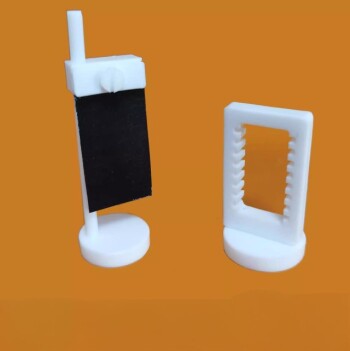
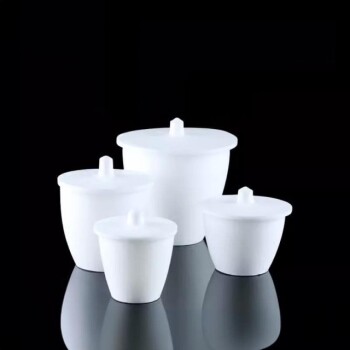
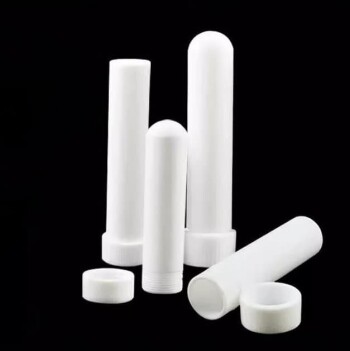
- Custom PTFE Teflon Parts Manufacturer for Hydrothermal Synthesis Reactor Polytetrafluoroethylene Carbon Paper and Carbon Cloth Nano-growth
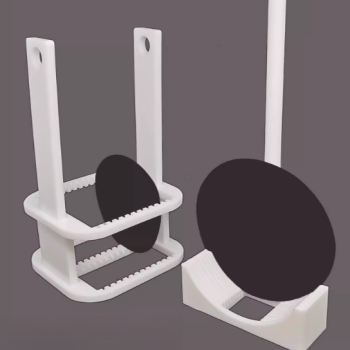
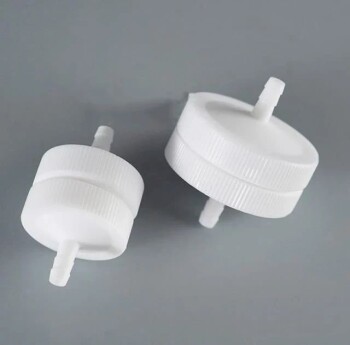
- Customizable PTFE Wafer Carriers for Semiconductor and Lab Applications
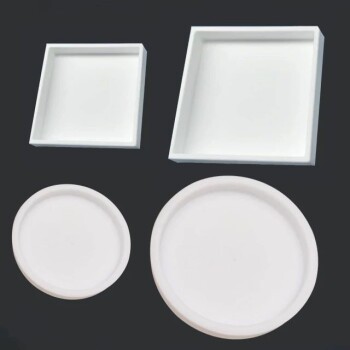
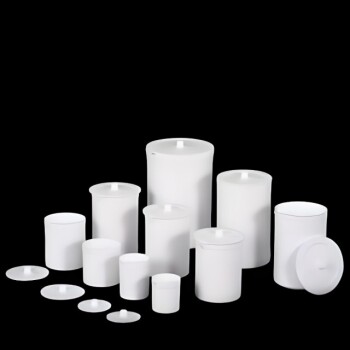
- Custom PTFE Teflon Parts Manufacturer for PTFE Containers
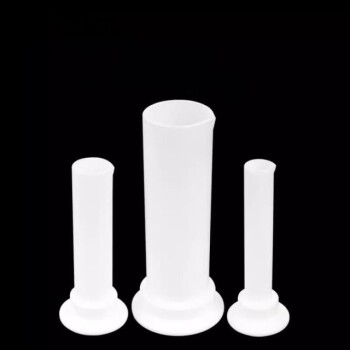
- Custom PTFE Teflon Parts Manufacturer for PTFE Measuring Cylinder 10/50/100ml
- Custom Machined and Molded PTFE Teflon Parts Manufacturer with PTFE Crucible and Lid
People Also Ask
- What is the function of a PTFE reactor in MXene etching? Ensure Safe, High-Purity MAX Phase Conversion
- Why is a PTFE reactor required for titanium-based nano-ceramic coating solutions? Ensure Chemical Inertness & Purity
- Why must a Polytetrafluoroethylene (PTFE) reactor be used for Ti3C2TX MXene etching? Ensure Safety and Purity
- Why are PTFE reactors preferred for silver phosphate glass testing? Ensure Purity and Kinetic Accuracy
- What are the advantages of using polytetrafluoroethylene (PTFE) liners in hydrothermal synthesis reactors? High Purity