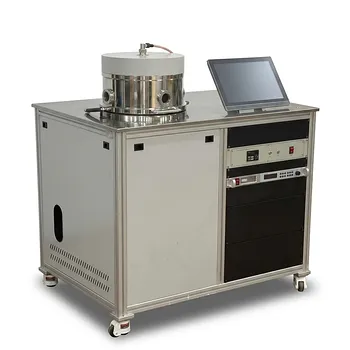
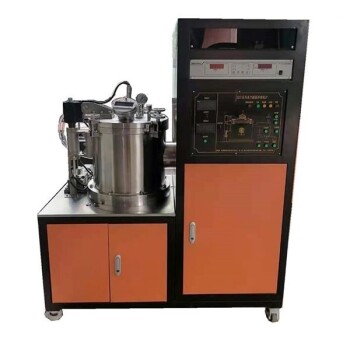
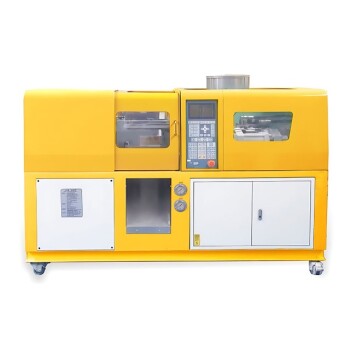
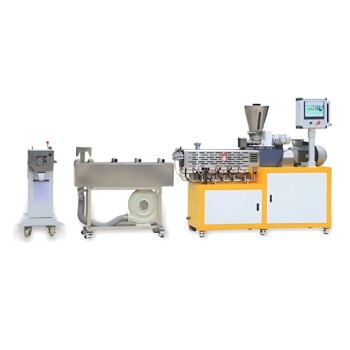
Plasma melting equipment offers a distinct dual advantage for processing complex waste streams like circuit boards and three-way catalysts: superior economic return and rigorous environmental safety. By utilizing high-temperature processing, this technology significantly outperforms traditional methods in recovering precious metals while simultaneously rendering hazardous byproducts inert.
The core value of plasma melting lies in its ability to maximize the extraction of valuable metals like gold and platinum while locking away toxic pollutants into an environmentally safe, stable slag.
Transforming Waste into Value
Superior Precious Metal Recovery
The primary economic driver for using plasma melting is efficiency. When processing materials rich in value, such as waste circuit boards and three-way catalysts, this technology achieves a higher recovery rate of precious metals compared to conventional techniques.
Overcoming Traditional Limitations
Traditional waste processing methods often struggle to separate valuable materials from complex scrap effectively. Plasma melting bypasses these inefficiencies, ensuring that a greater percentage of high-value metals are captured rather than lost during the process.
Ensuring Environmental Compliance
Neutralizing Hazardous Components
Beyond economic recovery, plasma melting addresses the critical challenge of toxicity. The intense heat effectively neutralizes hazardous components found in electronic waste and automotive catalysts, preventing them from being released into the environment.
Encapsulation in Stable Slag
The process results in a byproduct known as slag. Unlike the ash or residue from older methods, this slag encapsulates toxic elements in a stable, glass-like form. This ensures that hazardous materials are permanently trapped and cannot leach into the soil or water.
Comparing Approaches: The Pitfalls of Traditional Methods
The Risk of Inefficiency
While traditional methods are established, the reference material highlights a clear performance gap. Relying on older technologies for these specific waste streams results in a measurable loss of valuable precious metals.
Environmental Liability
Traditional methods often lack the capability to fully contain or neutralize toxins found in modern electronics and catalysts. Choosing these older routes increases the risk of environmental contamination, whereas plasma melting offers a closed-loop solution via encapsulation.
Making the Right Choice for Your Goal
When deciding between waste processing technologies, consider your primary objectives regarding yield and safety.
- If your primary focus is Maximum ROI: Plasma melting provides the highest efficiency for recovering precious metals from specialized waste, directly improving your bottom line.
- If your primary focus is Environmental Compliance: The ability to encapsulate hazardous waste into stable slag ensures you meet strict safety standards and minimize ecological impact.
Adopting plasma melting technology allows you to turn a complex disposal challenge into a profitable and environmentally responsible operation.
Summary Table:
| Feature | Plasma Melting Technology | Traditional Processing Methods |
|---|---|---|
| Metal Recovery Rate | Superior efficiency; captures maximum gold/platinum | Often inefficient with significant metal loss |
| Hazardous Waste | Neutralized and encapsulated in stable slag | Risk of toxic leaching and environmental contamination |
| Byproduct Type | Inert, glass-like stable slag | Ash or residue requiring complex disposal |
| Economic Impact | Higher ROI due to maximum yield recovery | Lower ROI due to material waste |
| Safety Standard | High; prevents toxin release | Variable; potential for environmental liability |
Transform Your Waste into High-Value Resources with KINTEK
Are you looking to maximize your ROI from complex waste streams? KINTEK specializes in advanced laboratory and industrial solutions, including high-performance high-temperature furnaces and processing equipment designed for precision and efficiency.
Our expertise covers everything from crushing and milling systems to high-temperature reactors and dental furnaces, ensuring that researchers and industrial operators have the tools they need to achieve superior results. Whether you are focused on battery research, material science, or precious metal recovery, we provide the consumables—like ceramics, crucibles, and PTFE products—and the machinery to keep your operations at the cutting edge.
Ready to upgrade your recovery process? Contact us today to learn how our tailored equipment solutions can enhance your lab's efficiency and environmental compliance!
Related Products
- Chemical Vapor Deposition CVD Equipment System Chamber Slide PECVD Tube Furnace with Liquid Gasifier PECVD Machine
- Inclined Rotary Plasma Enhanced Chemical Vapor Deposition PECVD Equipment Tube Furnace Machine
- Microwave Plasma Chemical Vapor Deposition MPCVD Machine System Reactor for Lab and Diamond Growth
- Vacuum Induction Melting Spinning System Arc Melting Furnace
- Vacuum Arc Induction Melting Furnace
People Also Ask
- What are the advantages of chemical vapor deposition? Achieve Superior Thin Films for Your Lab
- What types of substrates are used in CVD to facilitate graphene films? Optimize Graphene Growth with the Right Catalyst
- What is the chemical vapor deposition growth process? Build Superior Thin Films from the Atom Up
- How expensive is chemical vapor deposition? Understanding the True Cost of High-Performance Coating
- Why is Chemical Vapor Deposition (CVD) equipment uniquely suited for constructing hierarchical superhydrophobic structures?