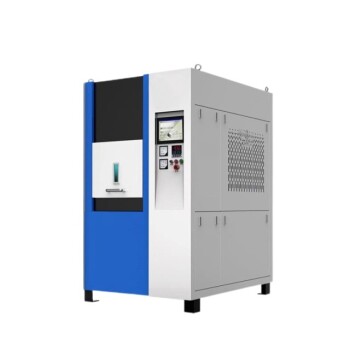
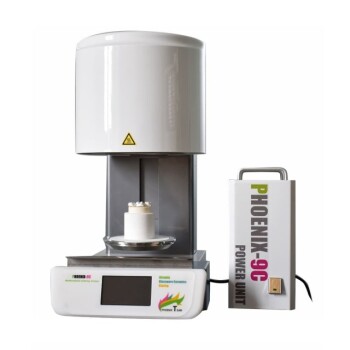
A dry hydrogen atmosphere is primarily utilized as a controlled environment for high-precision metallurgical processes, specifically the sintering of tungsten carbide and metal powders, the annealing of stainless and low-carbon steels, and the direct reduction of metal ores.
Beyond these core uses, it is also critical for advanced brazing applications where superior thermal conductivity and hermetic sealing are required.
Dry hydrogen acts as a powerful reducing agent, actively removing oxides to ensure ultra-clean surfaces and stronger metallurgical bonds. However, its reactivity makes it unsuitable for certain high-carbon materials where structural integrity must be preserved.
Primary Industrial Applications
The following applications rely on dry hydrogen (typically 98–99.9% pure) to alter the physical and chemical properties of metals during heat treatment.
Sintering Metal Powders
Sintering is the process of compacting and forming a solid mass of material by heat or pressure without melting it to the point of liquefaction.
Dry hydrogen is the standard atmosphere for sintering tungsten carbide and various metal powder components. It facilitates the bonding of powder particles by reducing surface oxides that would otherwise inhibit consolidation.
Annealing Steels
Annealing involves heating metal and allowing it to cool slowly to remove internal stresses and toughen the material.
Dry hydrogen is frequently used to anneal low carbon steels, stainless steels, and magnetic steel alloys. This process is often referred to as "bright annealing" because the reducing nature of the gas prevents oxidation, leaving the metal with a bright, clean surface.
Direct Reduction of Ores
In primary metallurgy, dry hydrogen is employed in the direct reduction of metal ores.
By reacting with the oxygen in the ore, hydrogen removes it as water vapor, leaving behind the pure metal without the need for melting.
Precision Brazing
Brazing in a dry hydrogen atmosphere results in parts that are metallurgically bonded across the entire mating surface.
This method provides optimized thermal conductivity and can create strong hermetic seals down to a 10^-10 vacuum scale. Parts exit the furnace in an "ultra-clean" state, free of hydrocarbon contaminants, oxide layers, or cleaning residues, often featuring a uniform braze fillet.
Understanding the Trade-offs
While hydrogen is an exceptional reducing agent, it is not universally applicable. You must carefully evaluate the chemical composition of your materials before introducing a hydrogen atmosphere.
Risk of Decarburization
Hydrogen is a decarburizing gas. When used with high carbon steels, it can react with the carbon in the metal, effectively stripping it out.
This reduction in carbon content can significantly alter the hardness and strength of the steel, rendering it unsuitable for its intended application.
Hydrogen Embrittlement
Exposure to hydrogen can cause hydrogen embrittlement in many types of steel.
This occurs when hydrogen atoms diffuse into the metal lattice, causing it to become brittle and susceptible to cracking under stress. This is a critical failure mode that must be assessed when treating high-strength alloys.
Making the Right Choice for Your Goal
Selecting the correct atmosphere is a balance between the need for surface cleanliness and the risk of material degradation.
- If your primary focus is joining complex assemblies: Use dry hydrogen brazing to achieve high thermal conductivity and hermetic seals without post-process cleaning.
- If your primary focus is processing tungsten carbide: Rely on dry hydrogen sintering to ensure proper particle bonding and density.
- If your primary focus is treating high carbon steel: Avoid hydrogen atmospheres to prevent decarburization and ensure the material retains its intended hardness.
By aligning the atmosphere's chemical behavior with your material's sensitivity, you ensure metallurgical integrity rather than just surface appearance.
Summary Table:
| Application | Process Type | Primary Benefit |
|---|---|---|
| Tungsten Carbide | Sintering | Facilitates particle bonding by reducing surface oxides |
| Stainless Steel | Bright Annealing | Prevents oxidation for a clean, bright surface finish |
| Metal Ores | Direct Reduction | Removes oxygen as water vapor to produce pure metal |
| Precision Brazing | Metal Joining | Creates hermetic seals with superior thermal conductivity |
| Magnetic Alloys | Stress Relief | Maintains material purity during heat treatment cycles |
Elevate Your Material Processing with KINTEK Precision
Are you looking to optimize your dry hydrogen atmosphere processes for sintering, brazing, or annealing? KINTEK specializes in advanced laboratory equipment designed to meet the rigorous demands of high-precision metallurgy. Our extensive portfolio includes high-performance atmosphere furnaces (tube, muffle, and vacuum), high-temperature high-pressure reactors, and essential ceramic and PTFE consumables tailored for clean-room and high-heat environments.
From achieving perfect hermetic seals to preventing decarburization, our technical experts are ready to provide the cooling solutions, crushing systems, and thermal equipment your lab requires for consistent, high-quality results. Contact KINTEK today to discuss your specific application needs and discover how our comprehensive range of tools can enhance your research and production efficiency.
Related Products
- Controlled Nitrogen Inert Hydrogen Atmosphere Furnace
- Mesh belt controlled atmosphere furnace
- 1200℃ Controlled Atmosphere Furnace Nitrogen Inert Atmosphere Furnace
- 1700℃ Controlled Atmosphere Furnace Nitrogen Inert Atmosphere Furnace
- Spark Plasma Sintering Furnace SPS Furnace
People Also Ask
- What is the role of a hydrogen atmosphere furnace in diamond/copper composites? Enhance Your Material Purity
- Why is hydrogen used in furnaces? Achieve Superior Purity and Bright Finishes
- What are the characteristics and risks of a hydrogen atmosphere in a furnace? Master the Balance of Power and Control
- What is the use of hydrogen in furnace? A Key to Oxygen-Free High-Temperature Processing
- Can hydrogen be used in furnaces? Yes, for Oxide-Free Metal Processing & Rapid Heating