To create high-quality graphene via Chemical Vapor Deposition (CVD), you must maintain strict control over gas volumes, pressure, temperature, and the duration of the process. Adhering to precise guidelines for these variables is the fundamental requirement for successful synthesis.
The CVD process relies on a delicate balance of physical conditions; precise manipulation of gas flow and temperature determines whether you produce pristine single-layer sheets or multi-layer structures with unwanted defects.
The Pillars of Process Control
The creation of CVD graphene involves two main stages: the pyrolysis of a precursor to dissociate carbon atoms, and the subsequent formation of the carbon structure. To ensure these stages result in high-quality material, several parameters must be managed.
Thermal Regulation
Temperature is a critical variable that drives the reaction kinetics. It facilitates the initial pyrolysis step where the carbon source is broken down.
However, thermal management requires precision. If the temperature inside the furnace becomes too high, the quality of the final graphene sheet will be compromised.
Gas Dynamics and Purity
The volume and flow rate of the gases introduced into the reaction chamber are essential for determining the graphene's final architecture.
By adjusting the gas flow rate, you can exercise precise control over the layer thickness. This allows for the specific production of either single-layer or multilayer graphene sheets depending on your application needs.
Pressure and Duration
The pressure within the reaction chamber and the length of time the substrate is exposed to the reaction are equally vital.
Strict adherence to guidelines regarding process duration is necessary to achieve the desired thickness and uniformity. Deviating from established timeframes can lead to inconsistent layer growth.
The Role of Substrate Preparation
Beyond the atmospheric controls, the quality of the graphene is heavily influenced by the condition of the substrate, such as copper.
Chemical Pre-treatment
Treating the substrate before the reaction begins is a proven technique to enhance quality. For example, chemically treating a copper substrate can reduce its catalytic activity.
Surface Morphology
Proper treatment increases the grain size of the copper and rearranges its surface morphology. These modifications facilitate the growth of graphene flakes with significantly fewer imperfections.
Common Pitfalls and Trade-offs
Achieving high-quality graphene requires navigating specific trade-offs and avoiding common errors that degrade the material.
The Purity Imperative
The quality of your inputs directly dictates the quality of your output. If the purity of the gas source is too low, the resulting graphene will inevitably suffer from defects, regardless of how well other parameters are managed.
The Flow Rate Balance
While adjusting gas flow controls thickness, an improper flow rate is a primary cause of quality degradation. You must balance the need for specific layer counts against the stability of the deposition environment.
Making the Right Choice for Your Goal
Successful CVD synthesis depends on prioritizing the right parameters for your specific desired outcome.
- If your primary focus is controlling layer thickness: Prioritize precise adjustments to the gas flow rate and the duration of exposure to switch between single and multilayer growth.
- If your primary focus is minimizing structural defects: Focus on high-purity gas sources and pre-treating the substrate to optimize grain size and surface morphology.
Mastering the CVD process requires a holistic approach where temperature, pressure, and material purity are tuned in unison to achieve the perfect carbon structure.
Summary Table:
| Parameter | Influence on Graphene Quality | Key Optimization Strategy |
|---|---|---|
| Temperature | Drives pyrolysis & reaction kinetics | Maintain precise thermal regulation to avoid sheet compromise |
| Gas Flow Rate | Determines layer thickness & architecture | Balance flow to toggle between single and multi-layer growth |
| Gas Purity | Direct impact on structural defects | Use only high-purity precursors to prevent inherent impurities |
| Process Duration | Affects uniformity and layer count | Adhere to strict timing to ensure consistent growth patterns |
| Substrate Prep | Influences grain size & morphology | Pre-treat copper to reduce catalytic activity and imperfections |
Elevate Your Graphene Research with KINTEK Precision
Achieving the perfect carbon structure requires more than just process knowledge—it demands high-performance equipment that offers absolute control. KINTEK specializes in advanced laboratory solutions designed for the most demanding material syntheses.
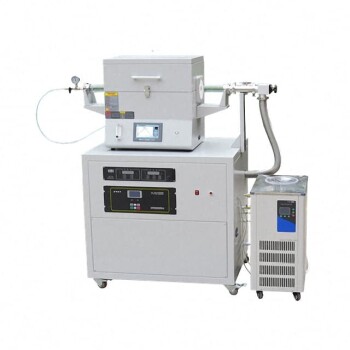
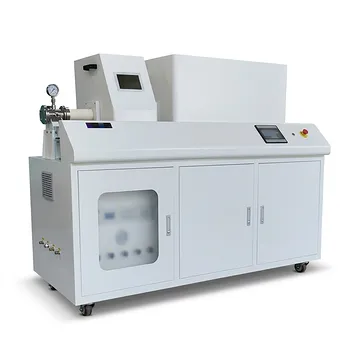
Our state-of-the-art CVD and PECVD systems provide the industry-leading thermal regulation and gas dynamics control necessary to produce pristine, high-quality graphene. Whether you are optimizing single-layer growth or scaling up production, our portfolio—including high-temperature furnaces, vacuum systems, and precision crushing and milling equipment—ensures your lab has the reliability it needs.
Ready to minimize defects and maximize your research output? Contact KINTEK today to discuss your laboratory needs
Related Products
- Chemical Vapor Deposition CVD Equipment System Chamber Slide PECVD Tube Furnace with Liquid Gasifier PECVD Machine
- Customer Made Versatile CVD Tube Furnace Chemical Vapor Deposition Chamber System Equipment
- HFCVD Machine System Equipment for Drawing Die Nano-Diamond Coating
- Split Chamber CVD Tube Furnace with Vacuum Station Chemical Vapor Deposition System Equipment Machine
- Multi Heating Zones CVD Tube Furnace Machine Chemical Vapor Deposition Chamber System Equipment
People Also Ask
- What are the advantages of chemical vapor deposition? Achieve Superior Thin Films for Your Lab
- What types of substrates are used in CVD to facilitate graphene films? Optimize Graphene Growth with the Right Catalyst
- What is the chemical vapor deposition growth process? Build Superior Thin Films from the Atom Up
- How expensive is chemical vapor deposition? Understanding the True Cost of High-Performance Coating
- Why is Chemical Vapor Deposition (CVD) equipment uniquely suited for constructing hierarchical superhydrophobic structures?