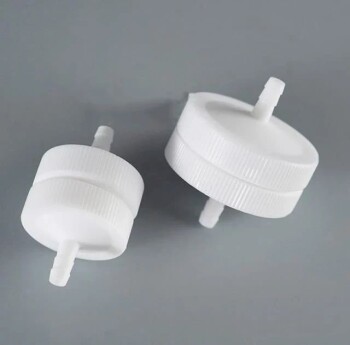
A Proton Exchange Membrane (PEM) acts as the critical interface in a dual-chamber Microbial Fuel Cell (MFC), serving as both a separator and a bridge. Its primary roles are to physically isolate the anodic and cathodic liquids to prevent interference while selectively permitting protons (H+) to pass through to complete the internal circuit.
The PEM is the defining boundary of the system; it isolates the fuel from the oxidant to prevent chemical short circuits while simultaneously acting as an ionic conduit to maintain the electrical neutrality required for continuous power generation.
The Role of Physical Isolation
Preventing Chemical Mixing
The first mandate of the PEM is to serve as a physical barrier. In a dual-chamber system, the anode chamber contains organic matter (anolyte), while the cathode chamber contains oxidants (catholyte).
Avoiding Short Circuits
If these two liquids were to mix, oxidants such as oxygen or ferric ions would come into direct contact with the organic fuel.
This would cause the fuel to react chemically rather than electrochemically. The result is a "chemical short circuit," where potential energy is lost as heat instead of being captured as electricity by the external wire.
The Role of Selective Transport
Facilitating Proton Migration
While the PEM blocks fluids and large molecules, it acts as a selective permeable medium for protons.
As bacteria break down organic matter at the anode, they release protons (H+). These protons must travel to the cathode to participate in reduction reactions.
Maintaining Electrical Neutrality
Electrons travel through the external circuit (the wire) to the cathode. To balance this negative charge arriving at the cathode, positive protons must arrive via the internal path.
The PEM allows this migration. By enabling H+ flow, it balances the charge between the chambers and ensures the electrical circuit remains closed and functional.
Understanding the Trade-offs
Internal Resistance
While the PEM is necessary for isolation, it acts as a bottleneck. It introduces internal resistance to the flow of ions.
If the membrane is too thick or becomes clogged (fouled) by biological matter, proton transport slows down. This creates a voltage loss that reduces the overall power output of the MFC.
Crossover Leakage
Ideally, the PEM blocks everything except protons. In reality, small amounts of oxygen or substrate can sometimes permeate the membrane.
This "crossover" reduces efficiency by allowing minor chemical short circuits or allowing oxygen to inhibit anaerobic bacteria at the anode.
Making the Right Choice for Your Goal
When selecting a PEM for your Microbial Fuel Cell, you must balance isolation against conductivity.
- If your primary focus is Maximum Power Output: Prioritize a membrane with high proton conductivity and low internal resistance to facilitate rapid ion flow.
- If your primary focus is Coulombic Efficiency: Prioritize a thicker or more robust membrane that offers superior physical isolation to strictly prevent oxidant crossover.
The PEM is the silent regulator of the MFC, determining how effectively chemical energy is translated into electrical current.
Summary Table:
| Feature | Primary Role in MFC | Impact on Performance |
|---|---|---|
| Physical Isolation | Separates anolyte from catholyte | Prevents chemical short circuits and energy loss |
| Selective Transport | Permits H+ (proton) migration | Completes the internal circuit and balances charge |
| Internal Resistance | Acts as an ionic bottleneck | High resistance reduces overall voltage and power output |
| Crossover Control | Blocks oxygen/substrate leakage | High selectivity improves Coulombic efficiency |
Elevate Your MFC Research with KINTEK Precision Solutions
Are you looking to optimize your Microbial Fuel Cell (MFC) performance? Choosing the right components is critical for balancing proton conductivity and physical isolation. KINTEK specializes in high-quality laboratory equipment, including specialized electrolytic cells and electrodes, and advanced materials for energy research.
Whether you are refining battery research or developing sustainable fuel cells, our comprehensive portfolio of high-temperature systems and laboratory consumables ensures your experiments achieve maximum Coulombic efficiency. Contact us today to discover how KINTEK can provide the technical expertise and precision tools your project demands!
References
- Yasser Bashir, Sovik Das. Critical assessment of advanced oxidation processes and bio-electrochemical integrated systems for removing emerging contaminants from wastewater. DOI: 10.1039/d3su00112a
This article is also based on technical information from Kintek Solution Knowledge Base .
Related Products
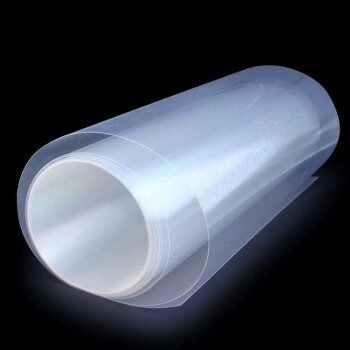
- Proton Exchange Membrane for Batteries Lab Applications
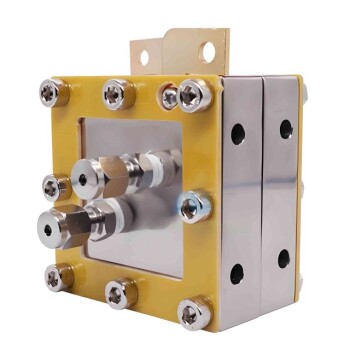
- Customizable PEM Electrolysis Cells for Diverse Research Applications
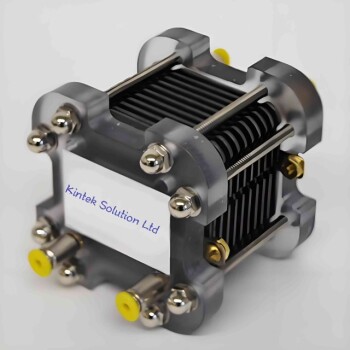
- FS Electrochemical Hydrogen Fuel Cells for Diverse Applications
- Anion Exchange Membrane for Laboratory Use
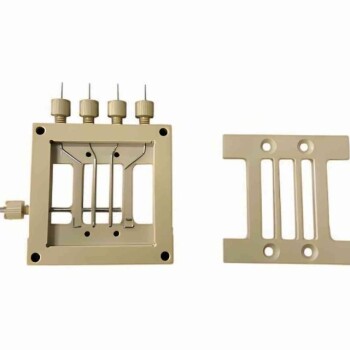
- Custom Ion Conductivity Test Fixtures for Fuel Cell Research
People Also Ask
- What is the function of a proton exchange membrane in a PEC cell? Enhancing CO2 Reduction Safety and Efficiency
- What initial steps are required before using a new proton exchange membrane? Ensure Peak Performance and Longevity
- What should be done if a proton exchange membrane is found to be contaminated or damaged? Restore Performance or Replace for Safety
- How should a proton exchange membrane be installed? A Guide to Flawless Assembly for Peak Performance
- What contaminants should be avoided during the operation of a proton exchange membrane? Protect Your PEM from Heavy Metals & Organics