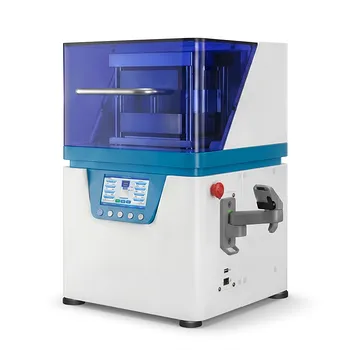
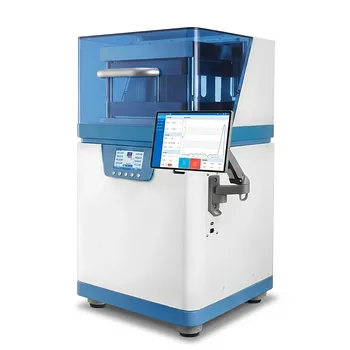
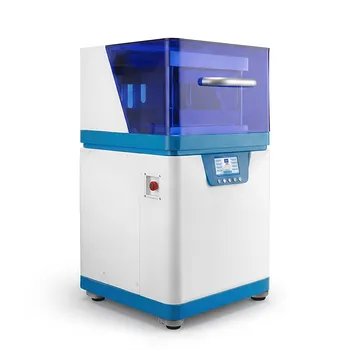
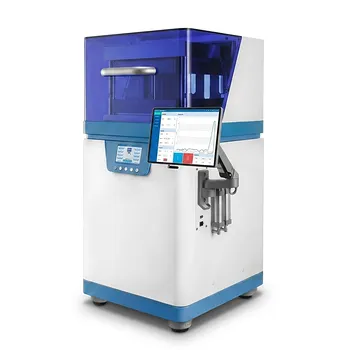
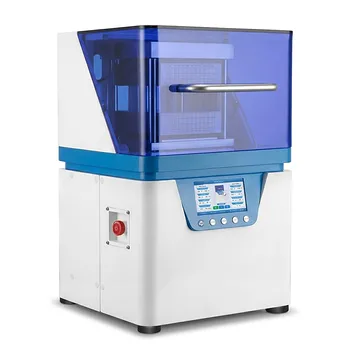
Hot-pressing machines provide a superior technical route for bismuthene production by integrating thermal and mechanical energy. Unlike standard presses that rely solely on mechanical force, hot presses utilize controlled temperatures to trigger thermo-mechanical exfoliation of bulk bismuth nanoparticles. This synergy facilitates the efficient thinning of material into ultrathin 2D nanosheets while optimizing material density and grain connectivity.
The primary advantage of hot-pressing over standard presses lies in its ability to achieve thermo-mechanical exfoliation, which suppresses grain growth and eliminates the need for chemical binders. By simultaneously applying heat and pressure, the machine induces plastic deformation that produces denser, more conductive ultrathin bismuthene sheets at lower molding pressures.
Leveraging Thermo-Mechanical Exfoliation
Facilitating Nanosheet Thinning
Hot-pressing machines use simultaneous heat and pressure to exfoliate bulk bismuth nanoparticles into bismuthene. This dual-action approach is significantly more effective than cold-pressing at reducing material thickness into ultrathin 2D structures.
Achieving Precise Material Morphology
Controlled temperatures allow the bismuth to reach a thermoplastic state. This state facilitates plastic flow, making it easier to shape the material into high-aspect-ratio nanosheets that would otherwise fracture under cold pressure.
Enhancing Formation Efficiency
The thermo-mechanical route is more economical and efficient for producing large quantities of bismuthene. By combining stages, it reduces the total energy required to reach the desired nanosheet morphology.
Improving Material Integrity and Performance
Maximizing Density and Connectivity
Hot presses promote grain boundary fusion and diffusion bonding between particles. This process can achieve near-theoretical density (up to 93%), which significantly enhances the electrical conductivity of the final bulk material compared to standard pressing.
Suppressing Crystal Grain Growth
The simultaneous application of heat and pressure reduces the required sintering time. Shorter processing windows help suppress the growth of crystal grains, preserving the fine-grain structure essential for 2D material properties.
Eliminating Internal Defects
In high-temperature and high-pressure environments, the fluidity of the material is enhanced, allowing it to better fill internal pores. This reduces the formation of internal cracks and improves the overall mechanical and electrical contact performance.
Streamlining the Manufacturing Workflow
Eliminating Chemical Binders
The combination of force and temperature is sufficient to bond parts completely. This removes the requirement for external binders, ensuring the final bismuthene product remains high-purity and free from chemical contamination.
Reducing Molding Pressures
Because the powder is in a thermoplastic state during hot pressing, the required molding pressure is relatively small. This facilitates better plastic flow and densification without needing the extreme mechanical force required by standard cold presses.
Shortening Production Cycles
By integrating heating and pressing into a single step, the production cycle is substantially shortened. This efficiency makes hot-pressing a more viable option for industrial-scale preparation of 2D materials.
Understanding the Trade-offs
Temperature Sensitivity
Precise regulation of the hot-pressing temperature is critical to avoid material degradation. If temperatures are not strictly maintained (e.g., specifically around 485 °C for certain bismuth compounds), the material may lose its structural integrity.
Equipment Complexity and Cost
Hot-pressing systems require sophisticated heating elements and stable hydraulic pressure controls. This results in a higher initial capital investment and more complex maintenance schedules compared to standard mechanical presses.
Cooling Rate Requirements
The transition from high temperature and pressure back to ambient conditions must be managed carefully. Rapid cooling can introduce thermal stresses that may cause the ultrathin nanosheets to warp or crack.
Strategic Implementation for Bismuthene Production
To achieve the best results when preparing ultrathin two-dimensional bismuthene, consider your specific production priorities.
- If your primary focus is material purity: Use hot-pressing to eliminate the need for chemical binders, ensuring a clean, uncontaminated final nanosheet.
- If your primary focus is electrical performance: Choose hot-pressing to maximize densification and grain boundary fusion, which are essential for high conductivity.
- If your primary focus is structural precision: Leverage the thermoplastic state provided by the hot press to achieve the specific thinning required for 2D bismuthene that standard presses cannot match.
By integrating thermal control with mechanical force, hot-pressing transforms bulk bismuth into high-performance bismuthene with unparalleled structural integrity and efficiency.
Summary Table:
| Feature | Hot-Pressing Machine | Standard Mechanical Press |
|---|---|---|
| Mechanism | Thermo-mechanical exfoliation | Pure mechanical force |
| Material Density | Near-theoretical (up to 93%) | Lower density/porous |
| Purity | Binder-free processing | Often requires chemical binders |
| Grain Control | Suppresses crystal grain growth | Limited control over grain size |
| Molding Pressure | Lower (due to thermoplastic state) | Higher mechanical force required |
| Workflow | Single-step heating and pressing | Multi-step/Cold cycle |
Elevate Your 2D Material Synthesis with KINTEK Precision
To achieve superior electrical conductivity and structural integrity in ultrathin bismuthene, precise control over thermal and mechanical energy is essential. KINTEK specializes in high-performance laboratory equipment, offering a specialized range of hydraulic presses (pellet, hot, isostatic) designed to optimize densification and eliminate chemical contamination in your samples.
Our solutions support researchers and industrial manufacturers in streamlining production cycles and achieving binder-free, high-purity results. Beyond pressing systems, we offer high-temperature furnaces, crushing systems, and cooling solutions to support your entire material science workflow.
Contact our technical specialists today to configure your hot-pressing solution!
References
- R. Shwetharani, R. Geetha Balakrishna. Recent advances in ecofriendly 2D monoelemental bismuthene as an emerging material for energy, catalysis and biomedical applications. DOI: 10.1039/d3tc00587a
This article is also based on technical information from Kintek Solution Knowledge Base .
Related Products
- Automatic Laboratory Hot Press Machine with Heated Platens 200x200mm Program Control Dual Heating Plates
- Automatic Heated Hydraulic Press Machine with Heated Plates for Laboratory Hot Press 25T 30T 50T
- 30T 40T Split Automatic Heated Hydraulic Press Machine with Heated Plates for Laboratory Hot Press
- Automatic Heated Hydraulic Press Machine with Heated Plates for Laboratory Hot Press
- 24T 30T 60T Heated Hydraulic Press Machine with Heated Plates for Laboratory Hot Press
People Also Ask
- What are the core advantages of using a laboratory hot press to produce Bi2Se3? Achieve 93% Density & High Conductivity
- What is the primary function of a laboratory hot press in MEA assembly? Optimize Fuel Cell Bonding & Performance
- What specific conditions does a laboratory hot press provide for the assembly of fuel cell MEA? Expert Bond Tips.
- Why use a lab press to mold H-DRI pellets? Achieve Accurate EAF Simulation & Thermal Mass
- What impact does a laboratory press have on solid electrolyte samples? Optimize Density and Ionic Conductivity