Knowledge What are the technical advantages of using a laboratory vacuum oven for drying MXene nanopowders? | KINTEK
Author avatar

Tech Team · Kintek Solution

Updated 3 days ago

What are the technical advantages of using a laboratory vacuum oven for drying MXene nanopowders? | KINTEK


The primary technical advantage of using a laboratory vacuum oven for drying MXene nanopowders is the ability to remove moisture and solvents at significantly reduced temperatures, such as 40 °C. By operating under reduced pressure, this method facilitates drying without subjecting the material to the high thermal stress required by conventional ovens.

Core Insight: The vacuum environment changes the thermodynamics of drying. By lowering the boiling point of solvents, you can achieve a completely dry state while actively preventing thermal oxidation and the aggregation of 2D layers—two factors that critically degrade MXene performance.

Preserving Material Architecture

Preventing Layer Aggregation

MXene materials derive their unique properties from their two-dimensional, sheet-like structure.

When dried in standard high-heat conditions, these sheets have a tendency to stack or clump together. Vacuum drying minimizes this risk, preventing aggregation and ensuring the nanomaterial remains distinct and effective.

Maintaining Low-Temperature Conditions

Standard laboratory drying ovens often require temperatures around 80°C to effectively remove water and solvents from composite powders.

For robust materials like MoO3/GO composites, this heat is acceptable. However, for sensitive MXenes, a vacuum oven allows drying at much lower temperatures (e.g., 40°C), drastically reducing thermal stress on the sample.

Chemical Stability and Surface Protection

Mitigating Thermal Oxidation

One of the greatest risks during the drying of nanomaterials is oxidation, which alters the chemical composition of the sample.

By evacuating the air from the chamber, a vacuum oven removes oxygen from the drying environment. This is vital for preventing thermal oxidation, preserving the purity of the MXene.

Protecting Active Functional Groups

The utility of MXene nanopowders often depends on specific active functional groups located on their surface.

High temperatures can degrade or strip these groups away. The gentle drying conditions of a vacuum oven ensure these functional groups remain intact, maintaining the material's reactivity and electrochemical properties.

Thermodynamic Efficiency

Lowering Solvent Boiling Points

The mechanism behind vacuum drying relies on pressure, not just heat.

By reducing the pressure inside the chamber, the boiling point of water and other solvents drops significantly. This allows for rapid evaporation at temperatures that would otherwise be insufficient for drying, optimizing both speed and safety.

Understanding the Trade-offs

Process Complexity vs. Simplicity

While vacuum ovens offer superior protection for sensitive materials, they require more complex setup and monitoring than standard drying ovens.

Standard ovens provide a constant thermal environment (e.g., 80°C) that is excellent for completely drying robust samples like MoO3/GO composites. If your material is thermally stable and not prone to oxidation, the simplicity of a standard oven may be preferable.

Throughput Considerations

Vacuum drying is often a batch process that may have volume limitations compared to large convective ovens.

You must balance the need for structural preservation against the need for high-volume processing speed.

Making the Right Choice for Your Goal

To select the correct drying method, evaluate the sensitivity of your nanomaterial:

  • If your primary focus is preserving 2D structure: Use a vacuum oven to prevent layer stacking and oxidation at low temperatures (40°C).
  • If your primary focus is drying thermally stable composites: Use a standard laboratory oven at constant heat (80°C) to ensure the complete removal of absorbed water and ethanol.

Ultimately, for MXene nanopowders, the vacuum oven is not just an alternative; it is a technical necessity for retaining high-performance characteristics.

Summary Table:

Feature Vacuum Oven (MXene Optimized) Standard Convection Oven
Drying Temp Low (approx. 40°C) High (approx. 80°C)
Atmosphere Oxygen-free vacuum Ambient air
Material Risk Minimal aggregation/oxidation High risk of thermal stress
Mechanism Reduced boiling point via pressure Thermal evaporation via heat
Best For MXenes & oxygen-sensitive nanos Thermally stable composites

Elevate Your Nanomaterial Research with KINTEK

Preserve the integrity of your sensitive MXene samples with precision-engineered drying solutions. KINTEK specializes in advanced laboratory equipment designed to protect your material architecture and chemical stability.

Our extensive portfolio includes:

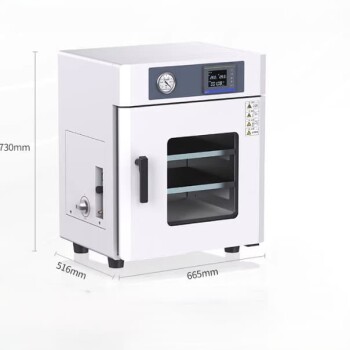
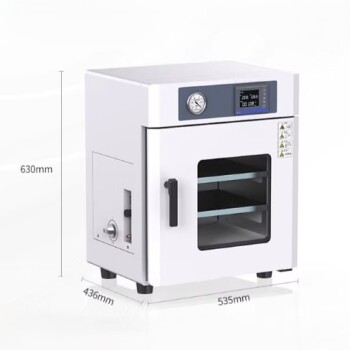
  • High-Performance Vacuum Ovens for low-temperature, oxygen-free drying.
  • High-Temperature Furnaces (Muffle, Tube, CVD, and PECVD) for precise thermal processing.
  • Advanced Processing Tools: Crushing systems, milling equipment, and hydraulic pellet presses.
  • Electrochemistry & Battery Research: High-pressure reactors, electrolytic cells, and battery consumables.

Don't compromise your research with sub-optimal drying conditions. Our technical experts are ready to help you select the ideal configuration for your laboratory.

Contact KINTEK Experts Today to discuss your specific application and find the perfect equipment for your workflow.

References

  1. Ruiqi Xu, Xiaohua Chen. Biomimetic Micro-Nanostructured Evaporator with Dual-Transition-Metal MXene for Efficient Solar Steam Generation and Multifunctional Salt Harvesting. DOI: 10.1007/s40820-024-01612-0

This article is also based on technical information from Kintek Solution Knowledge Base .

Related Products

People Also Ask

Related Products

Small Vacuum Heat Treat and Tungsten Wire Sintering Furnace

Small Vacuum Heat Treat and Tungsten Wire Sintering Furnace

The small vacuum tungsten wire sintering furnace is a compact experimental vacuum furnace specially designed for universities and scientific research institutes. The furnace features a CNC welded shell and vacuum piping to ensure leak-free operation. Quick-connect electrical connections facilitate relocation and debugging, and the standard electrical control cabinet is safe and convenient to operate.

Graphite Vacuum Furnace High Thermal Conductivity Film Graphitization Furnace

Graphite Vacuum Furnace High Thermal Conductivity Film Graphitization Furnace

The high thermal conductivity film graphitization furnace has uniform temperature, low energy consumption and can operate continuously.

Molybdenum Vacuum Heat Treat Furnace

Molybdenum Vacuum Heat Treat Furnace

Discover the benefits of a high-configuration molybdenum vacuum furnace with heat shield insulation. Ideal for high-purity, vacuum environments like sapphire crystal growth and heat treatment.

Vacuum Heat Treat Furnace with Ceramic Fiber Liner

Vacuum Heat Treat Furnace with Ceramic Fiber Liner

Vacuum furnace with polycrystalline ceramic fiber insulation liner for excellent heat insulation and uniform temperature field. Choose from 1200℃ or 1700℃ max. working temperature with high vacuum performance and precise temperature control.

Vacuum Heat Treat Sintering Brazing Furnace

Vacuum Heat Treat Sintering Brazing Furnace

A vacuum brazing furnace is a type of industrial furnace used for brazing, a metalworking process that joins two pieces of metal using a filler metal that melts at a lower temperature than the base metals. Vacuum brazing furnaces are typically used for high-quality applications where a strong, clean joint is required.

Graphite Vacuum Furnace IGBT Experimental Graphitization Furnace

Graphite Vacuum Furnace IGBT Experimental Graphitization Furnace

IGBT experimental graphitization furnace, a tailored solution for universities and research institutions, with high heating efficiency, user-friendliness, and precise temperature control.

Oil Free Diaphragm Vacuum Pump for Laboratory and Industrial Use

Oil Free Diaphragm Vacuum Pump for Laboratory and Industrial Use

Oil-free diaphragm vacuum pump for labs: clean, reliable, chemical-resistant. Ideal for filtration, SPE, and rotary evaporation. Maintenance-free operation.

Horizontal High Temperature Graphite Vacuum Graphitization Furnace

Horizontal High Temperature Graphite Vacuum Graphitization Furnace

Horizontal Graphitization Furnace: This type of furnace is designed with the heating elements placed horizontally, allowing for uniform heating of the sample. It's well-suited for graphitizing large or bulky samples that require precise temperature control and uniformity.

Laboratory High Pressure Horizontal Autoclave Steam Sterilizer for Lab Use

Laboratory High Pressure Horizontal Autoclave Steam Sterilizer for Lab Use

The horizontal autoclave steam sterilizer adopts the gravity displacement method to remove the cold air in the inner chamber, so that the inner steam and cold air content is less, and the sterilization is more reliable.

Vacuum Hot Press Furnace Machine for Lamination and Heating

Vacuum Hot Press Furnace Machine for Lamination and Heating

Experience clean and precise lamination with Vacuum Lamination Press. Perfect for wafer bonding, thin-film transformations, and LCP lamination. Order now!

Electric Heated Hydraulic Vacuum Heat Press for Lab

Electric Heated Hydraulic Vacuum Heat Press for Lab

The Electric Vacuum Heat Press is a specialized heat press equipment that operates in a vacuum environment, utilizing advanced infrared heating and precise temperature control for high quality, rugged and reliable performance.

Heated Hydraulic Press Machine with Heated Plates for Vacuum Box Laboratory Hot Press

Heated Hydraulic Press Machine with Heated Plates for Vacuum Box Laboratory Hot Press

Enhance your lab's precision with our lab press for vacuum box. Press pills and powders with ease and precision in a vacuum environment, reducing oxidation and improving consistency. Compact and easy to use with a digital pressure gauge.

Benchtop Laboratory Freeze Dryer for Lab Use

Benchtop Laboratory Freeze Dryer for Lab Use

Premium benchtop laboratory freeze dryer for lyophilization, preserving samples with ≤ -60°C cooling. Ideal for pharmaceuticals & research.

Graphite Vacuum Furnace Bottom Discharge Graphitization Furnace for Carbon Materials

Graphite Vacuum Furnace Bottom Discharge Graphitization Furnace for Carbon Materials

Bottom-out graphitization furnace for carbon materials, ultra-high temperature furnace up to 3100°C, suitable for graphitization and sintering of carbon rods and carbon blocks. Vertical design, bottom discharging, convenient feeding and discharging, high temperature uniformity, low energy consumption, good stability, hydraulic lifting system, convenient loading and unloading.

30T 40T Split Automatic Heated Hydraulic Press Machine with Heated Plates for Laboratory Hot Press

30T 40T Split Automatic Heated Hydraulic Press Machine with Heated Plates for Laboratory Hot Press

Discover our split automatic heated lab press 30T/40T for precise sample preparation in material research, pharmacy, ceramics, and electronics industries. With a small footprint and heating up to 300°C, it's perfect for processing under vacuum environment.

Laboratory Hydraulic Press Lab Pellet Press for Button Battery

Laboratory Hydraulic Press Lab Pellet Press for Button Battery

Efficiently prepare samples with our 2T Button Battery Press. Ideal for material research labs and small-scale production. Small footprint, lightweight, and vacuum-compatible.

Circulating Water Vacuum Pump for Laboratory and Industrial Use

Circulating Water Vacuum Pump for Laboratory and Industrial Use

Efficient circulating water vacuum pump for labs - oil-free, corrosion-resistant, quiet operation. Multiple models available. Get yours now!

2200 ℃ Graphite Vacuum Heat Treat Furnace

2200 ℃ Graphite Vacuum Heat Treat Furnace

Discover the power of the KT-VG Graphite Vacuum Furnace - with a maximum working temperature of 2200℃, it's perfect for vacuum sintering of various materials. Learn more now.

Graphite Vacuum Continuous Graphitization Furnace

Graphite Vacuum Continuous Graphitization Furnace

High-temperature graphitization furnace is a professional equipment for graphitization treatment of carbon materials. It is a key equipment for the production of high-quality graphite products. It has high temperature, high efficiency and uniform heating. It is suitable for various high-temperature treatments and graphitization treatments. It is widely used in metallurgy, electronics, aerospace, etc. industry.

Dental Porcelain Zirconia Sintering Ceramic Vacuum Press Furnace

Dental Porcelain Zirconia Sintering Ceramic Vacuum Press Furnace

Get precise dental results with Dental Vacuum Press Furnace. Automatic temperature calibration, low noise tray, and touch screen operation. Order now!


Leave Your Message