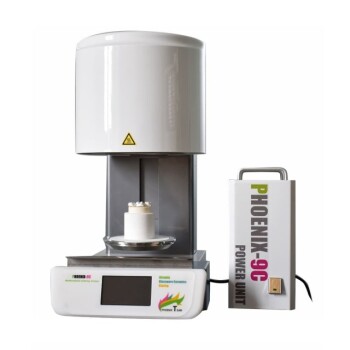
The sintering process is widely utilized in manufacturing to create robust components from materials that are difficult to shape through traditional melting. Its primary uses are found in the production of steel, the creation of complex alloy shapes, and the fabrication of ceramic and glass products, particularly when working with materials that possess exceptionally high melting points.
Core Takeaway Sintering is the process of fusing particles together using heat and pressure without liquefying the material. This technique is essential for processing metals with high melting points and creating parts with specific internal structures, such as porous filters or dense structural components.
Core Manufacturing Applications
The most common use of sintering is found in heavy industry and metallurgy. By avoiding the liquid phase of metal, manufacturers can achieve results that casting cannot duplicate.
Steel and Alloy Production
Sintering is fundamentally useful in the manufacturing of steel. It allows for the creation of structural steel parts where precise composition is required.
Processing High-Melting-Point Metals
This process is critical for metals like tungsten which have extremely high melting points. Reaching the liquid state for these metals requires immense energy; sintering allows them to be formed at lower, more manageable temperatures.
Ceramics and Glass
Beyond metals, sintering is a traditional and essential method for manufacturing ceramic objects and glass. It transforms powdery substances into dense, solid bodies through atomic diffusion.
Specialized Engineering Uses
Because sintering offers high control over material properties, it is used to create high-tech components with specific performance requirements.
Complex Geometries and 3D Printing
Sintering is utilized in modern 3D printing technologies to build bespoke metal forms layer by layer. This allows for the production of complex shapes that would be impossible or too costly to create using molds.
Porous Materials and Filtration
Engineers use sintering to bind metal particles while intentionally leaving gaps between them. This creates porous metals used for filtering applications or self-lubricating bearings, where the pores store oil.
Electrical and Electronic Components
The process is vital for creating electrical contacts, semiconductors, and optical fibers. It is also used to manufacture tungsten wiring for lighting filaments and magnetic materials.
Medical and Dental Tools
The precision of sintering allows for the production of small, intricate dental and medical products. These tools often require the high strength and specific alloys that sintering facilitates.
Understanding the Trade-offs
While sintering offers versatility, it introduces specific structural characteristics that must be managed.
Microscopic Gaps
While sintering generally reduces surface porosity to improve material quality, it may not achieve the absolute density of melted metal. In applications like 3D printing, the process can result in microscopic gaps that may affect the final consistency of the part.
Control vs. Uniformity
Sintering provides greater control over the shape and composition of a part compared to melting. However, achieving perfect uniformity requires rigorous management of the heat and pressure applied to the powder.
Making the Right Choice for Your Goal
The decision to use sintering depends on the material constraints and the functional requirements of the final part.
- If your primary focus is working with Tungsten or Molybdenum: Choose sintering to avoid the prohibitive energy costs and technical difficulty of melting these high-temperature metals.
- If your primary focus is filtration or lubrication: Use sintering to create controlled porosity, allowing fluids to pass through or remain stored within the material structure.
- If your primary focus is complex, custom geometry: Leverage sintering-based 3D printing to create intricate shapes without the need for expensive molds.
Sintering is the optimal manufacturing solution when you need to combine the strength of metal with geometries or material properties that liquid casting cannot achieve.
Summary Table:
| Application Category | Primary Uses & Components | Key Material Benefit |
|---|---|---|
| Metallurgy & Steel | Structural steel parts, complex alloys | Precise composition control |
| High-Melting Metals | Tungsten, Molybdenum components | Formable below melting point |
| Specialized Engineering | Porous filters, self-lubricating bearings | Controlled internal porosity |
| Advanced Electronics | Semiconductors, optical fibers, contacts | High electrical/thermal integrity |
| Modern Tech | 3D printed metal forms, dental tools | Complex geometries without molds |
Elevate your manufacturing precision with KINTEK’s world-class laboratory and industrial solutions. Whether you are developing high-strength alloys or complex ceramic structures, our comprehensive range of high-temperature furnaces (muffle, vacuum, tube, and atmosphere) and hydraulic presses are engineered to deliver the exact heat and pressure your sintering process demands. From crushing and milling systems for powder preparation to specialized PTFE and ceramic consumables, KINTEK provides the tools researchers and engineers need to achieve superior material density and performance. Contact us today to optimize your sintering workflow!
Related Products
- Vacuum Heat Treat and Sintering Furnace with 9MPa Air Pressure
- Spark Plasma Sintering Furnace SPS Furnace
- Vacuum Heat Treat and Molybdenum Wire Sintering Furnace for Vacuum Sintering
- Small Vacuum Heat Treat and Tungsten Wire Sintering Furnace
- Dental Porcelain Zirconia Sintering Ceramic Vacuum Press Furnace
People Also Ask
- What is the process of pressure sintering? Achieve Superior Density and Strength for High-Performance Parts
- What is the effect of pressure during sintering? Achieve Higher Density and Finer Microstructures Faster
- Why must green bodies produced via binder jetting undergo treatment in a vacuum sintering furnace?
- What is a vacuum sintering furnace? Unlock Purity and Performance in Advanced Materials
- How does the vacuum environment impact sintering of diamond-copper composites? Protect Against Thermal Damage