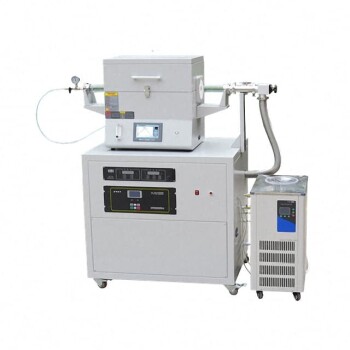
A high-temperature experimental furnace provides a precisely controlled thermodynamic environment characterized by extreme heat, typically reaching 1050°C, and a reducing atmosphere, such as hydrogen (H2). These specific conditions are required to drive the chemical reactions and atomic diffusion necessary for successful low-activity Chemical Vapor Deposition (CVD).
The furnace's primary role is to sustain the thermal energy required to trigger the outward diffusion of nickel atoms from the substrate. This process results in the formation of a dense, ductile, single-phase beta-NiAl intermetallic compound coating.
The Role of Thermal Energy
Achieving the Critical Temperature
To facilitate low-activity aluminization, the furnace must maintain a specific high-temperature threshold.
The target temperature is frequently set at 1050°C.
Driving Atomic Mobility
This sustained high heat is not merely for melting or bonding; it is the engine for atomic movement.
The thermal energy promotes the outward diffusion of nickel atoms from the substrate material.
Reaction with the Aluminum Source
As nickel atoms migrate outward due to the heat, they react with the aluminum source introduced during the CVD process.
This reaction is the fundamental mechanism that creates the protective coating.
The Importance of the Atmosphere
Creating a Reducing Environment
Beyond temperature, the furnace controls the chemical atmosphere surrounding the substrate.
It typically utilizes a reducing atmosphere, most often composed of hydrogen (H2).
Ensuring Process Purity
A controlled thermodynamic environment is essential for the stability of the CVD process.
The reducing atmosphere helps prevent unwanted oxidation or contamination that could compromise the integrity of the coating.
Resulting Material Properties
Formation of Beta-NiAl
The combination of 1050°C heat and outward nickel diffusion yields a specific intermetallic structure.
The process results in a single-phase beta-NiAl compound.
Physical Characteristics
The coating produced under these specific furnace conditions exhibits distinct physical properties.
The resulting layer is both dense and ductile, offering robust protection for the underlying component.
Understanding the Operational Constraints
The Necessity of Precision
The term "precisely controlled" is critical; the furnace cannot simply be "hot."
Deviations from the target thermodynamic environment can disrupt the diffusion rates of nickel.
Dependency on Diffusion Direction
This process relies specifically on the outward diffusion of nickel, rather than the inward diffusion of aluminum often seen in other processes.
Failure to maintain the correct temperature profile may result in a coating that lacks the desired phase composition or ductility.
Optimizing Your Aluminization Strategy
If your primary focus is Coating Ductility:
Ensure the furnace maintains a steady 1050°C to guarantee the formation of the single-phase beta-NiAl structure, which is known for its ductility.
If your primary focus is Process Consistency:
Prioritize the stability of the reducing hydrogen atmosphere to maintain a pristine thermodynamic environment for the reaction.
By strictly controlling temperature and atmosphere, you transform raw thermal energy into a precise tool for metallurgical surface modification.
Summary Table:
| Environmental Factor | Requirement | Function in CVD Aluminization |
|---|---|---|
| Temperature | 1050°C (Stable) | Drives outward nickel diffusion & atomic mobility |
| Atmosphere | Reducing (H2) | Prevents oxidation & ensures thermodynamic stability |
| Energy Type | Thermal Energy | Triggers chemical reactions with the aluminum source |
| Material Result | Beta-NiAl Phase | Creates a dense, ductile, single-phase protective layer |
Elevate Your Surface Engineering with KINTEK Precision
Achieving the perfect beta-NiAl intermetallic coating requires more than just heat; it demands a flawlessly controlled thermodynamic environment. KINTEK specializes in advanced laboratory solutions, offering a comprehensive range of high-temperature furnaces (CVD, PECVD, vacuum, and atmosphere models) designed to maintain the rigorous 1050°C thresholds and reducing atmospheres essential for your research.
From high-pressure reactors to specialized ceramics and crucibles, our equipment ensures your metallurgical processes are consistent, dense, and ductile.
Ready to optimize your CVD aluminization strategy? Contact our technical experts today to find the perfect furnace or consumable for your lab's specific needs!
References
- M. Zielińska, Maciej Motyka. Influence of Chemical Composition of Nickel Based Superalloy on the Formation of Aluminide Coatings. DOI: 10.2478/v10172-011-0023-y
This article is also based on technical information from Kintek Solution Knowledge Base .
Related Products
- Customer Made Versatile CVD Tube Furnace Chemical Vapor Deposition Chamber System Equipment
- Multi Heating Zones CVD Tube Furnace Machine Chemical Vapor Deposition Chamber System Equipment
- Split Chamber CVD Tube Furnace with Vacuum Station Chemical Vapor Deposition System Equipment Machine
- Horizontal High Temperature Graphite Vacuum Graphitization Furnace
- Vertical High Temperature Graphite Vacuum Graphitization Furnace
People Also Ask
- What is a CVD tube furnace? A Complete Guide to Thin-Film Deposition
- What is the function of a high-temperature CVD tube furnace in 3D graphene foam prep? Master 3D Nanomaterial Growth
- What are the technical advantages of using a CVD tube furnace? Optimize Silicon-Carbon Battery Anodes
- How does a CVD tube furnace inhibit the sintering of silver supports? Boost Membrane Durability and Performance
- What is the function of a tube furnace in CVD SiC synthesis? Achieving Ultra-Pure Silicon Carbide Powders