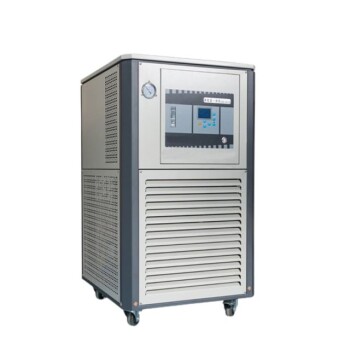
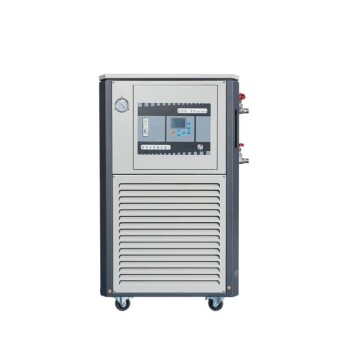
Stable thermodynamic control is the defining feature. A constant temperature reactor provides the precise thermal environment required for the liquid-phase reduction synthesis of Cu@Ni nanorods. By maintaining a uniform temperature field, the equipment enables the sequential formation of the nanostructure, ensuring the copper core reduces first followed by the in-situ cladding of the nickel shell.
The reactor’s primary function is to enforce "preferential reduction," where specific thermal conditions dictate the order of metal formation. This control is the sole determinant of the nanorod's radial consistency and structural integrity, which directly defines the magnetic loss capabilities of the final composite material.
The Mechanism of Core-Shell Formation
Establishing Thermodynamic Stability
The reactor creates a stable thermodynamic environment essential for liquid-phase reduction. Without this stability, the chemical kinetics becomes unpredictable. This consistency allows for the precise manipulation of reduction rates between two different metals.
Enabling Preferential Reduction
The central goal of the process is to reduce the copper (Cu) precursor before the nickel (Ni). The constant temperature reactor ensures the conditions favor the formation of the copper core first. This step establishes the template for the final nanostructure.
Facilitating In-Situ Cladding
Once the copper core is established, the reactor conditions support the growth of the nickel shell. This is known as in-situ cladding growth. The nickel creates a continuous layer around the copper, finalizing the "core-shell" architecture.
Impact on Physical and Functional Properties
Ensuring Radial Size Consistency
A stable temperature field is vital for controlling the geometry of the nanorods. It ensures that the rods grow to a consistent radial size (width). Variations in temperature would likely result in polydisperse (uneven) particle sizes.
Preserving Structural Integrity
The integrity of the Cu@Ni interface relies on the uninterrupted transition from core formation to shell growth. The reactor prevents the disruption of this delicate structure. A high-integrity structure prevents the exposure of the copper core to the external environment.
Defining Magnetic Performance
The physical structure of the nanorod dictates its electromagnetic properties. Specifically, the core-shell integrity impacts the magnetic loss performance. This is critical for the functionality of the final PVDF/CNT/graphene/Cu@Ni composite film.
Understanding Process Sensitivities
The Risk of Thermal Fluctuations
It is important to recognize that this process is highly sensitive to thermal drift. If the temperature fluctuates, the preferential reduction order may be lost. This can result in a random alloy mixture rather than a distinct core-shell structure.
Implications of Poor Cladding
If the reactor fails to maintain the correct thermodynamic conditions, the nickel shell may not fully encapsulate the core. Incomplete cladding exposes the copper, which alters the chemical stability of the nanorod. This degrades the intended performance of the composite film.
Optimizing Synthesis for Application Goals
To ensure the highest quality synthesis of Cu@Ni nanorods, consider the following alignment between process control and project goals:
- If your primary focus is Geometric Uniformity: Prioritize the stability of the temperature field to ensure high radial size consistency across the batch.
- If your primary focus is Electromagnetic Performance: Focus on the precision of the reduction sequence to guarantee the integrity of the nickel shell, which drives magnetic loss efficiency.
Mastering the thermal environment is the single most critical step in transitioning from raw chemical precursors to high-performance electromagnetic functional materials.
Summary Table:
| Process Condition | Role in Synthesis | Functional Impact |
|---|---|---|
| Thermodynamic Stability | Regulates liquid-phase reduction kinetics | Ensures predictable chemical reactions |
| Uniform Temperature Field | Facilitates preferential reduction (Cu then Ni) | Dictates core-shell structural integrity |
| In-situ Cladding Control | Manages nickel shell growth around copper core | Prevents alloy formation & oxidation |
| Thermal Precision | Maintains radial size consistency | Enhances magnetic loss & EM performance |
Elevate Your Nanomaterial Synthesis with KINTEK Precision
Achieving the perfect core-shell architecture requires uncompromising thermal control. KINTEK specializes in advanced laboratory equipment designed for rigorous research environments. Our comprehensive range of high-temperature high-pressure reactors and autoclaves, alongside precision cooling solutions and ultrasonic homogenizers, provides the stable thermodynamic environment essential for synthesizing high-performance Cu@Ni nanorods and other complex functional materials.
Why choose KINTEK?
- Precision Engineering: Ensure radial consistency and structural integrity in every batch.
- Comprehensive Solutions: From synthesis in our reactors to material processing with our crushing and milling systems.
- Expert Support: We provide the tools needed for battery research, electromagnetic composites, and advanced chemical synthesis.
Ready to optimize your lab’s output? Contact our specialists today to find the perfect reactor for your application!
References
- Ruosong Li, Rui Zhang. Enhancement of electromagnetic interference shielding from the synergism between Cu@Ni nanorods and carbon materials in flexible composite films. DOI: 10.1039/d0ma00751j
This article is also based on technical information from Kintek Solution Knowledge Base .
Related Products
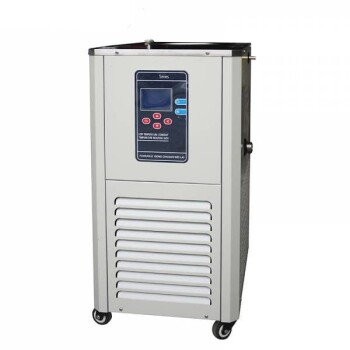
- 5L Chilling Circulator Cooling Water Bath Circulator for Low Temperature Constant Temperature Reaction Bath
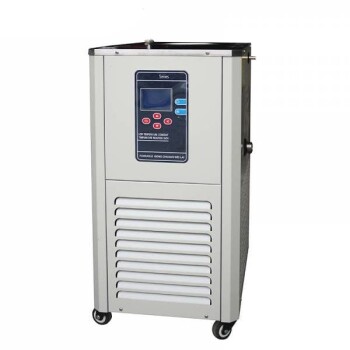
- 50L Chiller Water Bath Cooling Circulator Low Temperature Constant Temperature Reaction Bath
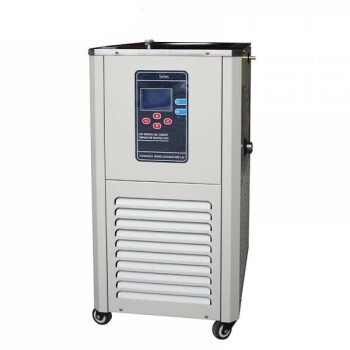
- 30L Chiller Water Bath Cooling Circulator Low Temperature Constant Temperature Reaction Bath
- 40L Chiller Water Bath Cooling Circulator Low Temperature Constant Temperature Reaction Bath
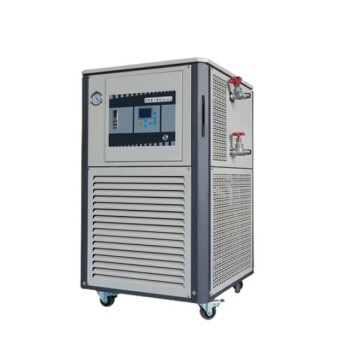
- 5L Heating Chilling Circulator Cooling Water Bath Circulator for High and Low Temperature Constant Temperature Reaction
People Also Ask
- What is the necessity of a circulating water bath in chlorate production? Optimize Yield & Purity with Precision
- Why is a circulating water chiller required for Prussian Blue nanoparticles? Ensure Stability & Batch Reproducibility
- What function does a circulating cooling chiller perform during the gas adsorption isotherm testing of nanoporous carbon?
- How does a constant temperature circulator support the leaching reaction of gold scrap? Optimize Gold Recovery Results
- How do constant temperature circulators impact weight-loss immersion tests? Ensure Precision in Corrosion Analysis