Knowledge What conditions and equipment are required for the diffusion bonding of layered materials? Achieve Superior Synthesis.
Author avatar

Tech Team · Kintek Solution

Updated 3 days ago

What conditions and equipment are required for the diffusion bonding of layered materials? Achieve Superior Synthesis.


Diffusion bonding for layered gradient materials mandates specific high-precision industrial equipment. You generally require industrial-grade hydraulic presses capable of exerting continuous, uniform axial pressure. This machinery must operate within a controlled vacuum or inert atmosphere while sustaining temperatures that approach the materials' melting points.

The success of diffusion bonding relies on creating an environment where atomic migration is physically possible. By combining high heat, axial pressure, and a contaminant-free atmosphere, you eliminate distinct boundaries between layers to create a seamless, high-performance gradient structure.

Equipment Requirements

The Necessity of Hydraulic Presses

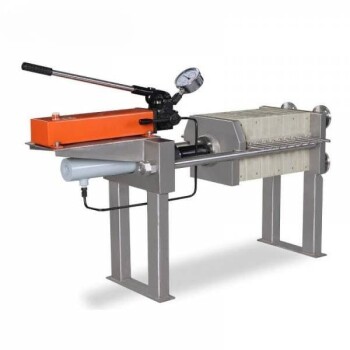
To achieve a successful bond, you must use industrial-grade hydraulic presses. The primary function of this equipment is to deliver continuous and uniform axial pressure across the material stack.

Ensuring Intimate Contact

The pressure generated by the press forces the surfaces of different material layers together. This mechanical force is critical for establishing intimate contact, ensuring there are no gaps between the layers that could impede the bonding process.

Critical Environmental Conditions

Atmosphere Control

The process cannot occur in standard ambient air. It must take place within a vacuum or an inert atmosphere. This controlled environment protects the materials from oxidation and contamination, which is essential for high-quality interfacial bonding.

Thermal Management

Temperature control is as vital as pressure. The environment must sustain temperatures that approach the melting point of the materials involved.

Promoting Atomic Inter-diffusion

High temperatures combined with the specific atmosphere facilitate atomic inter-diffusion. This mechanism allows atoms to migrate across the interface, physically merging the layers.

The Result: Structure and Performance

Elimination of Boundaries

When the correct pressure and temperature are applied in the right atmosphere, macroscopic boundaries between the layers are eliminated. The distinct layers effectively dissolve into one another at the interface.

Superior Mechanical Properties

The result of this process is a layered gradient structure. Because the bond is formed at the atomic level, the final material exhibits superior mechanical properties compared to traditionally joined laminates.

Understanding the Trade-offs

Process Precision vs. Throughput

Diffusion bonding is a sensitive process. While it produces high-strength bonds, it requires maintaining continuous pressure for extended periods. This often makes it slower than other joining methods.

Thermal Sensitivity

Operating at temperatures approaching the melting point carries risk. If the temperature is too low, diffusion will not occur; if it is too high, you risk melting the material and destroying the intended gradient structure. Precise thermal regulation is non-negotiable.

Optimizing Your Diffusion Bonding Strategy

To ensure you achieve the desired material properties, align your equipment settings with your specific goals:

  • If your primary focus is Interface Integrity: Ensure your hydraulic press is calibrated to deliver absolutely uniform axial pressure to prevent voids.
  • If your primary focus is Material Purity: Prioritize a high-vacuum environment to eliminate any potential contaminants that could weaken the atomic bond.

Success in diffusion bonding is defined by the rigorous control of heat and pressure to force distinct materials to act as one.

Summary Table:

Requirement Specific Detail Core Purpose
Equipment Industrial Hydraulic Press Delivers continuous, uniform axial pressure
Atmosphere Vacuum or Inert Gas Prevents oxidation and material contamination
Temperature Near Melting Point Facilitates atomic migration and inter-diffusion
Pressure Uniform Axial Force Ensures intimate contact and eliminates boundaries

Elevate Your Material Research with KINTEK Precision

To achieve flawless diffusion bonding in layered gradient materials, you need equipment that guarantees absolute precision. KINTEK specializes in advanced laboratory solutions designed for high-stakes material science. We offer a comprehensive range of industrial hydraulic presses (pellet, hot, and isostatic) and high-temperature furnaces (vacuum, atmosphere, and muffle) that provide the exact environmental control your process demands.

Our portfolio also features high-temperature high-pressure reactors, ceramic consumables, and cooling solutions to support your entire workflow from synthesis to analysis.

Ready to enhance your lab's performance? Contact our technical experts today to find the perfect equipment for your diffusion bonding needs.

References

  1. Islam M. El-Galy, Mahmoud H. Ahmed. Functionally graded materials classifications and development trends from industrial point of view. DOI: 10.1007/s42452-019-1413-4

This article is also based on technical information from Kintek Solution Knowledge Base .

Related Products

People Also Ask

Related Products

Vacuum Hot Press Furnace Machine Heated Vacuum Press

Vacuum Hot Press Furnace Machine Heated Vacuum Press

Discover the advantages of Vacuum Hot Press Furnace! Manufacture dense refractory metals & compounds, ceramics, and composites under high temp and pressure.

Vacuum Hot Press Furnace Heated Vacuum Press Machine Tube Furnace

Vacuum Hot Press Furnace Heated Vacuum Press Machine Tube Furnace

Reduce forming pressure & shorten sintering time with Vacuum Tube Hot Press Furnace for high-density, fine-grain materials. Ideal for refractory metals.

600T Vacuum Induction Hot Press Furnace for Heat Treat and Sintering

600T Vacuum Induction Hot Press Furnace for Heat Treat and Sintering

Discover the 600T Vacuum Induction Hot Press Furnace, designed for high-temperature sintering experiments in vacuum or protected atmospheres. Its precise temperature and pressure control, adjustable working pressure, and advanced safety features make it ideal for nonmetal materials, carbon composites, ceramics, and metal powders.

High Pressure Laboratory Vacuum Tube Furnace Quartz Tubular Furnace

High Pressure Laboratory Vacuum Tube Furnace Quartz Tubular Furnace

KT-PTF High Pressure Tube Furnace: Compact split tube furnace with strong positive pressure resistance. Working temp up to 1100°C and pressure up to 15Mpa. Also works under controller atmosphere or high vacuum.

Vacuum Heat Treat Furnace with Ceramic Fiber Liner

Vacuum Heat Treat Furnace with Ceramic Fiber Liner

Vacuum furnace with polycrystalline ceramic fiber insulation liner for excellent heat insulation and uniform temperature field. Choose from 1200℃ or 1700℃ max. working temperature with high vacuum performance and precise temperature control.

Vacuum Heat Treat and Sintering Furnace with 9MPa Air Pressure

Vacuum Heat Treat and Sintering Furnace with 9MPa Air Pressure

The air pressure sintering furnace is a high-tech equipment commonly used for the sintering of advanced ceramic materials. It combines vacuum sintering and pressure sintering techniques to achieve high-density and high-strength ceramics.

Molybdenum Vacuum Heat Treat Furnace

Molybdenum Vacuum Heat Treat Furnace

Discover the benefits of a high-configuration molybdenum vacuum furnace with heat shield insulation. Ideal for high-purity, vacuum environments like sapphire crystal growth and heat treatment.

Vacuum Heat Treat and Molybdenum Wire Sintering Furnace for Vacuum Sintering

Vacuum Heat Treat and Molybdenum Wire Sintering Furnace for Vacuum Sintering

A vacuum molybdenum wire sintering furnace is a vertical or bedroom structure, which is suitable for withdrawal, brazing, sintering and degassing of metal materials under high vacuum and high temperature conditions. It is also suitable for dehydroxylation treatment of quartz materials.

2200 ℃ Tungsten Vacuum Heat Treat and Sintering Furnace

2200 ℃ Tungsten Vacuum Heat Treat and Sintering Furnace

Experience the ultimate refractory metal furnace with our Tungsten vacuum furnace. Capable of reaching 2200℃, perfect for sintering advanced ceramics and refractory metals. Order now for high-quality results.

Vacuum Heat Treat Sintering Brazing Furnace

Vacuum Heat Treat Sintering Brazing Furnace

A vacuum brazing furnace is a type of industrial furnace used for brazing, a metalworking process that joins two pieces of metal using a filler metal that melts at a lower temperature than the base metals. Vacuum brazing furnaces are typically used for high-quality applications where a strong, clean joint is required.

2200 ℃ Graphite Vacuum Heat Treat Furnace

2200 ℃ Graphite Vacuum Heat Treat Furnace

Discover the power of the KT-VG Graphite Vacuum Furnace - with a maximum working temperature of 2200℃, it's perfect for vacuum sintering of various materials. Learn more now.

Graphite Vacuum Furnace High Thermal Conductivity Film Graphitization Furnace

Graphite Vacuum Furnace High Thermal Conductivity Film Graphitization Furnace

The high thermal conductivity film graphitization furnace has uniform temperature, low energy consumption and can operate continuously.

Laboratory Rapid Thermal Processing (RTP) Quartz Tube Furnace

Laboratory Rapid Thermal Processing (RTP) Quartz Tube Furnace

Get lightning-fast heating with our RTP Rapid Heating Tube Furnace. Designed for precise, high-speed heating and cooling with convenient sliding rail and TFT touch screen controller. Order now for ideal thermal processing!

1800℃ Muffle Oven Furnace for Laboratory

1800℃ Muffle Oven Furnace for Laboratory

KT-18 muffle furnace with Japan Al2O3 polycrystalline fibe and Silicon Molybdenum heating element, up to 1900℃, PID temperature control and 7" smart touch screen. Compact design, low heat loss, and high energy efficiency. Safety interlock system and versatile functions.

Laboratory Vacuum Tilt Rotary Tube Furnace Rotating Tube Furnace

Laboratory Vacuum Tilt Rotary Tube Furnace Rotating Tube Furnace

Discover the versatility of Laboratory Rotary Furnace: Ideal for calcination, drying, sintering, and high-temperature reactions. Adjustable rotating and tilting functions for optimal heating. Suitable for vacuum and controlled atmosphere environments. Learn more now!

1700℃ Muffle Oven Furnace for Laboratory

1700℃ Muffle Oven Furnace for Laboratory

Get superior heat control with our 1700℃ Muffle Furnace. Equipped with intelligent temperature microprocessor, TFT touch screen controller & advanced insulation materials for precise heating up to 1700C. Order now!

Horizontal High Temperature Graphite Vacuum Graphitization Furnace

Horizontal High Temperature Graphite Vacuum Graphitization Furnace

Horizontal Graphitization Furnace: This type of furnace is designed with the heating elements placed horizontally, allowing for uniform heating of the sample. It's well-suited for graphitizing large or bulky samples that require precise temperature control and uniformity.

1400℃ Muffle Oven Furnace for Laboratory

1400℃ Muffle Oven Furnace for Laboratory

Get precise high-temperature control up to 1500℃ with KT-14M Muffle furnace. Equipped with a smart touch screen controller and advanced insulation materials.

Vacuum Dental Porcelain Sintering Furnace

Vacuum Dental Porcelain Sintering Furnace

Get precise and reliable results with KinTek's Vacuum Porcelain Furnace. Suitable for all porcelain powders, it features hyperbolic ceramic furnace function, voice prompt, and automatic temperature calibration.

1700℃ Laboratory High Temperature Tube Furnace with Alumina Tube

1700℃ Laboratory High Temperature Tube Furnace with Alumina Tube

Looking for a high-temperature tube furnace? Check out our 1700℃ Tube Furnace with Alumina Tube. Perfect for research and industrial applications up to 1700C.


Leave Your Message