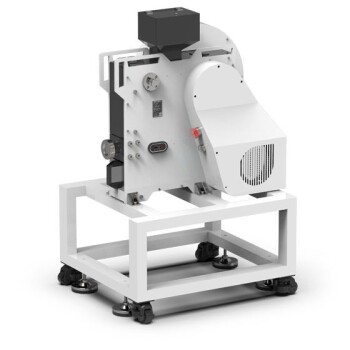
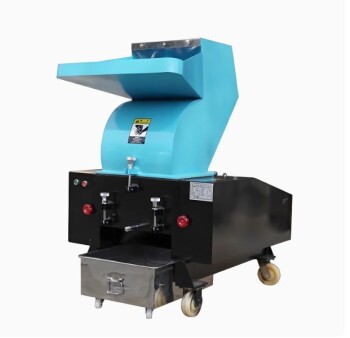
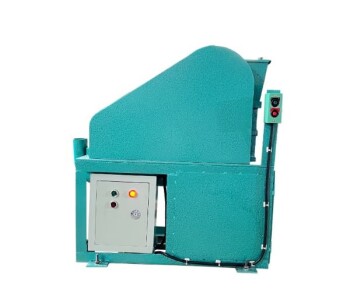
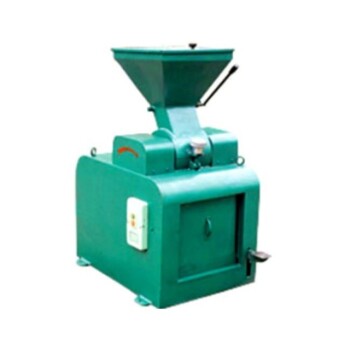
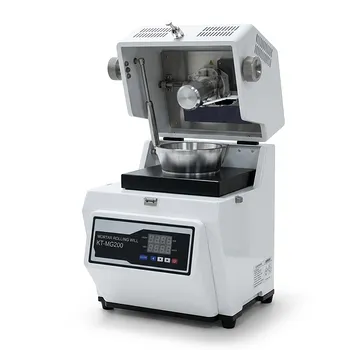
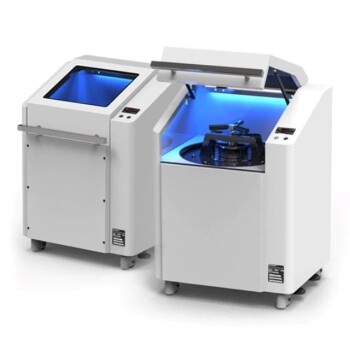
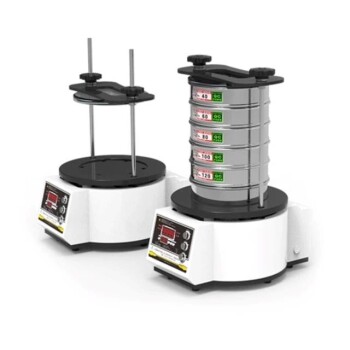
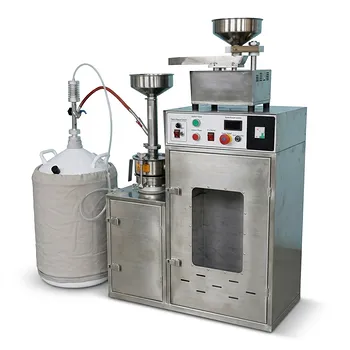
Crushing and sieving systems are the fundamental tools for establishing experimental control. Their primary function is to produce oxide powders with an extremely narrow grain size distribution, thereby precisely regulating the particle's surface area-to-volume ratio. By standardizing these initial physical conditions, these systems ensure that the macro-scale kinetic data derived from laboratory experiments is directly comparable to micro-scale computational models, such as ab initio metadynamics calculations.
Core Takeaway: Reliable kinetic modeling requires minimizing variables that affect reaction rates. Crushing and sieving eliminate geometric inconsistency, ensuring that experimental dissolution behavior reflects intrinsic material properties rather than random variations in particle size.
The Role of Standardization in Kinetics
Achieving Narrow Grain Size Distribution
The validity of a dissolution model depends on the uniformity of the sample. Crushing and sieving systems mechanically process bulk material to isolate a specific fraction of particles.
This process eliminates outliers—both overly large chunks and fine dust—resulting in a homogeneous powder. Without this step, dissolution rates would vary wildly across the sample, making accurate data collection impossible.
Controlling Surface Area-to-Volume Ratio
Dissolution is a surface-controlled reaction. The speed at which an oxide dissolves is directly proportional to the surface area exposed to the solvent relative to the particle's volume.
By strictly controlling the particle size, researchers fix the surface area-to-volume ratio. This transforms a variable geometric parameter into a known constant, simplifying the mathematical modeling of the reaction.
Bridging Experiment and Simulation
Creating Comparable Initial Conditions
Computational models often assume ideal conditions. To test these models against reality, the physical experiment must mirror those assumptions as closely as possible.
Sieving systems act as a standardization filter. They ensure that the starting material in the beaker matches the theoretical starting material in the algorithm.
Validating Micro-Scale Models
Advanced simulations, such as ab initio metadynamics calculations, operate at the atomic or micro-scale. These models predict how individual atoms and bonds react during dissolution.
If the experimental oxide powder is irregular, macro-scale noise will drown out micro-scale signals. Uniform powders allow researchers to attribute observed reaction rates to chemical kinetics rather than physical inconsistencies.
Understanding the Trade-offs
Material Loss and Efficiency
Achieving an "extremely narrow" distribution inherently requires discarding material. Particles that are too large (oversize) or too small (fines) must be separated out.
This ensures high-quality data but results in lower yield. Researchers must balance the need for strict uniformity against the availability of the raw oxide material.
Potential for Mechanochemical Alteration
While the goal is simply to change the size, aggressive crushing can inadvertently alter the material's properties. High-energy impact can introduce lattice strain or surface defects.
If not monitored, these mechanically induced defects can accelerate dissolution rates artificially, potentially skewing the comparison with theoretical models that assume a perfect crystal structure.
Making the Right Choice for Your Goal
To select the appropriate preparation protocol for your oxide powders, consider your end-goal:
- If your primary focus is Model Validation: Prioritize the narrowest possible sieve fraction to strictly align experimental geometry with the ideal assumptions of ab initio calculations.
- If your primary focus is Process Stability: Focus on maintaining a consistent specific surface area to ensure stable reaction characteristics, even if the absolute size range is slightly broader.
Ultimately, the precision of your preparation determines the reliability of your prediction.
Summary Table:
| Feature | Role in Dissolution Kinetic Modeling | Impact on Data Accuracy |
|---|---|---|
| Particle Size Control | Produces a narrow grain size distribution | Minimizes variables for reliable experimental data |
| Surface Area Scaling | Fixes the surface area-to-volume ratio | Simplifies mathematical modeling of reactions |
| Physical Standardization | Aligns physical samples with computational models | Enables validation of ab initio metadynamics |
| Geometry Consistency | Eliminates outliers (fines and oversize chunks) | Ensures macro-scale rates reflect intrinsic properties |
Elevate Your Material Research with KINTEK Precision
High-quality dissolution kinetic modeling starts with impeccable sample preparation. KINTEK specializes in advanced laboratory equipment designed to help researchers achieve the rigorous standardization required for ab initio validation.
Our comprehensive range of crushing and milling systems and high-precision sieving equipment ensures you maintain a narrow grain size distribution and a consistent surface area-to-volume ratio. Beyond sample prep, we support your entire workflow with high-temperature furnaces, hydraulic presses, and specialized reactors.
Ready to eliminate geometric variables and achieve superior experimental control?
Contact KINTEK today to find the perfect solution for your lab!
References
- Levi C. Felix, Boris I. Yakobson. Ab Initio Molecular Dynamics Insights into Stress Corrosion Cracking and Dissolution of Metal Oxides. DOI: 10.3390/ma18030538
This article is also based on technical information from Kintek Solution Knowledge Base .
Related Products
- Laboratory Test Sieves and Sieving Machines
- Laboratory Vibratory Sieve Shaker Machine for Dry and Wet Three-Dimensional Sieving
- Three-dimensional electromagnetic sieving instrument
- Laboratory Jaw Crusher
- Powerful Plastic Crusher Machine
People Also Ask
- What are laboratory test sieves used for? A Guide to Particle Size Analysis
- How do you calculate the sieve test? Master Particle Size Distribution for Quality Control
- How does a lab test sieve contribute to biomass charcoal powder preparation? Achieve Uniform Particle Size
- What are the specifications for test sieves? A Guide to ASTM & ISO Standards for Accurate Particle Analysis
- What materials are required for sieving? Achieve Accurate Particle Size Analysis