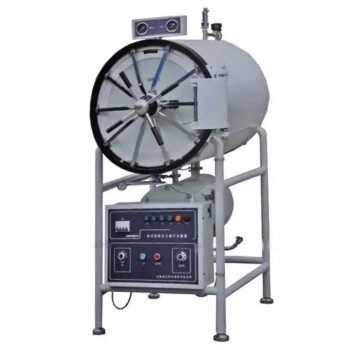
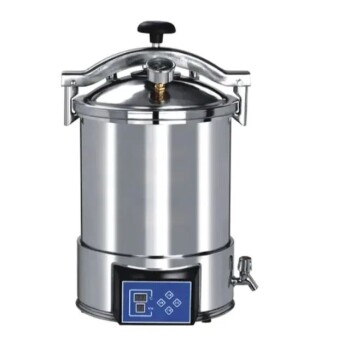
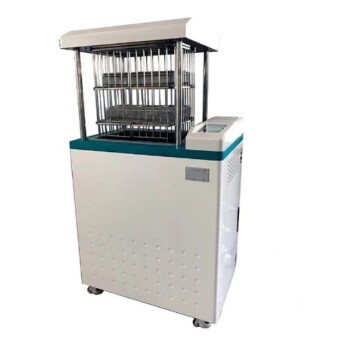
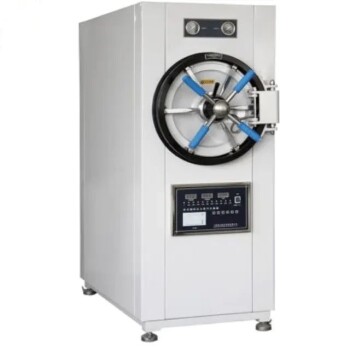
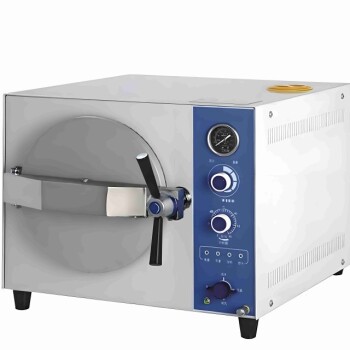
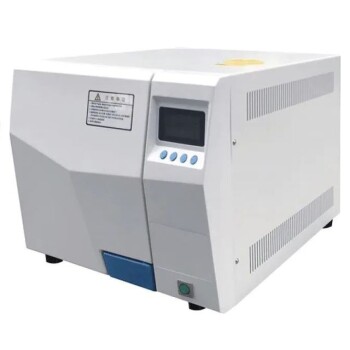
A high-pressure autoclave system functions as a precise environmental simulator. Its primary role during the measurement of primary water stress corrosion cracking growth rates (PWSCCGR) is to create a completely sealed ecosystem that replicates the specific high-temperature and high-pressure conditions found in a pressurized water reactor (PWR) primary circuit.
The autoclave does not merely heat the material; it bridges the gap between laboratory testing and operational reality by dynamically controlling water chemistry and thermodynamics to mirror the exact conditions under which TT 690 alloy degrades in actual nuclear reactors.
Simulating the Primary Circuit Environment
Creating Thermal and Pressure Consistency
The fundamental function of the autoclave is to establish and maintain a target temperature, specifically around 633 K.
Simultaneously, it maintains high pressure within a sealed vessel. This combination ensures that the water remains in a liquid state despite the high heat, exactly mimicking the physics of a PWR primary circuit.
Preventing Environmental Contamination
The system is designed to be completely sealed.
This isolation is critical for preventing external atmospheric variables from skewing the corrosion data, ensuring that any observed crack growth is solely the result of the interaction between the alloy and the simulated primary water.
Precise Chemical Control
Dynamic Chemical Regulation
Beyond temperature and pressure, the autoclave utilizes an integrated chemical monitoring system.
This subsystem is responsible for dynamically controlling the concentrations of critical chemical species, specifically boron (B) and lithium (Li).
Managing Dissolved Gases
The system also actively regulates the levels of dissolved hydrogen.
By controlling these chemical parameters, the autoclave replicates the specific corrosive environment that facilitates real-world damage processes, allowing researchers to study how the water chemistry accelerates cracking.
Understanding the Scope and Dependencies
Distinguishing Environment from Material State
It is crucial to understand that the autoclave controls the external environment, not the internal stress state of the material.
While the autoclave facilitates the growth measurement, the susceptibility of the TT 690 alloy is often established prior to testing.
For example, a separate hydraulic press process is often used to cold-roll the alloy (reducing it by 5-30%) to introduce high-density dislocations and vacancies.
The Limitation of Simulation
The autoclave cannot compensate for an improperly prepared sample.
If the alloy does not possess the requisite shear strains or grain boundary cavity foundations created during the pre-test cold rolling, the environmental simulation provided by the autoclave will not yield relevant stress corrosion cracking (SCC) sensitivity data.
Making the Right Choice for Your Goal
To ensure valid PWSCCGR measurements, you must align the machine's capabilities with your specific research objectives:
- If your primary focus is Environmental Fidelity: Ensure the autoclave's chemical monitoring system can dynamically adjust Boron and Lithium levels to match specific reactor cycle phases.
- If your primary focus is Material Susceptibility: Verify that your TT 690 alloy samples have undergone the correct multi-pass cold rolling via a hydraulic press before they ever enter the autoclave.
Ultimately, the high-pressure autoclave is the stage where the prepared material meets the harsh reality of the reactor environment.
Summary Table:
| Function Category | Specific Role in PWSCCGR Testing | Key Parameter/Value |
|---|---|---|
| Environmental Simulation | Replicates PWR primary circuit physics | Target Temp: ~633 K |
| Pressure Regulation | Maintains high pressure to keep water in liquid phase | High-Pressure Vessel |
| Chemical Control | Dynamic regulation of primary water chemistry | Boron (B) & Lithium (Li) |
| Gas Management | Actively regulates dissolved gases for corrosion | Dissolved Hydrogen |
| Isolation | Prevents atmospheric contamination for data integrity | Completely Sealed System |
Elevate Your Nuclear Material Research with KINTEK
Precise simulation is the cornerstone of accurate PWSCCGR measurements. KINTEK specializes in advanced laboratory solutions designed for the most demanding research environments. Our comprehensive portfolio includes:
- High-Temperature High-Pressure Autoclaves & Reactors: Engineered for flawless simulation of PWR primary circuit conditions with dynamic chemical monitoring.
- Precision Hydraulic Presses: Perfect for the multi-pass cold rolling of TT 690 alloy to achieve specific shear strains and material susceptibility before testing.
- High-Temperature Furnaces & Thermal Systems: Providing uniform heating for complex material treatments.
Whether you are studying alloy degradation or preparing high-density dislocation samples, KINTEK provides the reliability and technical expertise you need. Contact us today to discuss your testing requirements and discover how our equipment can enhance your lab's performance.
References
- Toshio Yonezawa, Atsushi Hashimoto. Effect of Cold Working and Long-Term Heating in Air on the Stress Corrosion Cracking Growth Rate in Commercial TT Alloy 690 Exposed to Simulated PWR Primary Water. DOI: 10.1007/s11661-021-06286-6
This article is also based on technical information from Kintek Solution Knowledge Base .
Related Products
- Mini SS High Pressure Autoclave Reactor for Laboratory Use
- High Pressure Laboratory Autoclave Reactor for Hydrothermal Synthesis
- Stainless High Pressure Autoclave Reactor Laboratory Pressure Reactor
- Desktop Fast High Pressure Laboratory Autoclave Sterilizer 16L 24L for Lab Use
- Portable High Pressure Laboratory Autoclave Steam Sterilizer for Lab Use
People Also Ask
- Why use high-pressure reactors for molecular sieve synthesis? Unlock Superior Crystallinity and Framework Control
- What is the function of a high-pressure reactor autoclave? Enhancing Cu/N Co-Doped Carbon Catalyst Synthesis
- What are the advantages of using a high-pressure reactor like an autoclave? Maximize Liquefaction Speed & Yield
- Why are high-pressure reactors or autoclaves necessary for the synthesis of new functional materials? Unlock Precision.
- How are high-pressure reactors used to prepare metaphosphate electrocatalysts? Master In-Situ Precursor Growth