Knowledge What grinder is used in lab? A Guide to Primary, Secondary & Tertiary Crushing Stages
Author avatar

Tech Team · Kintek Solution

Updated 6 days ago

What grinder is used in lab? A Guide to Primary, Secondary & Tertiary Crushing Stages


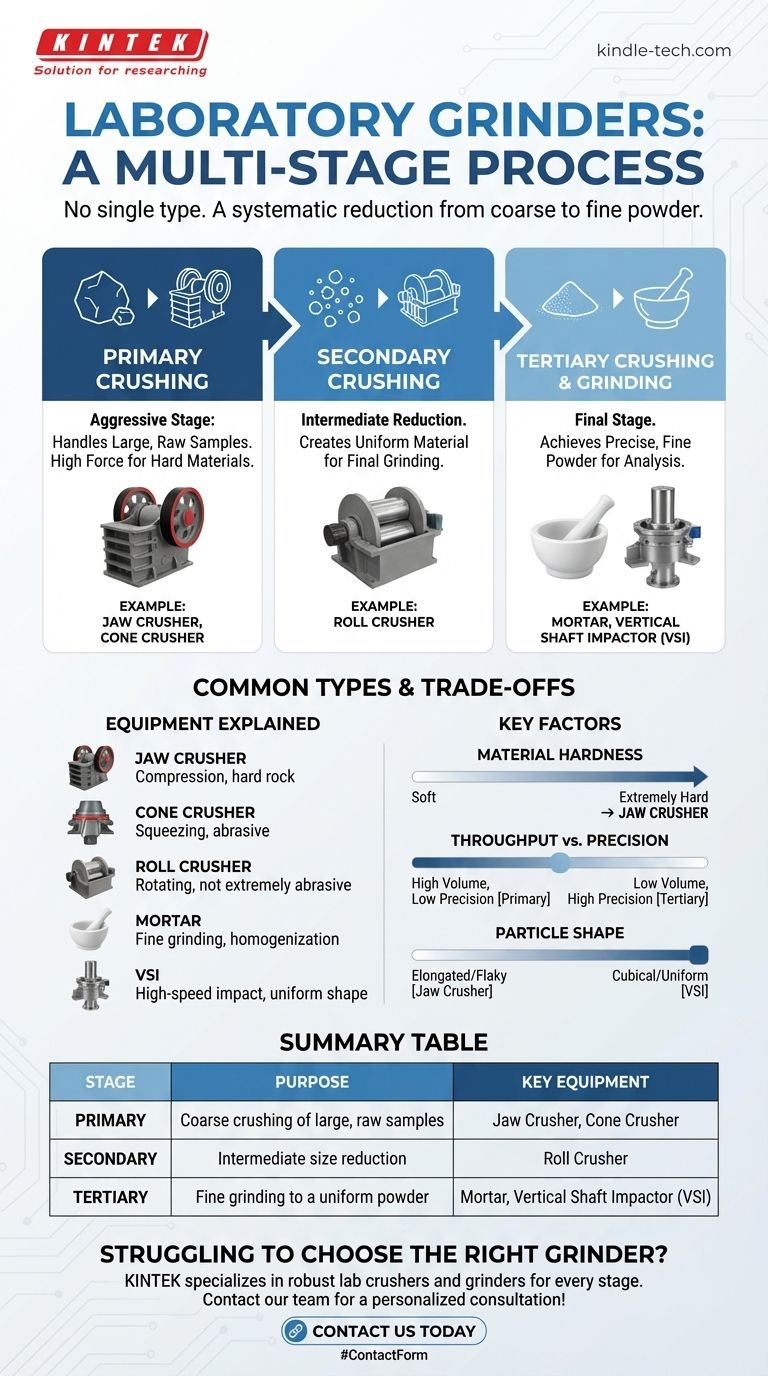
In a laboratory setting, there is no single type of grinder used. Instead, labs employ a range of crushers and grinders categorized into primary, secondary, and tertiary stages to systematically reduce material size. Specific examples include robust primary jaw crushers for large samples and fine mortars for producing powders.

The choice of a lab grinder is not about a single machine but about a multi-stage process. The right equipment depends entirely on whether you are performing initial coarse crushing (primary), intermediate reduction (secondary), or fine grinding (tertiary) to achieve the desired particle size.
What grinder is used in lab? A Guide to Primary, Secondary & Tertiary Crushing Stages

The Three Stages of Laboratory Size Reduction

Understanding the size reduction workflow is critical to selecting the correct equipment. The process is broken down into distinct stages, each requiring a different type of machine.

Primary Crushing: Handling the Raw Sample

This is the first and most aggressive stage. Its purpose is to take large, raw samples and break them down into a manageable size for the next step.

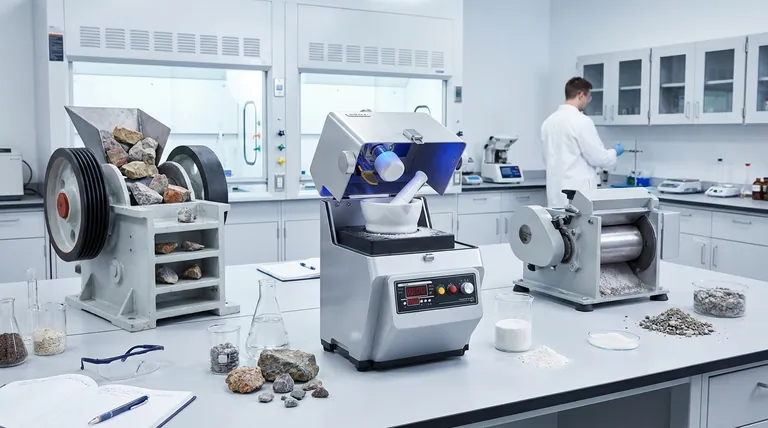
Machines used here, like jaw crushers, are designed for high force and can handle very hard materials directly from the field.

Secondary Crushing: Intermediate Size Reduction

Secondary crushers take the output from the primary stage and reduce it further. The goal is to create a more uniform material that is suitable for final grinding.

This stage bridges the gap between coarse chunks and fine particles. A roll crusher is a common example of equipment used for this intermediate step.

Tertiary Crushing & Grinding: Achieving Final Particle Size

This is the final stage, focused on producing a fine, well-graded powder with a narrow size distribution. The material is already relatively small before entering this stage.

Equipment like mortars or vertical shaft impactors are used here to achieve the precise particle size required for chemical analysis or further processing.

Common Types of Laboratory Crushers Explained

While the stages define the process, specific machines execute the work. Each is engineered for a particular type of material and reduction goal.

Jaw Crushers

These are powerful primary crushers that use two "jaws"—one fixed and one moving—to crush material through compression. They are the go-to choice for the initial breakdown of hard, brittle rock and ore.

Cone Crushers

Often used for primary or secondary crushing, a cone crusher breaks material by squeezing it between a moving cone and a stationary bowl. They are highly effective for hard and abrasive materials.

Roll Crushers

A roll crusher uses compression from two rotating cylinders to reduce material size. They are typically used in the secondary stage for materials that are not extremely abrasive.

Mortars

The classic laboratory mortar and pestle is a form of tertiary grinder. It is used for fine grinding and homogenization of small samples to create a consistent powder for analysis.

Vertical Shaft Impactors (VSI)

These machines are typically used in the tertiary stage. They work by throwing material at high speed against an impact plate, causing it to shatter along natural fracture lines, which produces a well-shaped, uniform product.

Understanding the Trade-offs

Selecting the right machine involves balancing several key factors. An incorrect choice can lead to inefficient processing or damaged equipment.

Material Hardness and Abrasiveness

The physical properties of your sample are the most critical factor. A jaw crusher is built to handle extremely hard rock, whereas a simpler crusher might fail or wear out quickly.

Throughput vs. Precision

There is a direct trade-off between volume and precision. Primary crushers can process large quantities of material quickly but offer little control over the final size. Tertiary grinders are much slower but provide exacting control over the particle distribution.

Final Particle Shape

Different machines produce different particle shapes. Impact crushers like a VSI tend to create more cubical particles, whereas compression crushers like a jaw crusher may produce more elongated, flaky particles. The required shape depends on the subsequent analysis or use.

Making the Right Choice for Your Goal

To select the correct equipment, you must first define your objective within the size-reduction workflow.

  • If your primary focus is preparing a large, raw sample for initial processing: You need a primary crusher designed for coarse material, such as a jaw or cone crusher.
  • If your primary focus is reducing an already crushed sample to a smaller, more manageable size: A secondary crusher, such as a roll crusher, is the appropriate choice for this intermediate step.
  • If your primary focus is creating a fine, uniform powder for analysis: You must use a tertiary grinder, like a laboratory mortar or a specialized impactor.

Ultimately, selecting the correct laboratory grinder is about matching the tool to the specific stage of your size-reduction workflow.

Summary Table:

Stage Purpose Key Equipment
Primary Coarse crushing of large, raw samples Jaw Crusher, Cone Crusher
Secondary Intermediate size reduction Roll Crusher
Tertiary Fine grinding to a uniform powder Mortar, Vertical Shaft Impactor (VSI)

Struggling to choose the right grinder for your lab workflow? KINTEK specializes in lab equipment and consumables, providing robust crushers and grinders for every stage of your size-reduction process—from primary jaw crushers for hard materials to fine mortars for precise analysis. Let our experts help you select the perfect equipment to improve efficiency and achieve your target particle size. Contact our team today for a personalized consultation!

Visual Guide
What grinder is used in lab? A Guide to Primary, Secondary & Tertiary Crushing Stages Visual Guide

Related Products

People Also Ask

Related Products

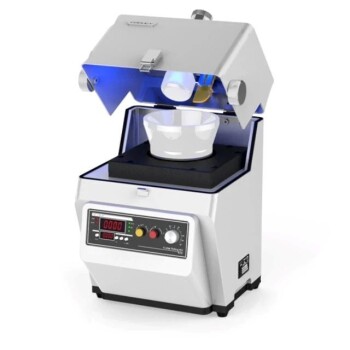
Laboratory Grinding Mill Mortar Grinder for Sample Preparation

Laboratory Grinding Mill Mortar Grinder for Sample Preparation

KT-MG200 mortar grinder can be used for mixing and homogenizing powder, suspension, paste and even viscous samples. It can help users realize the ideal operation of sample preparation with more regularization and higher repeatability.

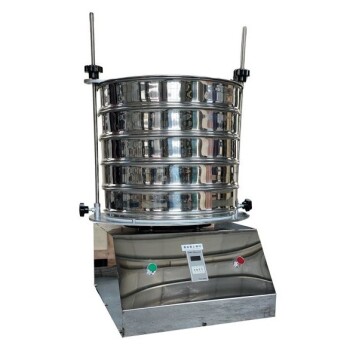
Laboratory Test Sieves and Sieving Machines

Laboratory Test Sieves and Sieving Machines

Precision lab test sieves & sieving machines for accurate particle analysis. Stainless steel, ISO-compliant, 20μm-125mm range. Request specs now!

High Energy Planetary Ball Mill Milling Machine for Laboratory

High Energy Planetary Ball Mill Milling Machine for Laboratory

The biggest feature is that the high energy planetary ball mill can not only perform fast and effective grinding, but also has good crushing ability

High-Energy Omnidirectional Planetary Ball Mill Milling Machine for Laboratory

High-Energy Omnidirectional Planetary Ball Mill Milling Machine for Laboratory

The KT-P4000E is a new product derived from the vertical high-energy planetary ball mill with a 360° swivel function. Experience faster, uniform, and smaller sample output results with 4 ≤1000ml ball mill jars.

High-Energy Omnidirectional Planetary Ball Mill Machine for Laboratory

High-Energy Omnidirectional Planetary Ball Mill Machine for Laboratory

The KT-P2000E is a new product derived from the vertical high-energy planetary ball mill with a 360°rotation function. The product not only has the characteristics of the vertical high-energy ball mill, but also has a unique 360°rotation function for the planetary body.

High Energy Planetary Ball Mill Milling Machine for Laboratory

High Energy Planetary Ball Mill Milling Machine for Laboratory

Experience fast and effective sample processing with the F-P2000 high-energy planetary ball mill. This versatile equipment offers precise control and excellent grinding capabilities. Perfect for laboratories, it features multiple grinding bowls for simultaneous testing and high output. Achieve optimal results with its ergonomic design, compact structure, and advanced features. Ideal for a wide range of materials, it ensures consistent particle size reduction and low maintenance.

Laboratory Horizontal Planetary Ball Mill Milling Machine

Laboratory Horizontal Planetary Ball Mill Milling Machine

Improve sample uniformity with our Horizontal Planetary Ball Mills. KT-P400H reduces sample deposition and KT-P400E has multi-directional capabilities. Safe, convenient and efficient with overload protection.

High Energy Planetary Ball Mill for Laboratory Horizontal Tank Type Milling Machine

High Energy Planetary Ball Mill for Laboratory Horizontal Tank Type Milling Machine

KT-P4000H uses the unique Y-axis planetary motion trajectory, and utilizes the collision, friction and gravity between the sample and the grinding ball to have a certain anti-sinking ability, which can obtain better grinding or mixing effects and further improve the sample output.

High Energy Vibratory Laboratory Ball Mill Grinding Mill Single Tank Type

High Energy Vibratory Laboratory Ball Mill Grinding Mill Single Tank Type

High-energy vibration ball mill is a small desktop laboratory grinding instrument.It can be ball-milled or mixed with different particle sizes and materials by dry and wet methods.

Anti-Cracking Press Mold for Lab Use

Anti-Cracking Press Mold for Lab Use

The anti-cracking press mold is a specialized equipment designed for molding various shapes and sizes of film using high pressure and electric heating.

Laboratory Sterilizer Lab Autoclave Vertical Pressure Steam Sterilizer for Liquid Crystal Display Automatic Type

Laboratory Sterilizer Lab Autoclave Vertical Pressure Steam Sterilizer for Liquid Crystal Display Automatic Type

Liquid crystal display automatic vertical sterilizer is a safe, reliable and automatic control sterilization equipment, which is composed of heating system, microcomputer control system and overheating and overvoltage protection system.

High Energy Vibratory Ball Mill for Lab Use

High Energy Vibratory Ball Mill for Lab Use

The high-energy vibrating ball mill is a high-energy oscillating and impacting multifunctional laboratory ball mill. The table-top type is easy to operate, small in size, comfortable and safe.

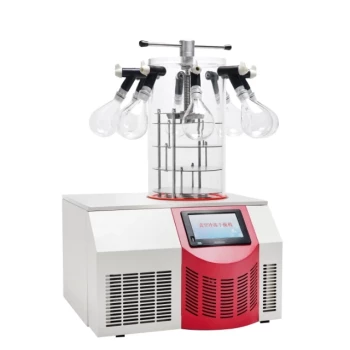
Benchtop Laboratory Freeze Dryer for Lab Use

Benchtop Laboratory Freeze Dryer for Lab Use

Premium benchtop laboratory freeze dryer for lyophilization, preserving samples with ≤ -60°C cooling. Ideal for pharmaceuticals & research.

Laboratory Sterilizer Lab Autoclave Pulse Vacuum Lifting Sterilizer

Laboratory Sterilizer Lab Autoclave Pulse Vacuum Lifting Sterilizer

The pulse vacuum lifting sterilizer is a state-of-the-art equipment for efficient and precise sterilization. It uses pulsating vacuum technology, customizable cycles, and a user-friendly design for easy operation and safety.

Benchtop Laboratory Vacuum Freeze Dryer

Benchtop Laboratory Vacuum Freeze Dryer

Benchtop laboratory freeze dryer for efficient lyophilization of biological, pharmaceutical, and food samples. Features intuitive touchscreen, high-performance refrigeration, and durable design. Preserve sample integrity—consult now!

HFCVD Machine System Equipment for Drawing Die Nano-Diamond Coating

HFCVD Machine System Equipment for Drawing Die Nano-Diamond Coating

The nano-diamond composite coating drawing die uses cemented carbide (WC-Co) as the substrate, and uses the chemical vapor phase method ( CVD method for short ) to coat the conventional diamond and nano-diamond composite coating on the surface of the inner hole of the mold.

Vacuum Hot Press Furnace Machine for Lamination and Heating

Vacuum Hot Press Furnace Machine for Lamination and Heating

Experience clean and precise lamination with Vacuum Lamination Press. Perfect for wafer bonding, thin-film transformations, and LCP lamination. Order now!

CVD Diamond Cutting Tool Blanks for Precision Machining

CVD Diamond Cutting Tool Blanks for Precision Machining

CVD Diamond Cutting Tools: Superior Wear Resistance, Low Friction, High Thermal Conductivity for Non-Ferrous Materials, Ceramics, Composites Machining

915MHz MPCVD Diamond Machine Microwave Plasma Chemical Vapor Deposition System Reactor

915MHz MPCVD Diamond Machine Microwave Plasma Chemical Vapor Deposition System Reactor

915MHz MPCVD Diamond Machine and its multi-crystal effective growth, the maximum area can reach 8 inches, the maximum effective growth area of single crystal can reach 5 inches. This equipment is mainly used for the production of large-size polycrystalline diamond films, the growth of long single crystal diamonds, the low-temperature growth of high-quality graphene, and other materials that require energy provided by microwave plasma for growth.

Laboratory Vibratory Sieve Shaker Machine Slap Vibrating Sieve

Laboratory Vibratory Sieve Shaker Machine Slap Vibrating Sieve

KT-T200TAP is a slapping and oscillating sieving instrument for laboratory desktop use, with 300 rpm horizontal circular motion and 300 vertical slapping motions to simulate manual sieving to help sample particles pass through better.


Leave Your Message