At its core, cold isostatic pressing (CIP) is used to consolidate powders into solid, high-integrity components. Common examples include creating high-performance ceramic parts like alumina spark plug shells and silicon nitride components, compressing graphite and refractories, and forming parts from hard-to-press metals like tungsten and tool steel. It is also used in specialized fields to create medical implants and dental ceramics.
The fundamental purpose of cold isostatic pressing is to apply extreme, uniform pressure to a powdered material from all directions. This creates a highly uniform, pre-sintered part (or "green body") with consistent density, which is critical for the performance and reliability of advanced materials.
Why CIP is a Critical Manufacturing Process
Cold isostatic pressing solves a fundamental problem in powder metallurgy and ceramics: achieving uniform density. When pressure is only applied from one or two directions (uniaxial pressing), it can create density variations within the part, leading to weak spots, warping, or cracking during final processing.
The Basic Mechanism
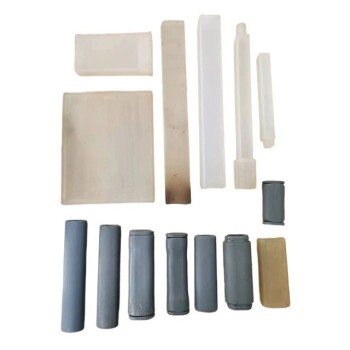
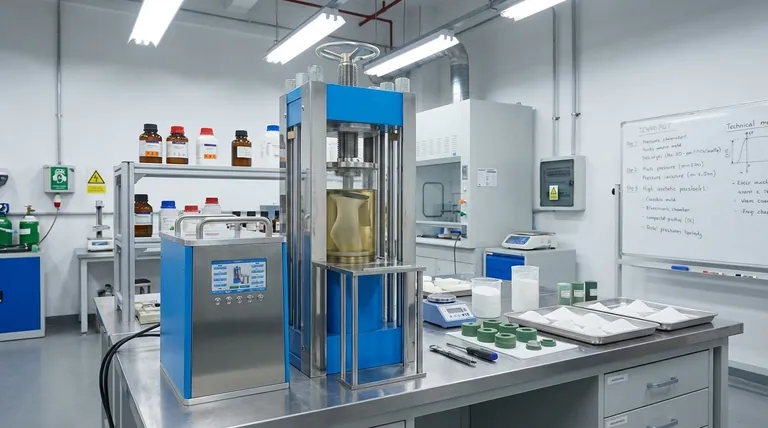
In CIP, the raw powder is encased in a flexible, elastomeric mold. This mold is then submerged in a chamber filled with a liquid, typically water. An external pump pressurizes this fluid to immense levels—anywhere from 20 to 400 MPa—exerting equal pressure on every surface of the mold, which compacts the powder inside uniformly.
Example: High-Performance Ceramics
CIP is a standard process for a wide range of advanced ceramics, including alumina (Al2O3), silicon nitride (Si3N4), and silicon carbide (SiC).
Applications like electrical insulators and spark plug shells depend on a complete lack of porosity to function. CIP ensures the initial powder form is uniformly dense, which is essential for creating a flawless final part after sintering (firing).
Example: Metals and Carbides
Certain materials, like tungsten, tool steel, and cemented carbides, are extremely hard and difficult to press using conventional methods.
CIP can effectively compact these powders into a variety of shapes. Often, a part is first formed using CIP to create a uniform "green" billet, which is then processed further using a high-temperature method like Hot Isostatic Pressing (HIP) to achieve its final properties.
Example: Isotropic Graphite and Carbon
For components that require consistent properties in all directions (isotropy), such as specialized graphite electrodes or blocks, CIP is the ideal method.
The all-sided, uniform pressure ensures the graphite particles are compacted without creating a preferential grain direction, resulting in predictable thermal and electrical performance regardless of orientation.
Example: Medical and Niche Applications
The uniformity and purity of the CIP process make it suitable for highly sensitive applications.
This includes forming dental ceramics and components for artificial bones or implants, where material integrity and biocompatibility are non-negotiable. The process is even used in specialized food processing applications.
Understanding the Trade-offs: Wet Bag vs. Dry Bag
While the principle of uniform pressure is the same, the application of CIP is divided into two primary methods, each with distinct advantages and use cases. This choice represents a key decision in manufacturing.
The Wet Bag Method
In wet bag pressing, the elastomeric mold containing the powder is manually placed into the pressure vessel and fully submerged in the fluid.
This method is highly versatile, making it ideal for producing a variety of shapes, prototypes, and small production runs. However, it is a more manual and slower process.
The Dry Bag Method
In dry bag pressing, the elastomeric mold is integrated directly into the pressure vessel itself. The powder is loaded into the mold, the vessel is sealed, and pressure is applied.
This approach is much faster and easily automated, making it the preferred choice for high-volume production of standardized parts, such as spark plug insulators.
Making the Right Choice for Your Goal
Selecting a manufacturing process depends entirely on the material and the desired outcome. CIP is chosen when uniformity and integrity are paramount.
- If your primary focus is high-performance ceramics: CIP is the standard for creating dense, defect-free pre-forms for insulators, refractories, and medical implants.
- If your primary focus is advanced metal components: Use CIP to form uniform billets from hard metal powders like tungsten or tool steel, often as a critical first step before final sintering or HIP.
- If your primary focus is achieving isotropic properties: CIP is the method of choice for materials like graphite where uniform characteristics in all directions are crucial for performance.
Ultimately, cold isostatic pressing is the definitive technique for transforming powdered materials into solid, reliable, high-performance components.
Summary Table:
| Material Category | Common CIP Examples | Key Application |
|---|---|---|
| Ceramics | Alumina, Silicon Nitride | Spark plug shells, electrical insulators |
| Metals & Carbides | Tungsten, Tool Steel | Billets for further processing |
| Graphite & Carbon | Isotropic Graphite | Electrodes, blocks with uniform properties |
| Medical & Dental | Dental Ceramics, Implants | Biocompatible components |
Ready to achieve uniform density and superior performance in your powder compaction process?
At KINTEK, we specialize in providing advanced lab equipment and consumables, including solutions for cold isostatic pressing. Whether you're working with high-performance ceramics, hard metals, or specialized graphite, our expertise ensures you get the right equipment for consistent, high-integrity results.
Contact us today to discuss how our solutions can enhance your laboratory's capabilities and streamline your manufacturing process.
#ContactForm to get started!
Visual Guide

Related Products
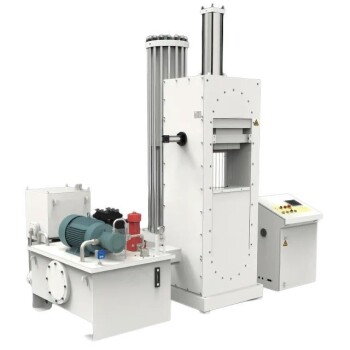
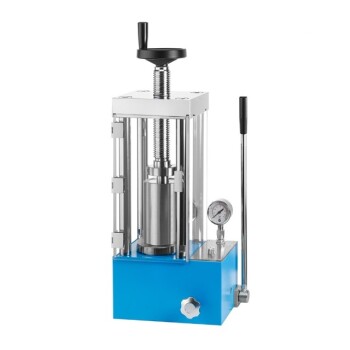
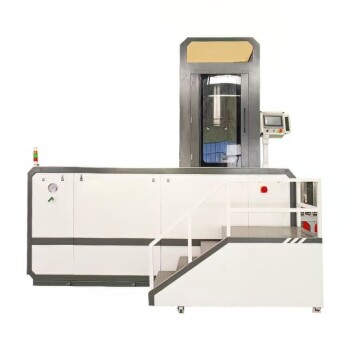
- Cold Isostatic Pressing Machine CIP for Small Workpiece Production 400Mpa
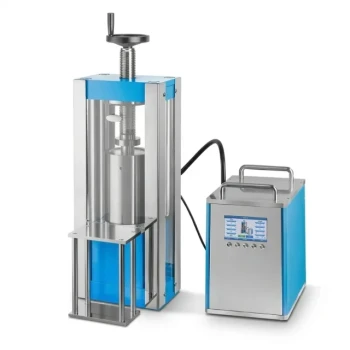
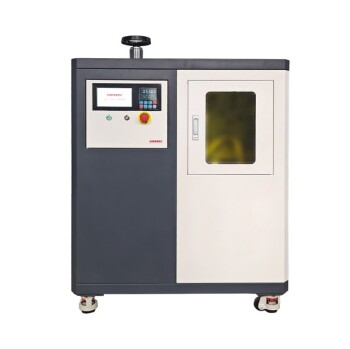
- Electric Split Lab Cold Isostatic Press CIP Machine for Cold Isostatic Pressing
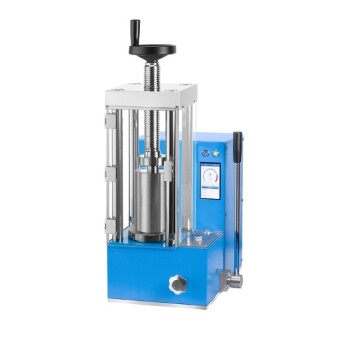
- Electric Lab Cold Isostatic Press CIP Machine for Cold Isostatic Pressing
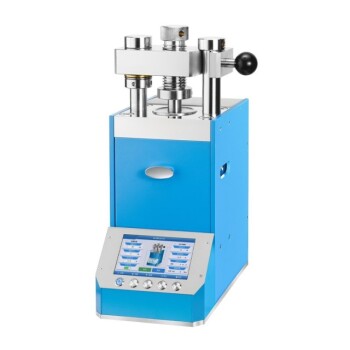
- Automatic Lab Cold Isostatic Press CIP Machine Cold Isostatic Pressing
- Manual Cold Isostatic Pressing Machine CIP Pellet Press
People Also Ask
- What are the advantages of using a Cold Isostatic Press for perovskite solar cells? Unlock High-Pressure Performance
- What is cold isostatic pressure? Achieve Uniform Density for Complex Powder Parts
- What advantages does a Cold Isostatic Press (CIP) offer for solid-state batteries? Superior Density & Uniformity
- What is the specific function of a cold isostatic press in the sintering process of LiFePO4? Maximize Battery Density
- What is the significance of using a cold isostatic press (CIP) to achieve pressureless sintering in LLZO? Enhance Density