Knowledge What is a porcelain crucible? Your Essential Guide to High-Temp Lab Work
Author avatar

Tech Team · Kintek Solution

Updated 1 week ago

What is a porcelain crucible? Your Essential Guide to High-Temp Lab Work


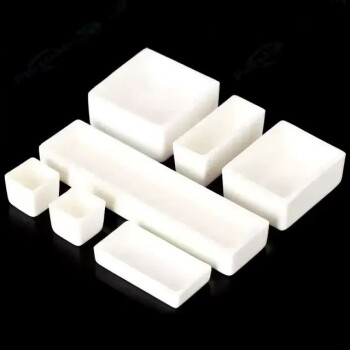
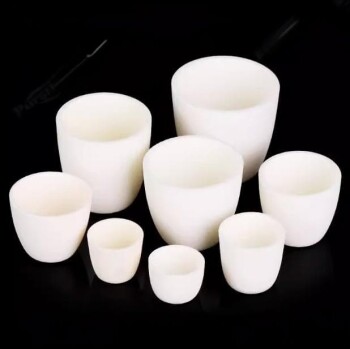
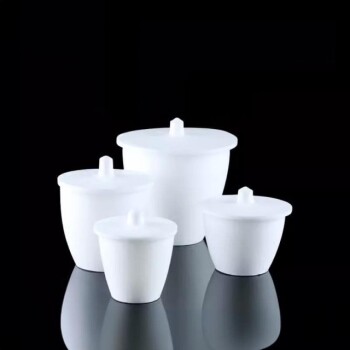
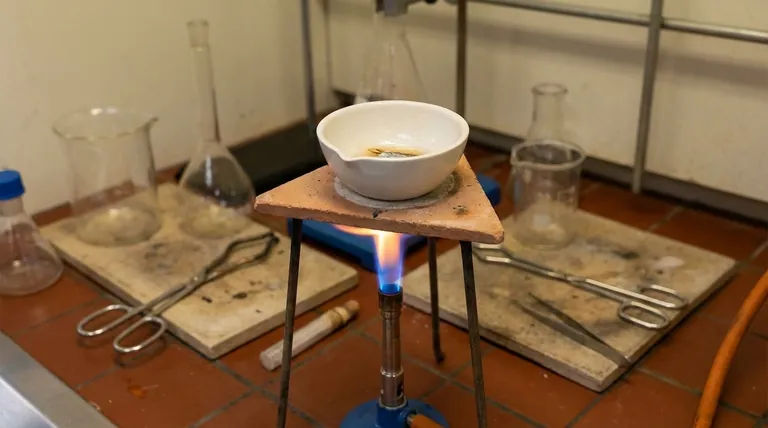
In essence, a porcelain crucible is a ceramic cup-like container designed to withstand extremely high temperatures for laboratory procedures. It is used for tasks like heating, melting, and burning chemical compounds and samples. Its primary material is porcelain, a specific type of ceramic known for its strength, thermal stability, and chemical resistance.

A porcelain crucible is the standard, general-purpose tool for high-temperature work in a lab. It offers an excellent balance of heat resistance and chemical inertness at a reasonable cost, but it is not indestructible and has specific thermal limits you must respect.
What is a porcelain crucible? Your Essential Guide to High-Temp Lab Work

What Defines a Porcelain Crucible?

A crucible is simply a container for high-temperature work. The material it's made from dictates its specific capabilities and limitations. Porcelain is a common and reliable choice for many applications.

Core Material and Composition

Porcelain is a type of vitrified (glass-like) ceramic. It is produced by firing a refined clay, typically kaolin, at very high temperatures. This process results in a material that is dense, non-porous, and exceptionally hard.

Most laboratory-grade porcelain crucibles are also glazed on the interior and exterior (except for the bottom surface) to increase their resistance to chemical attack and make them easier to clean.

Key Property: High-Temperature Resistance

The primary function of a porcelain crucible is to endure intense heat without melting, breaking, or reacting with its contents.

Porcelain can typically withstand temperatures up to approximately 1150°C (2100°F). While this is lower than specialized ceramics like alumina or zirconia, it is more than sufficient for many common laboratory tasks.

Key Property: Chemical Inertness

Porcelain is highly resistant to the corrosive action of most acids and other chemicals, even at high temperatures. This ensures that the crucible itself does not contaminate the sample being heated, which is critical for accurate analytical chemistry.

When to Use a Porcelain Crucible

Porcelain crucibles are a workhorse in chemistry labs, particularly for gravimetric analysis, where precise mass measurements before and after heating are required.

High-Temperature Heating and Ignition

The most common use is for the ashing of samples. This involves heating a substance, such as a filter paper or organic material, at a high temperature until it burns away completely, leaving only a non-combustible ash or residue for analysis.

Drying and Dehydration

Crucibles are used to heat chemical precipitates to drive off all moisture and obtain a constant, dry weight. The non-porous surface prevents absorption of water that could alter the final measurement.

Melting Low-Melting-Point Substances

While not suitable for high-temperature steel or exotic alloys, porcelain is effective for melting certain salts, glass powders, and non-ferrous metals with lower melting points.

Understanding the Trade-offs

Choosing a porcelain crucible means accepting a specific set of strengths and weaknesses. It is not always the best tool for every high-temperature job.

Compared to Metal Crucibles

Metal crucibles (made of nickel, iron, or platinum) can often handle thermal shock better. However, they are far more chemically reactive and can easily contaminate a sample, especially under acidic conditions. Porcelain is chosen when chemical purity is paramount.

Compared to Advanced Ceramics

Specialized ceramics like alumina, zirconia, and silicon carbide can withstand significantly higher temperatures (1700°C and above). However, these materials are substantially more expensive. Porcelain offers a cost-effective solution for the vast majority of sub-1200°C applications.

The Primary Weakness: Thermal Shock

The most significant limitation of porcelain is its susceptibility to thermal shock. Heating or cooling the crucible too rapidly will create internal stresses, causing it to crack or shatter. It must always be heated and cooled gradually to ensure its longevity.

Making the Right Choice for Your Application

Selecting the correct crucible material is critical for the success and safety of your work.

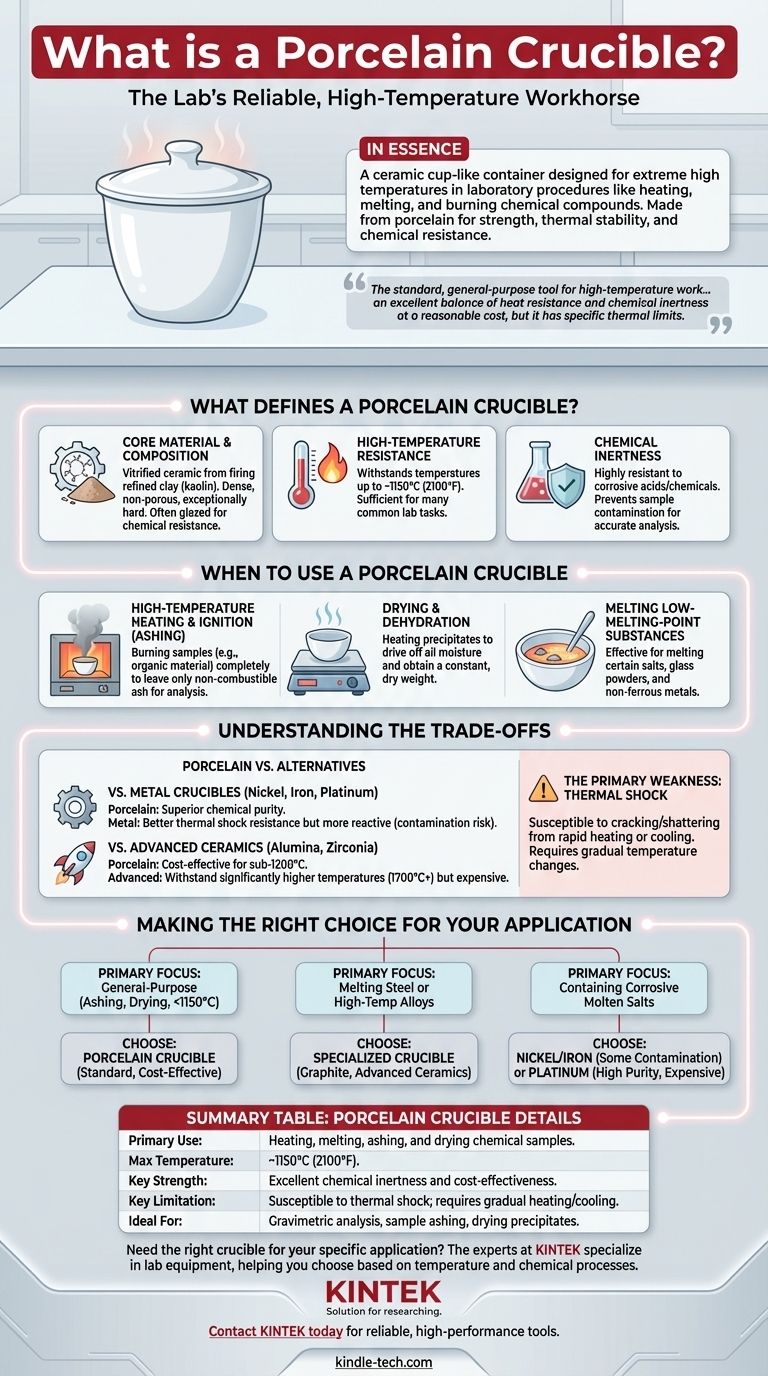
  • If your primary focus is general-purpose ashing, drying precipitates, or heating below 1150°C: A porcelain crucible is the standard, most cost-effective choice.
  • If your primary focus is melting steel or other high-temperature alloys: You must use a specialized crucible made of graphite, clay-graphite, or advanced ceramics.
  • If your primary focus is containing highly corrosive molten salts (alkaline fluxes): A nickel or iron crucible may be more suitable, though it will contaminate the sample. For analytical purity, an expensive platinum crucible is required.

Understanding the properties of your tools is the first step toward achieving reliable and accurate results in the lab.

Summary Table:

Property Porcelain Crucible Details
Primary Use Heating, melting, ashing, and drying chemical samples
Max Temperature ~1150°C (2100°F)
Key Strength Excellent chemical inertness and cost-effectiveness
Key Limitation Susceptible to thermal shock; requires gradual heating/cooling
Ideal For Gravimetric analysis, sample ashing, drying precipitates

Need the right crucible for your specific application?

Porcelain crucibles are a lab staple, but selecting the correct equipment is crucial for safety and accuracy. The experts at KINTEK specialize in lab equipment and consumables, serving all your laboratory needs. We can help you choose the perfect crucible—whether porcelain, advanced ceramic, or metal—based on your temperature requirements and chemical processes.

Contact KINTEK today to ensure your lab has the reliable, high-performance tools it needs for precise results.

Visual Guide
What is a porcelain crucible? Your Essential Guide to High-Temp Lab Work Visual Guide

Related Products

People Also Ask

Related Products

Alumina Al2O3 Ceramic Crucible Semicircle Boat with Lid for Engineering Advanced Fine Ceramics

Alumina Al2O3 Ceramic Crucible Semicircle Boat with Lid for Engineering Advanced Fine Ceramics

Crucibles are containers widely used for melting and processing various materials, and semicircular boat-shaped crucibles are suitable for special smelting and processing requirements. Their types and uses vary by material and shape.

Engineering Advanced Fine Alumina Al2O3 Ceramic Crucible for Laboratory Muffle Furnace

Engineering Advanced Fine Alumina Al2O3 Ceramic Crucible for Laboratory Muffle Furnace

Alumina ceramic crucibles are used in some materials and metal melting tools, and flat-bottomed crucibles are suitable for melting and processing larger batches of materials with better stability and uniformity.

Engineering Advanced Fine Ceramics Alumina Al2O3 Crucible With Lid Cylindrical Laboratory Crucible

Engineering Advanced Fine Ceramics Alumina Al2O3 Crucible With Lid Cylindrical Laboratory Crucible

Cylindrical Crucibles Cylindrical crucibles are one of the most common crucible shapes, suitable for melting and processing a wide variety of materials, and are easy to handle and clean.

Engineering Advanced Fine Ceramics Alumina Crucibles (Al2O3) for Thermal Analysis TGA DTA

Engineering Advanced Fine Ceramics Alumina Crucibles (Al2O3) for Thermal Analysis TGA DTA

TGA/DTA thermal analysis vessels are made of aluminum oxide (corundum or aluminum oxide). It can withstand high temperature and is suitable for analyzing materials that require high temperature testing.

Arc-Shaped Alumina Ceramic Crucible High Temperature Resistant for Engineering Advanced Fine Ceramics

Arc-Shaped Alumina Ceramic Crucible High Temperature Resistant for Engineering Advanced Fine Ceramics

In the journey of scientific exploration and industrial production, every detail is crucial. Our arc-shaped alumina ceramic crucibles, with their excellent high temperature resistance and stable chemical properties, have become a powerful assistant in laboratories and industrial fields. They are made of high-purity alumina materials and manufactured through precision processes to ensure excellent performance in extreme environments.

Custom Machined and Molded PTFE Teflon Parts Manufacturer with PTFE Crucible and Lid

Custom Machined and Molded PTFE Teflon Parts Manufacturer with PTFE Crucible and Lid

PTFE crucibles, made from pure Teflon, offer chemical inertness and resistance from -196°C to 280°C, ensuring compatibility with a wide range of temperatures and chemicals. These crucibles feature machine-finished surfaces for easy cleaning and prevention of contamination, making them ideal for precise laboratory applications.

Evaporation Crucible for Organic Matter

Evaporation Crucible for Organic Matter

An evaporation crucible for organic matter, referred to as an evaporation crucible, is a container for evaporating organic solvents in a laboratory environment.

High Purity Pure Graphite Crucible for Electron Beam Evaporation

High Purity Pure Graphite Crucible for Electron Beam Evaporation

A technology mainly used in the field of power electronics. It is a graphite film made of carbon source material by material deposition using electron beam technology.

Boron Nitride (BN) Crucible for Phosphorous Powder Sintered

Boron Nitride (BN) Crucible for Phosphorous Powder Sintered

Phosphorus powder sintered boron nitride (BN) crucible has a smooth surface, dense, pollution-free and long service life.

High Temperature Constant Temperature Heating Circulator Water Bath Chiller Circulator for Reaction Bath

High Temperature Constant Temperature Heating Circulator Water Bath Chiller Circulator for Reaction Bath

Efficient and reliable, KinTek KHB Heating Circulator is perfect for your lab needs. With a max. heating temperature of up to 300℃, it features accurate temperature control and fast heating.

Electron Beam Evaporation Coating Conductive Boron Nitride Crucible BN Crucible

Electron Beam Evaporation Coating Conductive Boron Nitride Crucible BN Crucible

High-purity and smooth conductive boron nitride crucible for electron beam evaporation coating, with high temperature and thermal cycling performance.

E Beam Crucibles Electron Gun Beam Crucible for Evaporation

E Beam Crucibles Electron Gun Beam Crucible for Evaporation

In the context of electron gun beam evaporation, a crucible is a container or source holder used to contain and evaporate the material to be deposited onto a substrate.

Electron Beam Evaporation Coating Oxygen-Free Copper Crucible and Evaporation Boat

Electron Beam Evaporation Coating Oxygen-Free Copper Crucible and Evaporation Boat

Electron Beam Evaporation Coating Oxygen-Free Copper Crucible enables precise co-deposition of various materials. Its controlled temperature and water-cooled design ensure pure and efficient thin film deposition.

Three-dimensional electromagnetic sieving instrument

Three-dimensional electromagnetic sieving instrument

KT-VT150 is a desktop sample processing instrument for both sieving and grinding. Grinding and sieving can be used both dry and wet. The vibration amplitude is 5mm and the vibration frequency is 3000-3600 times/min.

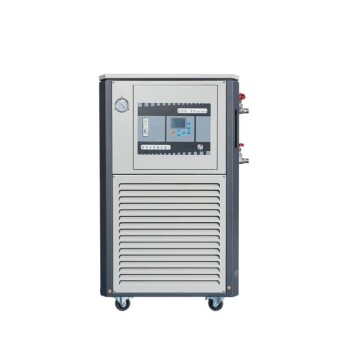
10L Heating Chilling Circulator Cooling Water Bath Circulator for High and Low Temperature Constant Temperature Reaction

10L Heating Chilling Circulator Cooling Water Bath Circulator for High and Low Temperature Constant Temperature Reaction

Experience efficient lab performance with KinTek KCBH 10L Heating Chilling Circulator. Its all-in-one design offers reliable heating, chilling, and circulating functions for industrial and lab use.

Engineering Advanced Fine Ceramics Head Tweezers with Pointed Elbow Zirconia Ceramic Tip

Engineering Advanced Fine Ceramics Head Tweezers with Pointed Elbow Zirconia Ceramic Tip

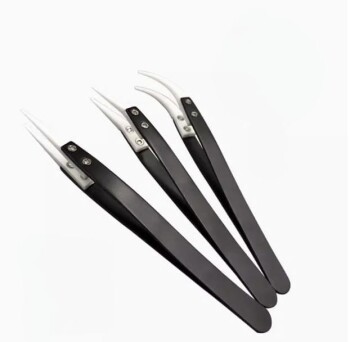
Zirconia ceramic tweezers are a high-precision tool made of advanced ceramic materials, especially suitable for operating environments that require high precision and corrosion resistance. This type of tweezers not only has excellent physical properties, but is also popular in the medical and laboratory fields because of its biocompatibility.

Laboratory manual slicer

Laboratory manual slicer

Manual microtome is a high-precision cutting device designed for laboratories, industry and medical fields. It is suitable for the preparation of thin slices of various materials such as paraffin samples, biological tissues, battery materials, food, etc.

Lab Internal Rubber Mixer Rubber Kneader Machine for Mixing and Kneading

Lab Internal Rubber Mixer Rubber Kneader Machine for Mixing and Kneading

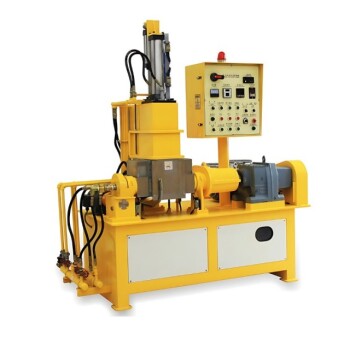
Lab internal rubber mixer is suitable for mixing, kneading and dispersing various chemical raw materials such as plastics, rubber, synthetic rubber, hot melt adhesive and various low-viscosity materials.

Laboratory Vibratory Sieve Shaker Machine Slap Vibrating Sieve

Laboratory Vibratory Sieve Shaker Machine Slap Vibrating Sieve

KT-T200TAP is a slapping and oscillating sieving instrument for laboratory desktop use, with 300 rpm horizontal circular motion and 300 vertical slapping motions to simulate manual sieving to help sample particles pass through better.

Automatic Laboratory Heat Press Machine

Automatic Laboratory Heat Press Machine

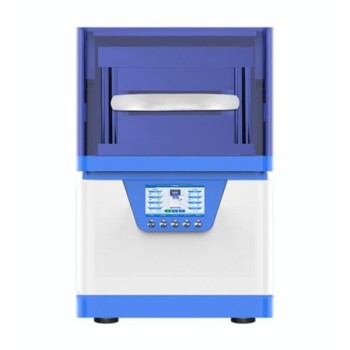
Precision automatic heat press machines for labs—ideal for material testing, composites, and R&D. Customizable, safe, and efficient. Contact KINTEK today!


Leave Your Message