Knowledge What is the chemical vapor deposition (CVD) method of diamond growth? Master Precision with KINTEK
Author avatar

Tech Team · Kintek Solution

Updated 5 days ago

What is the chemical vapor deposition (CVD) method of diamond growth? Master Precision with KINTEK


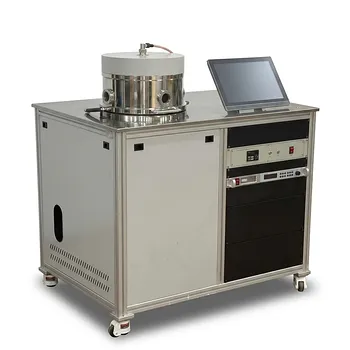
Chemical Vapor Deposition (CVD) is a precise laboratory method for growing synthetic diamonds by depositing carbon atoms from a gas mixture onto a substrate. Instead of using crushing force, this process utilizes moderate temperatures and low pressures within a vacuum chamber to break down hydrocarbon gases, allowing carbon to crystallize layer by layer onto a diamond seed.

Core Takeaway While High Pressure High Temperature (HPHT) methods mimic the crushing force of the Earth's mantle, CVD replicates the conditions found in interstellar gas clouds. This technique allows for the growth of high-purity diamonds by assembling them atom by atom from an energized gas plasma.

The Mechanics of the CVD Process

Preparation of the Seed Crystal

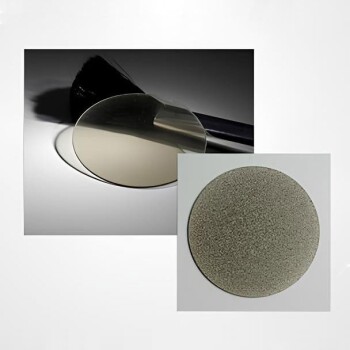
The process does not create a diamond out of thin air; it requires a foundation. A thin slice of diamond, known as a seed crystal or wafer, is placed inside a sealed vacuum chamber.

This seed acts as a blueprint for the atomic structure. It is often a synthetic diamond created previously via the HPHT method.

The Gas Environment

Once the seed is secured, the chamber is filled with a specific hydrocarbon gas mixture.

The most common combination involves hydrogen and methane. This mixture serves as the source of carbon that will eventually become the diamond.

Ionization and Plasma Formation

The chamber is heated to temperatures typically between 800°C and 900°C.

Energy sources, such as microwaves, lasers, or hot filaments, are used to ionize the gas mixture. This transforms the gas into plasma, breaking the molecular bonds of the gases.

Atomic Deposition

Once the bonds are broken, pure carbon atoms are freed from the methane molecules.

These carbon atoms precipitate from the gas cloud and settle onto the cooler diamond seed. They bond to the surface of the seed, crystallizing atom by atom and extending the diamond's lattice structure.

Vertical Growth

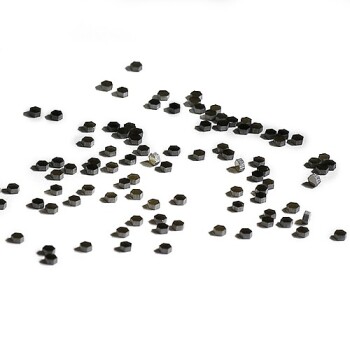
The diamond grows vertically in layers, resulting in a rough crystal that is typically square or tabular in shape.

This is distinct from the octahedron shapes often found in natural diamonds. The process creates a solid, continuous film over the seed.

Understanding the Operational Trade-offs

The Risk of Contamination

The CVD process is delicate and requires strict control. Sometimes, carbon deposits as graphite (black carbon) rather than crystal diamond.

The process must be monitored closely. In some iterations, the growth is periodically paused so technicians or machinery can remove graphite build-up before resuming.

Production Duration

Growing a gem-quality diamond via CVD is not instantaneous. The process generally takes anywhere from days to several weeks.

While it is slow, the method allows for batch processing. Producers can often grow dozens of stones simultaneously within the same reactor.

By-product Management

The chemical reactions involved generate volatile by-products.

To maintain a clean growth environment, these by-products must be continuously diffused away and flowed out of the reactor to prevent them from interfering with the diamond structure.

Contextualizing CVD for Your Needs

Making the Right Distinction

Understanding CVD is essential when evaluating the quality and origin of synthetic diamonds.

  • If your primary focus is Purity: CVD allows for exceptional control over chemical composition, often resulting in Type IIa diamonds which are chemically purer than most natural stones.
  • If your primary focus is Production Scalability: The ability to grow multiple stones on a single wafer or in a single run makes CVD highly scalable, though it requires significant time.

The CVD method represents a shift from brute force to chemical precision, allowing for the creation of diamonds that are chemically identical to their natural counterparts through atomic assembly.

Summary Table:

Feature CVD Diamond Growth Specification
Mechanism Chemical deposition of carbon atoms onto a seed
Environment Vacuum chamber with moderate pressure
Temperature 800°C to 900°C
Gas Source Hydrocarbon mixture (typically Hydrogen and Methane)
Growth Shape Square or tabular layers
Crystal Purity High purity (often Type IIa diamonds)

Elevate Your Material Research with KINTEK

Ready to harness the precision of Chemical Vapor Deposition? KINTEK provides state-of-the-art laboratory equipment tailored for advanced synthesis and research. Whether you are growing high-purity diamonds or developing thin films, our comprehensive range of CVD and PECVD systems, high-temperature furnaces, and specialized high-pressure reactors ensure optimal growth environments.

From high-performance vacuum chambers to essential consumables like ceramics and crucibles, KINTEK is your partner in laboratory excellence. Don't compromise on your results—leverage our expertise to scale your production and achieve superior material purity.

Contact KINTEK experts today to find the perfect solution for your lab.

Contact Us Now

Related Products

People Also Ask

Related Products

Multi Heating Zones CVD Tube Furnace Machine Chemical Vapor Deposition Chamber System Equipment

Multi Heating Zones CVD Tube Furnace Machine Chemical Vapor Deposition Chamber System Equipment

KT-CTF14 Multi Heating Zones CVD Furnace - Precise Temperature Control and Gas Flow for Advanced Applications. Max temp up to 1200℃, 4 channels MFC mass flow meter, and 7" TFT touch screen controller.

1200℃ Split Tube Furnace with Quartz Tube Laboratory Tubular Furnace

1200℃ Split Tube Furnace with Quartz Tube Laboratory Tubular Furnace

KT-TF12 split tube furnace: high-purity insulation, embedded heating wire coils, and max. 1200C. Widely used for new materials and chemical vapour deposition.

Vacuum Hot Press Furnace Heated Vacuum Press Machine Tube Furnace

Vacuum Hot Press Furnace Heated Vacuum Press Machine Tube Furnace

Reduce forming pressure & shorten sintering time with Vacuum Tube Hot Press Furnace for high-density, fine-grain materials. Ideal for refractory metals.

Mesh belt controlled atmosphere furnace

Mesh belt controlled atmosphere furnace

Discover our KT-MB mesh belt sintering furnace - perfect for high-temperature sintering of electronic components & glass insulators. Available for open air or controlled atmosphere environments.

1400℃ Muffle Oven Furnace for Laboratory

1400℃ Muffle Oven Furnace for Laboratory

Get precise high-temperature control up to 1500℃ with KT-14M Muffle furnace. Equipped with a smart touch screen controller and advanced insulation materials.

Laboratory Vacuum Tilt Rotary Tube Furnace Rotating Tube Furnace

Laboratory Vacuum Tilt Rotary Tube Furnace Rotating Tube Furnace

Discover the versatility of Laboratory Rotary Furnace: Ideal for calcination, drying, sintering, and high-temperature reactions. Adjustable rotating and tilting functions for optimal heating. Suitable for vacuum and controlled atmosphere environments. Learn more now!

1700℃ Muffle Oven Furnace for Laboratory

1700℃ Muffle Oven Furnace for Laboratory

Get superior heat control with our 1700℃ Muffle Furnace. Equipped with intelligent temperature microprocessor, TFT touch screen controller & advanced insulation materials for precise heating up to 1700C. Order now!

Vacuum Dental Porcelain Sintering Furnace

Vacuum Dental Porcelain Sintering Furnace

Get precise and reliable results with KinTek's Vacuum Porcelain Furnace. Suitable for all porcelain powders, it features hyperbolic ceramic furnace function, voice prompt, and automatic temperature calibration.

1800℃ Muffle Oven Furnace for Laboratory

1800℃ Muffle Oven Furnace for Laboratory

KT-18 muffle furnace with Japan Al2O3 polycrystalline fibe and Silicon Molybdenum heating element, up to 1900℃, PID temperature control and 7" smart touch screen. Compact design, low heat loss, and high energy efficiency. Safety interlock system and versatile functions.

Vacuum Heat Treat and Sintering Furnace with 9MPa Air Pressure

Vacuum Heat Treat and Sintering Furnace with 9MPa Air Pressure

The air pressure sintering furnace is a high-tech equipment commonly used for the sintering of advanced ceramic materials. It combines vacuum sintering and pressure sintering techniques to achieve high-density and high-strength ceramics.

1700℃ Laboratory High Temperature Tube Furnace with Alumina Tube

1700℃ Laboratory High Temperature Tube Furnace with Alumina Tube

Looking for a high-temperature tube furnace? Check out our 1700℃ Tube Furnace with Alumina Tube. Perfect for research and industrial applications up to 1700C.

Horizontal High Temperature Graphite Vacuum Graphitization Furnace

Horizontal High Temperature Graphite Vacuum Graphitization Furnace

Horizontal Graphitization Furnace: This type of furnace is designed with the heating elements placed horizontally, allowing for uniform heating of the sample. It's well-suited for graphitizing large or bulky samples that require precise temperature control and uniformity.

Dental Porcelain Zirconia Sintering Ceramic Vacuum Press Furnace

Dental Porcelain Zirconia Sintering Ceramic Vacuum Press Furnace

Get precise dental results with Dental Vacuum Press Furnace. Automatic temperature calibration, low noise tray, and touch screen operation. Order now!

600T Vacuum Induction Hot Press Furnace for Heat Treat and Sintering

600T Vacuum Induction Hot Press Furnace for Heat Treat and Sintering

Discover the 600T Vacuum Induction Hot Press Furnace, designed for high-temperature sintering experiments in vacuum or protected atmospheres. Its precise temperature and pressure control, adjustable working pressure, and advanced safety features make it ideal for nonmetal materials, carbon composites, ceramics, and metal powders.

Vacuum Sealed Continuous Working Rotary Tube Furnace Rotating Tube Furnace

Vacuum Sealed Continuous Working Rotary Tube Furnace Rotating Tube Furnace

Experience efficient material processing with our vacuum-sealed rotary tube furnace. Perfect for experiments or industrial production, equipped with optional features for controlled feeding and optimized results. Order now.

Vacuum Hot Press Furnace Machine Heated Vacuum Press

Vacuum Hot Press Furnace Machine Heated Vacuum Press

Discover the advantages of Vacuum Hot Press Furnace! Manufacture dense refractory metals & compounds, ceramics, and composites under high temp and pressure.

Laboratory Rapid Thermal Processing (RTP) Quartz Tube Furnace

Laboratory Rapid Thermal Processing (RTP) Quartz Tube Furnace

Get lightning-fast heating with our RTP Rapid Heating Tube Furnace. Designed for precise, high-speed heating and cooling with convenient sliding rail and TFT touch screen controller. Order now for ideal thermal processing!

Ultra-High Temperature Graphite Vacuum Graphitization Furnace

Ultra-High Temperature Graphite Vacuum Graphitization Furnace

The ultra-high temperature graphitization furnace utilizes medium frequency induction heating in a vacuum or inert gas environment. The induction coil generates an alternating magnetic field, inducing eddy currents in the graphite crucible, which heats up and radiates heat to the workpiece, bringing it to the desired temperature. This furnace is primarily used for graphitization and sintering of carbon materials, carbon fiber materials, and other composite materials.

Rotary Tube Furnace Split Multi Heating Zone Rotating Tube Furnace

Rotary Tube Furnace Split Multi Heating Zone Rotating Tube Furnace

Multi zone rotary furnace for high-precision temperature control with 2-8 independent heating zones. Ideal for lithium ion battery electrode materials and high-temperature reactions. Can work under vacuum and controlled atmosphere.

Vacuum Heat Treat Sintering Brazing Furnace

Vacuum Heat Treat Sintering Brazing Furnace

A vacuum brazing furnace is a type of industrial furnace used for brazing, a metalworking process that joins two pieces of metal using a filler metal that melts at a lower temperature than the base metals. Vacuum brazing furnaces are typically used for high-quality applications where a strong, clean joint is required.


Leave Your Message