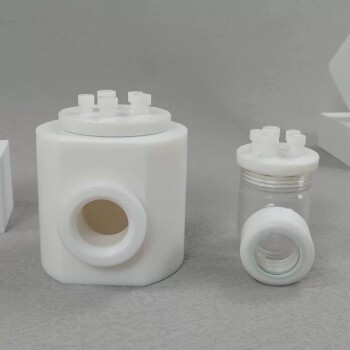
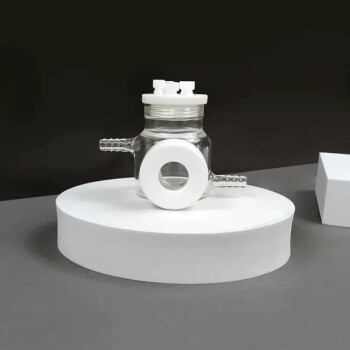
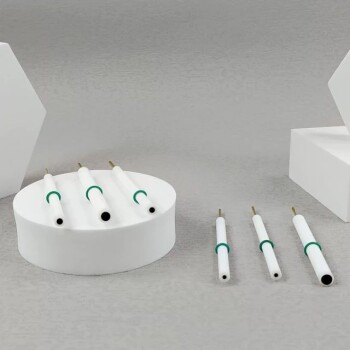
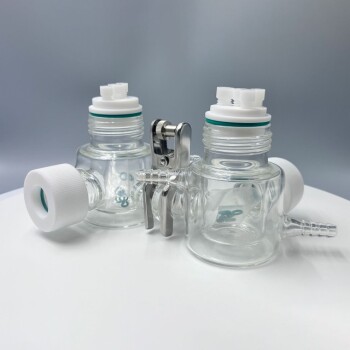
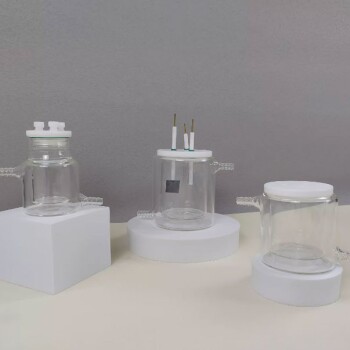
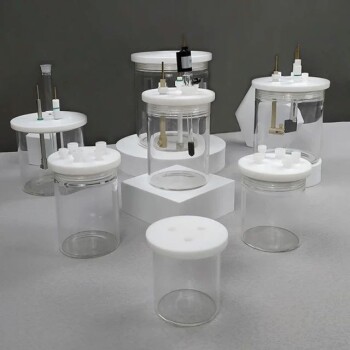
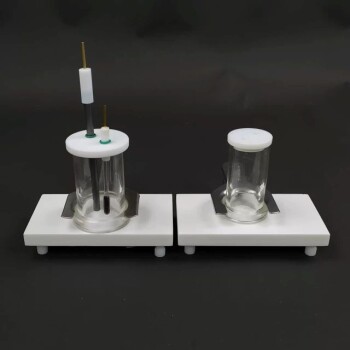
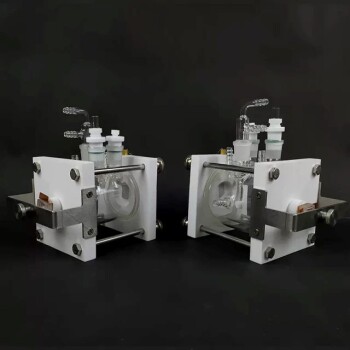
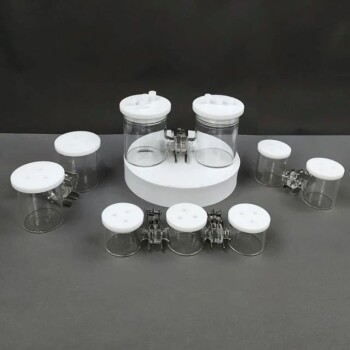
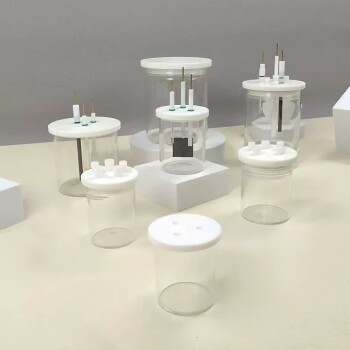
The primary function of a glass tube electrochemical cell in this context is to serve as a specialized reactor that accurately mimics the physiological environment of the oral cavity. By utilizing sealed rubber stoppers, gas control needles, and feeding ports, the device creates a highly controlled atmosphere for testing titanium dental implants. This apparatus allows researchers to isolate and reproduce the specific chemical conditions that lead to implant corrosion.
This device creates a dual-zone environment—separating oxygen-rich and anaerobic areas—to accurately simulate and measure the electrochemical corrosion currents driven by chemical gradients in the mouth.
Constructing the Oral Simulation
To study dental implants effectively, researchers must move beyond simple immersion and create a dynamic testing environment.
The Reactor Core
The glass tube acts as the core reactor for the experiment. It provides a sterile, transparent vessel where the physical and chemical interactions between the implant and the simulated environment can be observed.
Controlling the Atmosphere
The cell utilizes sealed rubber stoppers equipped with gas inlet and outlet needles. This precise configuration allows researchers to introduce specific gases to modulate the internal atmosphere, replicating the breathing and swallowing conditions of the mouth.
Nutrient Delivery
Feeding ports are integrated into the design to introduce fluids or metabolites. This ensures the environment remains chemically active, simulating the continuous presence of saliva and biological fluids found in a patient.
Reproducing Biogalvanic Corrosion
The most critical function of this cell is its ability to replicate the electrical currents responsible for metal degradation.
Creating Distinct Zones
The setup allows for the placement of titanium implants in spatially distinct zones. Researchers can create an oxygen-rich cathode area and an anaerobic anode area within the same tube.
Simulating Differential Aeration
In the mouth, implants often span areas with different oxygen levels (e.g., above and below the gumline). This cell reproduces these conditions, establishing oxygen and metabolite gradients across the implant surface.
Generating the Current
These chemical gradients drive biogalvanic currents. By reproducing this mechanism in the lab, researchers can measure the flow of electricity and predict how severe the corrosion will be in a clinical setting.
Critical Requirements for Validity
While powerful, the effectiveness of this simulation relies on the integrity of the physical setup.
Maintaining the Seal
The sealed rubber stoppers are not merely lids; they are functional components essential for isolating the internal environment. If the seal is compromised, the distinction between the aerobic and anaerobic zones will vanish, rendering the simulation of biogalvanic currents inaccurate.
Precision of Gas Control
The accuracy of the gas inlet and outlet needles determines the stability of the simulated zones. Without precise regulation of gas flow, the gradients necessary to drive the corrosion process cannot be sustained.
Applying This to Your Research
The glass tube electrochemical cell is a versatile tool for analyzing implant longevity.
- If your primary focus is mechanism analysis: Isolate the oxygen-rich cathode and anaerobic anode zones to identify which specific gradients drive the strongest currents.
- If your primary focus is material screening: Use the feeding ports to introduce aggressive metabolites and test how different titanium surface treatments resist biogalvanic attack.
By accurately reproducing the distinct zones of the oral cavity, this apparatus transforms theoretical corrosion risks into measurable laboratory data.
Summary Table:
| Feature | Function in Corrosion Experiment |
|---|---|
| Glass Tube Reactor | Provides a transparent, sterile environment for observing chemical interactions. |
| Sealed Rubber Stoppers | Maintains atmospheric isolation between aerobic and anaerobic zones. |
| Gas Inlet/Outlet Needles | Enables precise control of internal gases to replicate breathing/swallowing. |
| Feeding Ports | Facilitates introduction of saliva, metabolites, and biological fluids. |
| Dual-Zone Design | Simulates oxygen gradients to measure biogalvanic corrosion currents. |
Elevate Your Biomaterial Research with KINTEK
Precise simulation is the key to predicting dental implant longevity. KINTEK specializes in high-performance laboratory equipment, offering the specialized electrolytic cells and electrodes necessary to replicate complex physiological environments.
Whether you are conducting mechanism analysis or material screening, our comprehensive range of high-temperature furnaces, crushing systems, and precision electrochemical tools provides the reliability your research demands.
Ready to achieve more accurate laboratory data? Contact our experts today to find the perfect solution for your dental implant and battery research needs.
References
- Alexander Pozhitkov, James D. Bryers. Interruption of Electrical Conductivity of Titanium Dental Implants Suggests a Path Towards Elimination Of Corrosion. DOI: 10.1371/journal.pone.0140393
This article is also based on technical information from Kintek Solution Knowledge Base .
Related Products
- Side Window Optical Electrolytic Electrochemical Cell
- Optical Water Bath Electrolytic Electrochemical Cell
- Glassy Carbon Electrochemical Electrode
- H-Type Double-Layer Optical Electrolytic Electrochemical Cell with Water Bath
- Glassy Carbon Sheet RVC for Electrochemical Experiments
People Also Ask
- What are the critical safety and operational precautions when using a side-window optical electrolytic cell? Ensure Safe and Accurate Experiments
- What is the correct procedure for post-experiment shutdown and cleaning of a side-window optical electrolytic cell? Ensure Safety and Data Accuracy
- What maintenance procedures are recommended for a side-window optical electrolytic cell? Ensure Data Accuracy & Extend Cell Lifespan
- What are the ideal storage conditions for a side-window optical electrolytic cell? Ensure Long-Term Accuracy and Performance
- What is a side-window optical electrolytic cell? See Your Electrochemical Reactions in Action