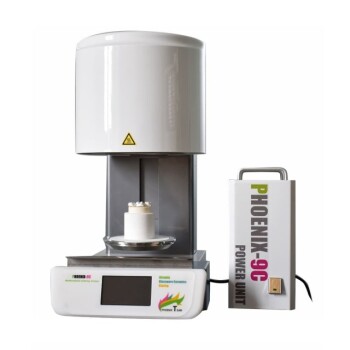
A high-strength hydrogen atmosphere sintering furnace serves as the primary densification tool for converting molybdenum powder into solid, high-performance metal disks. It functions by maintaining a 1600 °C environment containing a flowing hydrogen atmosphere, which chemically reduces the powder while fusing it. This specific combination is essential for creating targets that possess high density, superior mechanical strength, and optimized thermal conductivity.
The core function of this furnace is to create a "reducing" environment at extreme temperatures, ensuring the molybdenum achieves the structural integrity required to survive high-energy particle bombardment without physical failure.
The Operational Mechanism
Extreme Thermal Environment
The furnace generates and sustains a temperature of 1600 °C.
This intense heat is the catalyst that triggers the sintering process, allowing loose molybdenum powder particles to bond at the atomic level.
The Role of Hydrogen Flow
Unlike standard vacuum furnaces, this system utilizes a reducing hydrogen flow.
The hydrogen atmosphere actively removes oxygen and oxides from the powder particles during the heating process. This chemical reduction is vital for achieving pure, high-density metal disks free of oxidation impurities that could weaken the structure.
Critical Material Outcomes
Enhancing Mechanical Strength
The primary goal of the sintering process is to significantly improve the mechanical strength of the molybdenum.
By densifying the powder into a solid mass, the furnace ensures the target has the physical durability to withstand handling and operational stress.
Optimizing Thermal Conductivity
Proper sintering in a hydrogen atmosphere aligns the material's internal structure to maximize thermal conductivity.
High thermal conductivity is non-negotiable for these targets, as they must rapidly dissipate the intense heat generated during operation.
Preventing Thermal Destruction
The ultimate function of the furnace is ensuring cyclotron readiness.
Molybdenum targets are subjected to high-energy beam bombardment in cyclotrons. Without the specific densification provided by this furnace, the targets would suffer from thermal destruction or structural collapse under the beam.
Understanding the Process Requirements
Specificity of Application
This furnace is distinct from other sintering methods, such as vacuum hot-pressing, which might rely on mechanical pressure and vacuum states to densify alloys.
The hydrogen atmosphere furnace relies specifically on thermal energy and chemical reduction rather than external mechanical force to achieve density.
Energy Intensity
The requirement for maintaining 1600 °C represents a significant energy input.
However, this high temperature is a strict requirement; lower temperatures would fail to achieve the necessary density for cyclotron applications, leading to premature target failure.
Making the Right Choice for Your Goal
To ensure your molybdenum targets perform correctly, consider the following based on your specific needs:
- If your primary focus is Cyclotron Durability: You must use hydrogen atmosphere sintering to ensure the target can withstand high-energy beam bombardment without thermal destruction.
- If your primary focus is Material Purity: Rely on the reducing hydrogen flow to strip oxides and impurities during the densification process.
This furnace acts as the bridge between raw powder and a component capable of surviving the most extreme high-energy environments.
Summary Table:
| Feature | Function in Molybdenum Sintering | Benefit to Target Performance |
|---|---|---|
| 1600 °C Temperature | Triggers atomic bonding and densification | High structural integrity & density |
| Hydrogen Flow | Chemically reduces oxygen and oxides | High material purity & cleanliness |
| Atmospheric Control | Creates a stable reducing environment | Prevents oxidation during heating |
| Thermal Alignment | Optimizes internal material structure | Maximizes thermal conductivity |
| Material Strength | Converts loose powder to solid disk | Resistance to high-energy beam damage |
Elevate Your Materials Research with KINTEK Precision
Don't let impurities or structural weakness compromise your cyclotron performance. KINTEK specializes in advanced laboratory solutions designed for the most demanding applications. Whether you require high-temperature hydrogen atmosphere furnaces for molybdenum sintering or specialized high-pressure reactors, muffle furnaces, and vacuum systems, we provide the engineering excellence your lab deserves.
From high-purity ceramics and crucibles to precision crushing and milling systems, KINTEK supports every stage of your material preparation. Ensure your targets can withstand the most intense beam bombardment.
Contact KINTEK today for a customized equipment consultation and see how our comprehensive range of high-performance furnaces and laboratory consumables can optimize your research outcomes.
References
- Izabela Cieszykowska, Grażyna Birnbaum. Studies on electrochemical dissolution of sintered molybdenum discs as a potential method for targets dissolution in 99mTc production. DOI: 10.1007/s10967-021-08155-3
This article is also based on technical information from Kintek Solution Knowledge Base .
Related Products
- Controlled Nitrogen Inert Hydrogen Atmosphere Furnace
- Vacuum Heat Treat and Sintering Furnace with 9MPa Air Pressure
- 1400℃ Controlled Atmosphere Furnace with Nitrogen and Inert Atmosphere
- Ultra-High Temperature Graphite Vacuum Graphitization Furnace
- High Temperature Muffle Oven Furnace for Laboratory Debinding and Pre Sintering
People Also Ask
- Why is hydrogen used in furnaces? Achieve Superior Purity and Bright Finishes
- What is the role of a hydrogen atmosphere furnace in diamond/copper composites? Enhance Your Material Purity
- What are the characteristics and risks of a hydrogen atmosphere in a furnace? Master the Balance of Power and Control
- What is the use of hydrogen in furnace? A Key to Oxygen-Free High-Temperature Processing
- Can hydrogen be used in furnaces? Yes, for Oxide-Free Metal Processing & Rapid Heating