The primary function of a laboratory magnetic stirrer in photocatalytic degradation is to generate high-frequency rotational force that maintains catalyst powders in a uniform suspension. By creating a stable slurry system, the stirrer prevents the catalyst from settling, ensuring consistent physical interaction between the pollutant molecules and the photocatalyst throughout the experiment.
Core Takeaway
In photocatalysis, gravity is the enemy of efficiency. A magnetic stirrer counters this by maintaining a homogenous mixture, which guarantees that light, pollutants, and catalyst particles interact uniformly. Without this mechanical agitation, mass transfer limitations and sedimentation would render reaction rate data invalid.
The Mechanics of Suspension and Stability
Creating a Uniform Slurry
The fundamental role of the stirrer is to apply continuous mechanical power to the aqueous solution.
This force counteracts gravity to keep granular catalysts (such as Titanium Dioxide or Zinc Oxide) in a state of uniform suspension.
Without this constant agitation, catalyst particles would precipitate to the bottom of the reactor, effectively halting the reaction in the upper layers of the solution.
Eliminating Concentration Gradients
Beyond suspending solids, the stirrer ensures the pollutant (e.g., dye or 1-naphthol) remains evenly distributed.
It creates forced convection that eliminates concentration gradients, preventing local areas of high or low pollutant density.
This ensures that the solution entering the reaction zone or interacting with the catalyst represents the true concentration of the bulk liquid.
Optimizing the Reaction Environment
Maximizing Active Site Contact
Photocatalysis relies on the pollutant molecule physically touching the catalyst.
The stirrer facilitates this by increasing the collision frequency between dye molecules and the active sites on the catalyst surface.
By driving the fluid dynamics, the stirrer ensures that pollutant molecules diffuse effectively through the liquid to reach these sites, reducing mass transfer resistance.
Ensuring Uniform Light Exposure
For a photocatalyst to work, it must be activated by light (UV or visible).
If the catalyst settles, particles at the bottom block light from reaching particles beneath them, a phenomenon known as shielding.
Stirring guarantees uniform light exposure across the entire reaction medium, ensuring every particle contributes to the degradation process rather than sitting idle in a shadow.
Common Pitfalls to Avoid
Inconsistent Agitation Speed
A magnetic stirrer must provide power at a constant speed to be effective.
Fluctuations in speed can lead to temporary sedimentation or varying rates of mass transfer, which introduces noise into kinetic data collection.
Misunderstanding Mass Transfer Limitations
While stirring improves contact, it is not a chemical accelerant; it is a physical enabler.
It is critical to understand that the stirrer is removing mass transfer limitations, allowing you to measure the intrinsic activity of the catalyst.
If stirring is insufficient, you are measuring the speed of diffusion, not the speed of the chemical reaction.
Making the Right Choice for Your Goal
To ensure your experimental data is robust and reproducible, consider how the stirrer supports your specific objective:
- If your primary focus is Kinetic Accuracy: Ensure the stirrer speed is high enough to eliminate all mass transfer resistances so the data reflects the true chemical reaction rate.
- If your primary focus is Catalyst Efficiency: Verify that the stirring maintains a 100% suspension rate to prevent self-shadowing and maximize photon absorption.
Ultimately, the magnetic stirrer transforms a static mixture into a dynamic, reproducible system where light and chemistry can interact efficiently.
Summary Table:
| Function | Mechanism | Impact on Result |
|---|---|---|
| Catalyst Suspension | Prevents sedimentation of granular catalysts | Ensures uniform light exposure and active site availability |
| Mass Transfer | Reduces diffusion resistance between pollutants and catalyst | Allows measurement of true intrinsic reaction kinetics |
| Homogenization | Eliminates concentration gradients via forced convection | Ensures reproducible data and stable slurry systems |
| Light Distribution | Prevents particle shielding/shadowing | Maximizes photon absorption across the entire medium |
Elevate Your Photocatalytic Research with KINTEK
Precision is paramount in catalyst development. At KINTEK, we specialize in high-performance laboratory equipment designed to eliminate experimental variables. From high-stability magnetic stirrers and homogenizers to advanced photochemical reactors and cooling solutions, our tools ensure your data reflects true chemical performance, not mechanical limitations.
Whether you are optimizing high-temperature reactors, scaling up with crushing and milling systems, or conducting precise battery research, KINTEK provides the consumables and hardware—including PTFE components and specialized ceramics—to support your breakthrough.
Ready to maximize your lab’s efficiency and kinetic accuracy? Contact us today to find the perfect solution for your research!
References
- S K Kavitha Singaravelan, Dr P N Palanisamy. Photocatalytic degradation of Vat Yellow 4 using UV/TiO2. DOI: 10.5539/mas.v4n5p130
This article is also based on technical information from Kintek Solution Knowledge Base .
Related Products
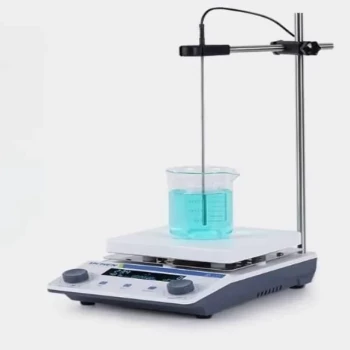
- Laboratory Small Constant Temperature Heated Magnetic Stirrer Heater and Stirrer
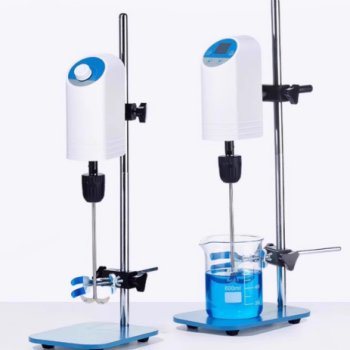
- High Performance Laboratory Stirrers for Diverse Applications
- Custom PTFE Teflon Parts Manufacturer for Magnetic Stirring Bar
- Laboratory Vibratory Sieve Shaker Machine for Dry and Wet Three-Dimensional Sieving
- Laboratory Vortex Mixer Orbital Shaker Multifunctional Rotation Oscillation Mixer
People Also Ask
- What role does a magnetic stirrer with heating play in ZnO nanoparticle synthesis? Precision Control for Quality Results
- What role does a constant temperature heating magnetic stirrer play in MFC-HAp synthesis? Achieve Material Homogeneity
- What is the function of a laboratory magnetic stirrer in Ni–Cr–P electrodeposition? Optimize Ion Transport & Coating
- Why is a laboratory magnetic stirrer required for benzoic acid esters? Boost Reaction Speed & Yield with High RPM
- What role does a laboratory magnetic stirrer play in TiO2 and TiO2-Ag sol preparation? Master Chemical Kinetics