The primary function of a magnetic stirrer in the pre-treatment phase of MoO3/GO composite synthesis is to enforce rapid, molecular-level homogenization. Specifically, it is utilized to thoroughly disperse sodium molybdate, sodium chloride, and dilute hydrochloric acid within deionized water. This mechanical agitation ensures that the subsequently added graphene oxide (GO) undergoes intense mixing with the precursor solution, establishing the uniformity required for successful synthesis.
By maintaining a high-speed, turbulent flow, the magnetic stirrer prevents the sedimentation of graphene oxide and eliminates solute concentration gradients. This creates a consistent chemical environment that serves as the critical foundation for the subsequent heterogeneous nucleation process.
Achieving Chemical Homogeneity
The effectiveness of the final composite material relies heavily on the state of the solution before any reaction occurs. The magnetic stirrer acts as the physical driver for this initial uniformity.
Dispersing the Precursor Solution
The process begins with the dissolution of specific salts: sodium molybdate and sodium chloride, alongside dilute hydrochloric acid.
The magnetic stirrer ensures these components do not settle or form localized pockets of high concentration within the deionized water. This rapid dissolution creates a stable ionic baseline for the introduction of the carbon matrix.
Integrating Graphene Oxide (GO)
Once the salts are dissolved, graphene oxide is introduced to the system.
The stirrer facilitates intense and uniform mixing, ensuring the GO sheets are evenly distributed throughout the liquid medium. This prevents the GO from agglomerating or floating, forcing it into intimate contact with the molybdenum precursors.
The Impact on Nucleation Mechanics
Beyond simple mixing, the magnetic stirrer plays a decisive role in defining the microscopic structure of the material.
Establishing a Concentration Foundation
For the MoO3/GO composite to form correctly, the concentration of the precursor solution must be identical at every point in the vessel.
The stirrer maintains this consistent concentration foundation, ensuring that no area of the solution is starved of reactants or oversaturated.
Facilitating Heterogeneous Nucleation
The ultimate goal of this pre-treatment is to prepare the system for heterogeneous nucleation—where the molybdenum trioxide begins to grow on the graphene oxide sheets.
By ensuring the GO is perfectly suspended and the precursors are evenly dispersed, the stirrer guarantees that nucleation sites are available uniformly across the substrate. This leads to a consistent grain size and distribution in the final product.
Common Pitfalls to Avoid
While the magnetic stirrer is a standard tool, its application in this specific synthesis requires attention to detail to avoid process failures.
The Risk of Insufficient Agitation
If the rotational speed is too low, the graphene oxide may experience localized agglomeration.
This leads to uneven coating of the GO sheets, resulting in a composite material with poor structural uniformity and reduced performance characteristics.
Inconsistent Precursor Contact
Failure to maintain continuous stirring during the addition of the acid or salts can create transient high-concentration zones.
This can trigger premature or uncontrolled precipitation before the mixture is fully homogenized, compromising the integrity of the controlled nucleation process.
Making the Right Choice for Your Goal
To maximize the efficacy of the magnetic stirrer in your MoO3/GO synthesis, consider the following strategic adjustments:
- If your primary focus is Structural Uniformity: Ensure the stirrer is active before adding the graphene oxide to the salt solution to prevent immediate clumping upon contact.
- If your primary focus is Nucleation Control: Maintain a constant, high-velocity rotation speed throughout the pre-treatment to ensure the "concentration foundation" remains stable until the reaction phase begins.
Ultimately, the magnetic stirrer is not just a mixer; it is the control mechanism that dictates the uniformity of the chemical environment for reliable composite growth.
Summary Table:
| Process Phase | Function of Magnetic Stirrer | Critical Outcome |
|---|---|---|
| Precursor Dissolution | Disperses salts and acids in deionized water | Prevents concentration gradients and sedimentation |
| GO Integration | Forces intense mixing of graphene oxide sheets | Eliminates agglomeration and floating for intimate contact |
| Nucleation Prep | Establishes a consistent chemical foundation | Ensures uniform grain size and distribution on substrates |
| Reaction Phase | Maintains high-velocity turbulent flow | Prevents localized precipitation and structural defects |
Elevate Your Material Synthesis with KINTEK Precision
Achieving perfect MoO3/GO composites requires more than just mixing—it requires precise control over the chemical environment. KINTEK specializes in high-performance laboratory equipment designed for rigorous material research. Whether you are performing high-speed magnetic stirring, utilizing our high-temperature furnaces (Muffle, Vacuum, CVD) for final synthesis, or preparing precursors with our ultrasonic homogenizers and hydraulic presses, we provide the reliability your research demands.
Our value to you:
- Comprehensive Portfolio: From high-pressure reactors to electrodes and battery research tools, we cover the entire synthesis workflow.
- Quality Assurance: Durable consumables including PTFE products, ceramics, and crucibles that withstand harsh chemical environments.
- Expert Support: Equipment tailored for advanced composite and nanomaterial production.
Ready to optimize your lab's performance? Contact KINTEK Today to Consult with Our Experts
References
- Haiyan Li, X. H. Zhang. Preparation and tribological properties of GO supported MoO3 composite nanomaterials. DOI: 10.15251/djnb.2023.184.1395
This article is also based on technical information from Kintek Solution Knowledge Base .
Related Products
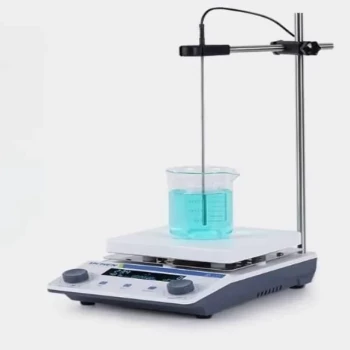
- Laboratory Small Constant Temperature Heated Magnetic Stirrer Heater and Stirrer
- Custom PTFE Teflon Parts Manufacturer for Magnetic Stirring Bar
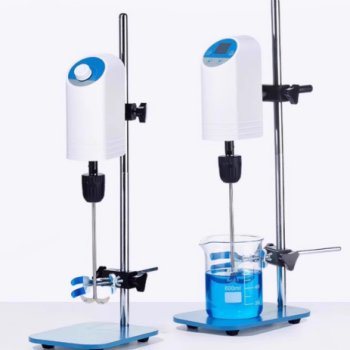
- High Performance Laboratory Stirrers for Diverse Applications
- Three-dimensional electromagnetic sieving instrument
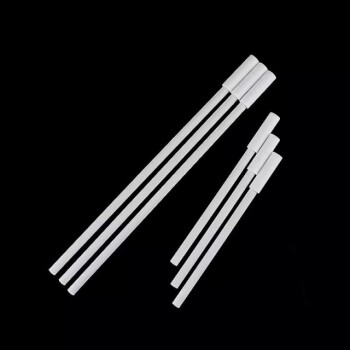
- Custom PTFE Teflon Parts Manufacturer for PTFE Stirring Bar Recovery Rod
People Also Ask
- What role does a magnetic stirrer with heating play in ZnO nanoparticle synthesis? Precision Control for Quality Results
- What role does a constant temperature heating magnetic stirrer play in MFC-HAp synthesis? Achieve Material Homogeneity
- What is the function of a laboratory magnetic stirrer in Ni–Cr–P electrodeposition? Optimize Ion Transport & Coating
- Why is a laboratory magnetic stirrer required for benzoic acid esters? Boost Reaction Speed & Yield with High RPM
- What role does a laboratory magnetic stirrer play in TiO2 and TiO2-Ag sol preparation? Master Chemical Kinetics