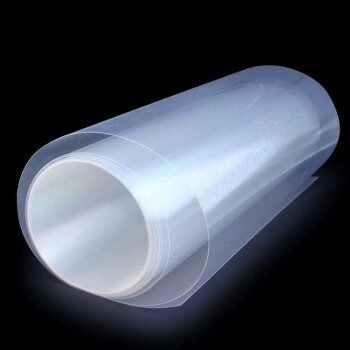
The proton exchange membrane (PEM) functions as a selective molecular gatekeeper. In a photoelectrochemical (PEC) carbon dioxide reduction cell, it physically separates the anode and cathode compartments. Its primary job is to allow protons to pass through to fuel the reduction reaction while strictly blocking the passage of generated gases to ensure safety and product purity.
The membrane's dual role effectively balances the system's chemistry: it facilitates the necessary ion transport for reaction continuity while preventing dangerous gas mixing that compromises both safety and efficiency.
The Mechanics of Compartmentalization
Physical Isolation of Electrodes
The membrane creates a tangible boundary between the anode and cathode. This defines two distinct environments within a single cell, allowing different chemical processes to occur simultaneously without physical interference.
Enabling Ion Migration
Despite acting as a barrier, the material is selectively permeable to protons. It allows these ions to migrate from the anode (where they are typically generated) to the cathode. This migration is essential to sustain the electrical circuit and drive the chemical reduction.
Ensuring Safety and Performance
Preventing Product Crossover
The anode generates oxygen, while the cathode produces hydrogen or carbon-based fuels. The membrane serves as a critical shield, preventing the oxygen generated at the anode from crossing over into the cathode compartment.
Mitigating Flammability Risks
By strictly keeping oxygen separate from hydrogen and fuel gases, the membrane prevents the formation of volatile mixtures. This separation is the primary defense against the creation of flammable or explosive environments within the cell.
Minimizing Parasitic Reactions
Gas crossover creates efficiency losses through unwanted side reactions. By blocking oxygen from interacting with the reduction products, the membrane ensures that the energy input is directed toward creating fuel rather than being wasted on reverse reactions.
The Critical Balance of Selectivity
The Permeability Requirement
The membrane must maintain high conductivity for protons. If proton migration is impeded, the reaction rate slows, and the overall cell performance degrades.
The Impermeability Requirement
Simultaneously, the membrane must remain strictly impermeable to larger gas molecules. Any failure in this selectivity—allowing gas to pass while transporting protons—immediately undermines the cell's efficiency and safety profile.
Making the Right Choice for Your Goal
To optimize the performance of a PEC carbon dioxide reduction cell, consider how the membrane supports your specific objectives:
- If your primary focus is Operational Safety: Prioritize the membrane's physical integrity to prevent the formation of flammable hydrogen-oxygen mixtures.
- If your primary focus is Reaction Efficiency: Focus on the membrane's ability to strictly isolate the anode compartment to eliminate parasitic side reactions that consume product yield.
The proton exchange membrane is the fundamental component that transforms a volatile chemical process into a stable, efficient energy conversion system.
Summary Table:
| Feature | Role of PEM in PEC Cell | Impact on Performance |
|---|---|---|
| Physical Isolation | Separates anode and cathode compartments | Prevents reactant interference |
| Ion Permeability | Facilitates selective proton migration | Sustains electrical circuit and reaction |
| Gas Barrier | Blocks oxygen and product crossover | Prevents parasitic side reactions |
| Safety Control | Mitigates flammable mixture formation | Ensures stable operational environment |
| Efficiency | Minimizes product loss and reverse reactions | Maximizes fuel yield and energy output |
Maximize Your Research Precision with KINTEK
Take your photoelectrochemical studies to the next level with high-performance laboratory solutions from KINTEK. Whether you are optimizing CO2 reduction with advanced electrolytic cells and electrodes or scaling up with our specialized high-temperature reactors, we provide the precision tools necessary for breakthrough results.
From high-purity ceramics and crucibles to integrated cooling solutions and freeze dryers, KINTEK specializes in equipping modern labs with reliable, durable equipment tailored for target research applications in energy and chemistry.
Ready to enhance your lab’s efficiency and safety? Contact our technical experts today to find the perfect equipment for your specific research needs!
References
- Evangelos Kalamaras, Huizhi Wang. Solar carbon fuel via photoelectrochemistry. DOI: 10.1016/j.cattod.2018.02.045
This article is also based on technical information from Kintek Solution Knowledge Base .
Related Products
- Proton Exchange Membrane for Batteries Lab Applications
- FS Electrochemical Hydrogen Fuel Cells for Diverse Applications
- Customizable PEM Electrolysis Cells for Diverse Research Applications
- Anion Exchange Membrane for Laboratory Use
- Custom PTFE Teflon Parts Manufacturer for Sampling Filters
People Also Ask
- What initial steps are required before using a new proton exchange membrane? Ensure Peak Performance and Longevity
- What should be done if a proton exchange membrane is found to be contaminated or damaged? Restore Performance or Replace for Safety
- How should a proton exchange membrane be installed? A Guide to Flawless Assembly for Peak Performance
- What contaminants should be avoided during the operation of a proton exchange membrane? Protect Your PEM from Heavy Metals & Organics
- What is the function of a PEM in an MFC? Optimize Proton Migration & Power Efficiency