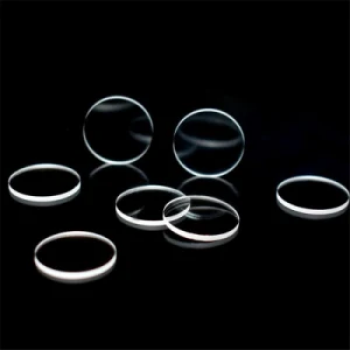
A quartz glass sleeve functions as a critical isolation barrier within a hot pressing machine. Its primary mechanical role is to create a sealed micro-environment that contains a high-purity argon protective atmosphere around the aluminum-silicon and graphite mixture. This physical separation ensures that the composite materials are effectively shielded from external air and contaminants throughout the heating process.
The sleeve is not merely a container; it is a process control device. By maintaining an inert argon atmosphere, it prevents the chemical degradation of the aluminum matrix and inhibits the formation of structurally compromising phases.
The Mechanics of Environmental Control
To understand the value of the quartz sleeve, you must look beyond the hardware to the chemical environment it facilitates.
Creating a Sealed Micro-Environment
Hot pressing machines often operate in environments where total atmospheric control of the entire chamber is difficult or inefficient.
The quartz sleeve solves this by defining a small, localized zone around the sample. This allows for the concentration of high-purity argon gas specifically where the reaction occurs.
Preventing Oxidation
Aluminum has a high affinity for oxygen, especially at the elevated temperatures required for sintering.
Without the sleeve to hold the protective argon gas, the aluminum matrix would rapidly oxidize. This would degrade the material properties and prevent proper bonding between the aluminum and silicon/graphite components.
Preserving Material Integrity
The ultimate goal of using the sleeve is to influence the microstructural evolution of the composite.
Inhibiting Brittle Interface Phases
The most critical function of this setup is controlling the reaction between aluminum and carbon (graphite).
At high temperatures, these elements naturally react to form aluminum carbide ($Al_4C_3$). This is a brittle interface phase that significantly weakens the final composite. The controlled atmosphere provided by the sleeve suppresses the conditions that favor this specific reaction.
Maintaining Composite Purity
The isolation provided by the quartz ensures that the graphite retains its lubricious properties and the aluminum retains its ductility.
By preventing the intrusion of impurities and uncontrolled gases, the sleeve ensures the final composite maintains the intended structural integrity and performance characteristics.
Operational Considerations and Trade-offs
While the quartz glass sleeve is essential for quality, it introduces specific operational constraints that must be managed.
Thermal limitations
Quartz glass has excellent thermal shock resistance, but it is not invincible. Rapid heating or cooling cycles outside of the quartz's tolerance can lead to cracking, which instantly compromises the protective argon atmosphere.
Handling Fragility
Unlike metal containment, quartz is brittle. Any physical damage or micro-cracks introduced during loading can lead to catastrophic failure under the pressure of the hot press, potentially ruining the sample and damaging the equipment.
Making the Right Choice for Your Goal
The decision to utilize a quartz glass sleeve is driven by the strictness of your material requirements.
- If your primary focus is mechanical strength: The sleeve is mandatory to prevent the formation of brittle $Al_4C_3$ phases that act as fracture initiation points.
- If your primary focus is material purity: You must use the sleeve to prevent oxidation, ensuring the aluminum matrix remains conductive and ductile.
The quartz sleeve is the defining component that transforms a standard hot pressing operation into a high-precision synthesis process.
Summary Table:
| Feature | Primary Function | Benefit to Composite |
|---|---|---|
| Inert Atmosphere | Contains high-purity argon gas | Prevents aluminum oxidation and matrix degradation |
| Isolation Barrier | Creates a sealed micro-environment | Shields materials from external air and contaminants |
| Phase Control | Inhibits $Al_4C_3$ formation | Prevents brittle interface phases and maintains strength |
| Material Purity | Ensures structural integrity | Retains graphite lubricity and aluminum ductility |
Elevate Your Composite Synthesis with KINTEK Precision
Achieving superior material properties in aluminum-silicon and graphite composites requires more than just heat—it requires a perfectly controlled environment. KINTEK specializes in advanced laboratory equipment, including high-performance hot pressing systems, vacuum furnaces, and specialized high-temperature consumables like quartz sleeves and ceramic crucibles.
Whether you are mitigating brittle $Al_4C_3$ phases or preventing oxidation, our expertise in high-pressure reactors and sintering technology ensures your research reaches its full potential.
Ready to optimize your lab’s material integrity?
Contact KINTEK today for expert solutions and high-quality equipment!
Related Products
- High Temperature Resistant Optical Quartz Glass Sheet
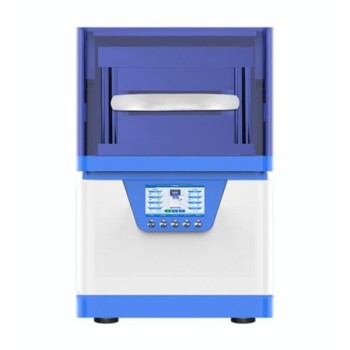
- Automatic High Temperature Heated Hydraulic Press Machine with Heated Plates for Lab
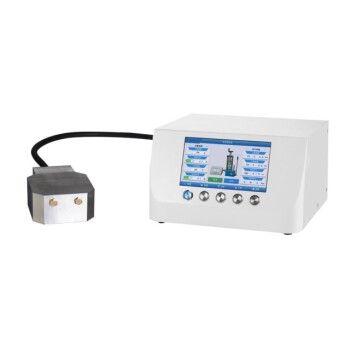
- 24T 30T 60T Heated Hydraulic Press Machine with Heated Plates for Laboratory Hot Press
- Automatic Heated Hydraulic Press Machine with Heated Plates for Laboratory Hot Press 25T 30T 50T
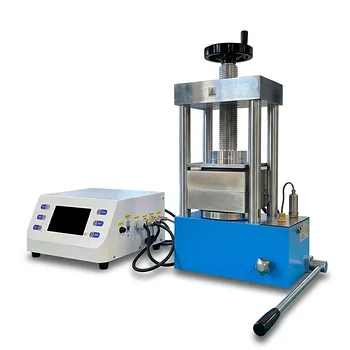
- Manual High Temperature Heated Hydraulic Press Machine with Heated Plates for Lab
People Also Ask
- What is the high temperature of quartz? Key Thresholds for Crystalline vs. Fused Silica
- What is high temperature quartz? A Guide to Unmatched Thermal Stability & Purity
- What is the high temperature variety of quartz? Unlock the Secrets of Beta-Quartz & Fused Quartz
- Which materials are used as high temperature resistance materials? A Guide to Superalloys, Ceramics & Composites
- What is optical quartz? The Ultimate Material for UV and High-Temp Optics