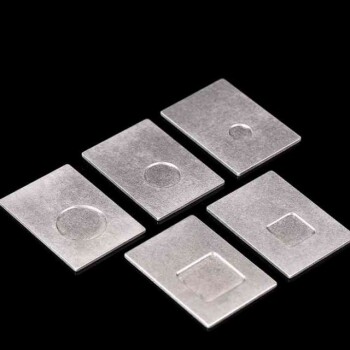
The primary function of the water-cooled copper sample holder is to actively manage thermal energy during high-power processing. By utilizing forced water circulation, it dissipates excess heat generated by the 500 W radio frequency (rf) plasma, strictly maintaining the sample temperature at approximately 500°C.
High-power plasma treatment injects significant energy into a material, creating a risk of overheating. The water-cooled holder acts as a critical thermal regulator, stabilizing the substrate to prevent structural degradation while facilitating optimal surface hardening.
The Mechanics of Thermal Regulation
Managing High-Power Energy
At a power level of 500 W, rf plasma generates substantial thermal energy. Without intervention, this energy would rapidly elevate the sample temperature beyond the target processing window.
The Role of Forced Circulation
The holder utilizes forced water circulation to continuously remove heat from the system. This active cooling mechanism ensures that the heat absorbed from the plasma is efficiently carried away, preventing accumulation.
Copper as a Thermal Conductor
Copper is utilized for the holder due to its exceptional thermal conductivity. It acts as an efficient bridge, transferring heat rapidly from the stainless steel sample to the circulating water.
Impact on Material Integrity (AISI 321)
Preventing Grain Coarsening
One of the primary risks of overheating metals is grain coarsening, where the microscopic grains of the metal grow larger, reducing mechanical strength. By clamping the temperature at 500°C, the holder preserves the fine grain structure of the AISI 321 stainless steel.
Avoiding Phase Transformations
Stainless steel can undergo unwanted microstructural changes, known as phase transformations, if exposed to excessive temperatures. The cooling system ensures the substrate remains thermally stable, maintaining its intended metallurgical properties.
Ensuring High-Quality Layer Growth
The goal of the process is to grow a hardened carbonitrided layer. Precise temperature control allows this layer to form optimally without compromising the underlying substrate.
Understanding the Risks and Trade-offs
The Necessity of Contact
For the copper holder to function correctly, there must be excellent physical contact between the sample and the holder. Poor contact results in inefficient heat transfer, leading to localized hot spots on the sample.
System Complexity
Implementing water cooling inside a plasma chamber adds complexity to the equipment setup. It requires reliable seals to prevent water leaks, which would be catastrophic to the vacuum environment and the plasma stability.
Making the Right Choice for Your Goal
To maximize the effectiveness of your plasma carbonitriding process, consider the following regarding your thermal setup:
- If your primary focus is Substrate Integrity: Ensure your cooling flow rate is sufficient to handle the 500 W load, preventing grain coarsening in temperature-sensitive alloys like AISI 321.
- If your primary focus is Layer Consistency: Verify that the sample is mounted flush against the copper holder to guarantee uniform cooling and avoid uneven hardened layer growth.
Active thermal management is not just a safety feature; it is the control variable that dictates the structural quality of your finished material.
Summary Table:
| Feature | Function in RF Plasma Carbonitriding |
|---|---|
| Material | High-conductivity copper for rapid heat transfer from sample to coolant. |
| Mechanism | Forced water circulation to actively dissipate 500W of plasma thermal energy. |
| Temperature Target | Maintains a stable processing window at approximately 500°C. |
| Material Protection | Prevents grain coarsening and unwanted phase transformations in alloys like AISI 321. |
| Quality Control | Ensures uniform layer growth by providing consistent thermal contact. |
Elevate Your Plasma Processing Precision with KINTEK
Don't let overheating compromise your material integrity. At KINTEK, we understand that precise thermal management is the key to superior surface hardening and laboratory success.
Whether you are performing high-power RF plasma treatments or advanced thin-film deposition, our high-performance high-temperature furnaces, CVD systems, and specialized vacuum components are designed to meet the rigorous demands of your research. From induction melting and crushing systems to high-pressure reactors and precision cooling solutions, KINTEK provides the specialized tools and consumables (including ceramics, crucibles, and PTFE products) needed to guarantee repeatable, high-quality results for battery research and advanced metallurgy.
Ready to optimize your lab's thermal regulation? Contact our technical experts today to find the perfect equipment solution tailored to your specific application!
References
- F.M. El-Hossary, M. Abo El-Kassem. Effect of rf Plasma Carbonitriding on the Biocompatibility and Mechanical Properties of AISI 321 Austenitic Stainless Steel. DOI: 10.4236/ampc.2014.42006
This article is also based on technical information from Kintek Solution Knowledge Base .
Related Products
- Customizable XRD Sample Holders for Diverse Research Applications
- XRD Sample Holder X-ray Diffractometer Powder Slide
- Sample Support Body for Electrochemical Tests
People Also Ask
- What are the applicable sample dimensions for the sample holder? Ensure a Perfect Fit for Your Lab Samples
- What are the specific storage requirements for a sample holder? Protect Your Lab's Critical Assets
- How can corrosion of the sample holder be prevented when using corrosive chemicals? Protect Your Lab's Integrity
- How should a suitable sample be selected and secured in the holder before an experiment? Ensure Unshakeable Stability for Reliable Data
- What are the general operating procedures for using a sample holder during experiments? Ensure Sample Integrity and Accurate Results