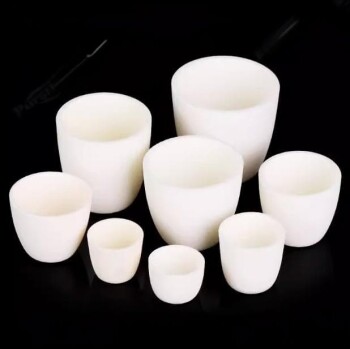
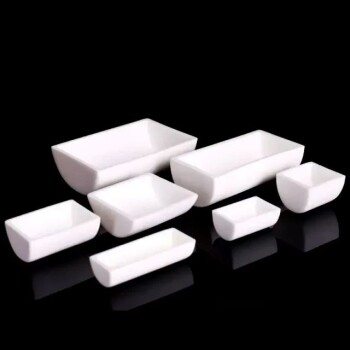
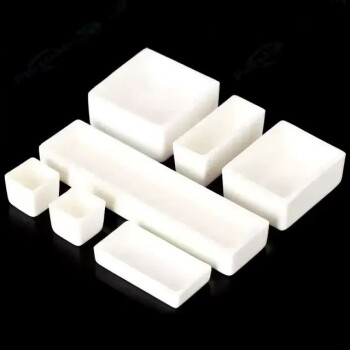
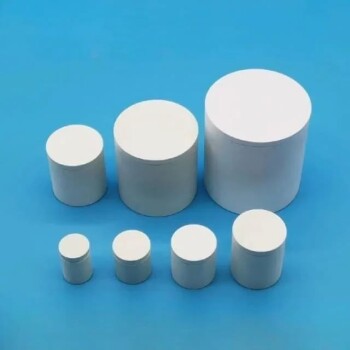
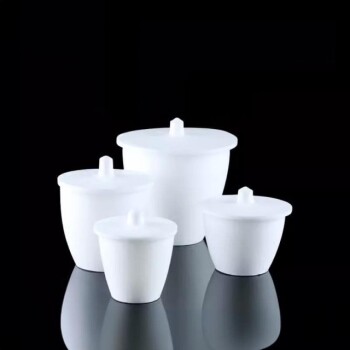
In the industrial analysis of charcoal, ceramic crucibles function as inert, high-temperature resistant vessels designed to isolate samples during extreme thermal processing. They are critical for accurately determining volatile matter and ash content because they withstand furnace temperatures up to 900°C without chemically reacting or physically deforming.
Core Insight: The primary value of the ceramic crucible is its ability to provide a chemically neutral environment. By remaining stable under extreme heat, it ensures that any measured change in mass is solely attributable to the combustion of the charcoal, guaranteeing the integrity of your compositional data.
The Mechanics of High-Temperature Integrity
Withstanding Extreme Heat
Charcoal analysis often requires subjecting samples to intense heat within a muffle furnace. Ceramic crucibles are engineered to maintain their structural integrity at temperatures typically ranging from 700°C to 900°C.
Preventing Physical Deformation
Unlike many metals or lower-grade materials, high-quality ceramics do not warp or melt under these thermal cycles. This stability is essential because even microscopic deformation could alter the sample's exposure to heat or air, leading to inconsistent results.
Ensuring Chemical Inertness
The crucible must remain chemically inert throughout the process. It does not react with the carbon, sulfur, or other impurities found in the charcoal, ensuring the vessel itself does not introduce variables into the analysis.
Critical Roles in Compositional Analysis
Volatile Matter Determination
To determine volatile matter, the charcoal is heated to drive off gases and moisture. The ceramic crucible holds the sample secure, allowing these volatile components to escape while retaining the fixed carbon and ash.
Ash Content Measurement
Ash determination requires burning away all organic matter to leave only the inorganic residue. The crucible collects this residue effectively, allowing for a precise measurement of the remaining ash content relative to the original sample mass.
Accuracy in Mass Measurement
The ultimate goal of these tests is to measure mass change. Because the ceramic crucible does not gain or lose weight via oxidation or degradation at high temperatures, analysts can be certain that weight loss is strictly due to the volatilization or combustion of the charcoal's components.
Understanding the Operational Trade-offs
Necessity of Purity vs. Durability
While ceramic crucibles offer superior chemical stability, they must be handled with care. Their rigid structure, while excellent for resisting heat deformation, can be susceptible to mechanical shock compared to metal alternatives.
The Risk of Contamination
The primary advantage of using ceramic is to prevent the introduction of impurities. However, this relies on the crucible remaining perfectly clean and intact; any residue from previous tests or cracks in the ceramic can compromise the "high purity" environment required for accurate analytical chemistry.
Making the Right Choice for Your Goal
To ensure the highest quality data during your charcoal analysis, consider the specific requirements of your testing protocol.
- If your primary focus is analytical accuracy: Rely on ceramic crucibles to eliminate the risk of container oxidation or chemical reactivity interfering with your mass readings.
- If your primary focus is process consistency: Standardize the use of crucibles rated for specific thermal cycles (e.g., 900°C) to ensure uniform heat distribution across all samples.
By utilizing the thermal stability of ceramic crucibles, you transform a rough raw material into precise, actionable chemical data.
Summary Table:
| Feature | Function in Charcoal Analysis | Benefit to Result |
|---|---|---|
| Thermal Resistance | Withstands 700°C - 900°C without warping | Maintains consistent sample exposure |
| Chemical Inertness | Prevents reaction with carbon or sulfur | Ensures no sample contamination |
| Mass Stability | Zero weight loss from oxidation | Guarantees accurate mass change measurement |
| Sample Isolation | Contains residue for ash determination | Enables precise quantification of inorganic matter |
Precision Lab Solutions for Your Critical Analysis
Maximize the accuracy of your industrial chemical analysis with KINTEK’s high-performance laboratory equipment. Whether you are conducting charcoal combustion tests or advanced material research, our comprehensive range of products provides the reliability your data demands:
- High-Temperature Excellence: Specialized muffle and tube furnaces for precise thermal cycles.
- Superior Consumables: High-purity ceramic crucibles, PTFE products, and durable labware.
- Advanced Processing: Crushing, milling, and hydraulic presses for professional sample preparation.
- Comprehensive Research Tools: From high-pressure reactors to battery research consumables and cooling solutions.
Empower your laboratory with KINTEK’s industry-leading technology. Contact our specialists today to find the perfect tools for your specific research and industrial needs.
References
- Raquel Marchesan, Vanessa Coelho Almeida. QUALITY OF Eucalyptus urograndis CHARCOAL PRODUCED IN THE SOUTHERN REGION OF TOCANTINS. DOI: 10.5380/rf.v49i4.57702
This article is also based on technical information from Kintek Solution Knowledge Base .
Related Products
- Arc-Shaped Alumina Ceramic Crucible High Temperature Resistant for Engineering Advanced Fine Ceramics
- Alumina Al2O3 Ceramic Crucible Semicircle Boat with Lid for Engineering Advanced Fine Ceramics
- Engineering Advanced Fine Alumina Al2O3 Ceramic Crucible for Laboratory Muffle Furnace
- Boron Nitride (BN) Crucible for Phosphorous Powder Sintered
- Engineering Advanced Fine Ceramics Alumina Al2O3 Crucible With Lid Cylindrical Laboratory Crucible
People Also Ask
- Why Use Alumina Crucibles & Powder Burial for NaSICON? Ensure Phase Purity and Prevent Elemental Volatilization
- What is the primary purpose of using alumina crucibles for LLTO ceramics? Optimize Your High-Temperature Sintering
- Why are alumina crucibles and mother powder essential for LATP sintering? Optimize Your Solid Electrolyte Performance
- Why are high-purity alumina crucibles used for liquid lead corrosion experiments? Ensure Data Accuracy at 550°C
- Primary considerations for choosing alumina crucibles and quartz tubes in indium intercalation: Ensure Material Purity