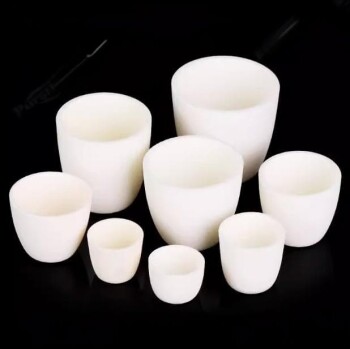
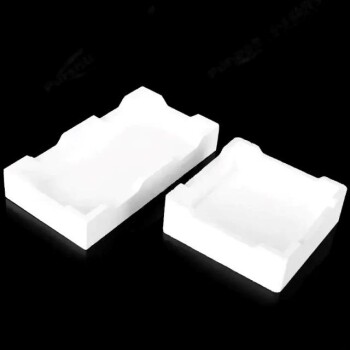
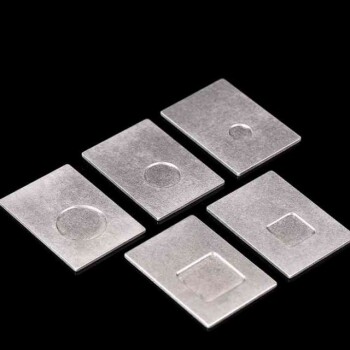
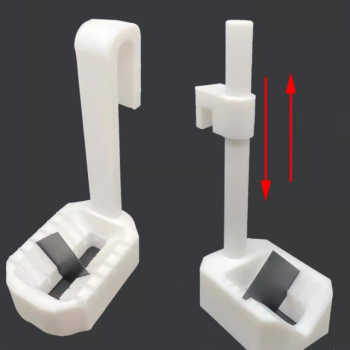
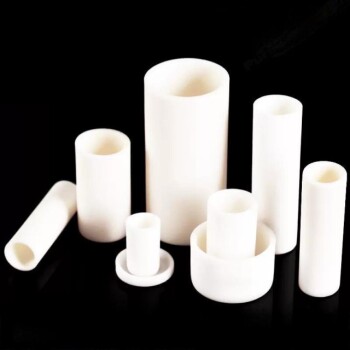
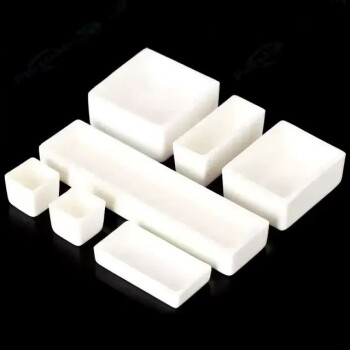
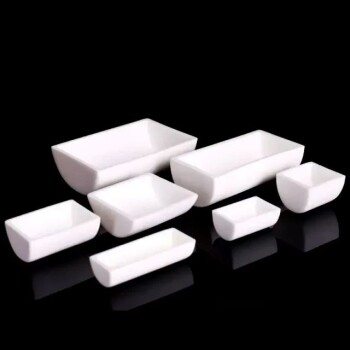
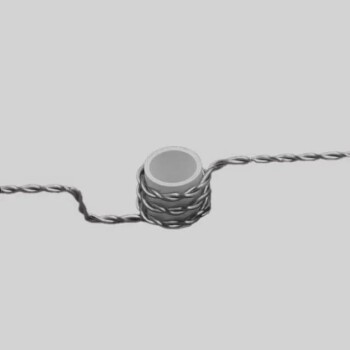
Ceramic sample holders serve as the critical isolation interface in high-temperature liquid lead experiments. Their primary function is to mechanically secure metal specimens at temperatures up to 600°C while remaining chemically inert. By resisting reaction with the liquid lead, they prevent contamination that would otherwise invalidate the study of corrosion kinetics.
Accurate corrosion analysis requires a testing environment free from external chemical variables. Ceramic holders provide the essential mechanical rigidity and chemical neutrality to ensure that observed degradation is caused solely by the liquid lead, not by the testing apparatus itself.
Ensuring Mechanical Stability at High Heat
Withstanding Extreme Thermal Environments
Liquid lead experiments operate at aggressive temperatures, often reaching 600 degrees Celsius. At these levels, standard fixture materials can lose structural integrity. Ceramic holders retain their exceptional mechanical strength to withstand this thermal stress without deformation.
Fixed Positioning for Long Durations
Corrosion studies frequently require extended exposure times to yield useful data. During tests lasting up to 1000 hours, the holder acts as a rigid anchor. It maintains the fixed position of multiple metal specimens, ensuring consistent exposure geometry throughout the entire timeline.
Guaranteeing Chemical Integrity
Absolute Inertness
The validity of a corrosion study depends entirely on chemical isolation. Ceramic holders possess exceptional chemical stability. They do not react with the liquid lead bath or the metal samples being tested.
Preventing Impurity Introduction
Any reaction between the holder and the environment would release foreign elements into the lead. Ceramic prevents the introduction of impurities. This ensures that the liquid lead remains pure, allowing for precise observation of the natural corrosion process.
Enabling Accurate Kinetic Analysis
The ultimate goal of these experiments is often a kinetic analysis of corrosion rates. Impurities from a reactive holder would accelerate or inhibit these rates artificially. By eliminating this variable, ceramic holders ensure the data reflects the true physical behavior of the metal samples.
Understanding the Trade-offs: Material Selection Risks
The Consequence of Alternative Materials
The choice of holder material is not merely a structural decision; it is a chemical one. Using non-ceramic (metallic) holders introduces a high risk of cross-contamination. This renders the resulting data regarding corrosion mechanisms unreliable.
Rigidity vs. Adaptability
Ceramics offer high rigidity, which is essential for maintaining sample placement. However, this fixity means the experimental setup must be precisely designed beforehand. Unlike malleable materials, the ceramic holder offers no flexibility for adjustment once the 1000-hour exposure cycle begins.
Making the Right Choice for Your Experiment
To ensure the fidelity of your high-temperature liquid lead data, consider the following regarding your sample holder selection:
- If your primary focus is data integrity: Rely on ceramic holders to eliminate the variable of dissolved impurities interfering with your kinetic analysis.
- If your primary focus is long-term reliability: Utilize ceramics to maintain the precise physical geometry of multiple samples over 1000+ hour exposure cycles at 600°C.
By strictly isolating your specimens from environmental contamination, ceramic holders turn a volatile thermal test into a controlled and quantifiable scientific study.
Summary Table:
| Feature | Ceramic Holder Performance | Impact on Experiment |
|---|---|---|
| Temperature Resistance | Stable up to 600°C+ | Prevents deformation and mechanical failure |
| Chemical Stability | Fully inert to liquid lead | Prevents impurity introduction and cross-contamination |
| Durability | Rated for 1000+ hour cycles | Ensures consistent exposure geometry for long-term tests |
| Data Accuracy | Eliminates external variables | Enables precise kinetic analysis of corrosion rates |
Elevate Your Research Precision with KINTEK
Don't let equipment contamination compromise your high-temperature research data. KINTEK specializes in advanced laboratory solutions designed for the most demanding environments. Whether you are conducting long-term corrosion studies or complex materials synthesis, our expertise in ceramics, crucibles, and high-temperature furnaces ensures your experiments remain pure and controlled.
Our comprehensive portfolio includes:
- High-Temperature Systems: Muffle, vacuum, and atmosphere furnaces for precise thermal control.
- Material Processing: Advanced crushing, milling, and hydraulic presses (pellet, hot, isostatic) for sample preparation.
- Reaction & Storage: High-pressure reactors, autoclaves, and ULT freezers for specialized workflows.
- Consumables: Premium PTFE products and high-purity ceramics tailored for chemical inertness.
Ready to optimize your lab's performance? Contact KINTEK today to discuss your specific experimental needs and discover how our high-performance equipment can drive your scientific breakthroughs.
References
- Martina Pazderová, Jan ČÍŽEK. EFFECT OF STEEL COMPOSITION ON ITS BEHAVIOUR IN THE LIQUID LEAD ENVIRONMENT. DOI: 10.37904/metal.2023.4700
This article is also based on technical information from Kintek Solution Knowledge Base .
Related Products
- Arc-Shaped Alumina Ceramic Crucible High Temperature Resistant for Engineering Advanced Fine Ceramics
- Advanced Engineering Fine Ceramics Alumina Ceramic Saggar for Fine Corundum
- Engineering Advanced Fine Ceramics Alumina Crucibles (Al2O3) for Thermal Analysis TGA DTA
- Customizable XRD Sample Holders for Diverse Research Applications
- Custom PTFE Wafer Holders for Lab and Semiconductor Processing
People Also Ask
- Why Use Alumina Crucibles & Powder Burial for NaSICON? Ensure Phase Purity and Prevent Elemental Volatilization
- What is the primary purpose of using alumina crucibles for LLTO ceramics? Optimize Your High-Temperature Sintering
- Why are alumina crucibles and mother powder essential for LATP sintering? Optimize Your Solid Electrolyte Performance
- Why are high-purity alumina crucibles used for liquid lead corrosion experiments? Ensure Data Accuracy at 550°C
- Primary considerations for choosing alumina crucibles and quartz tubes in indium intercalation: Ensure Material Purity