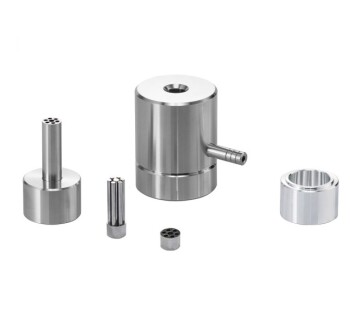
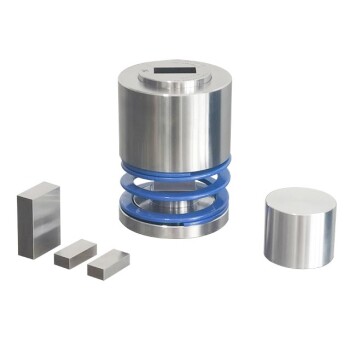
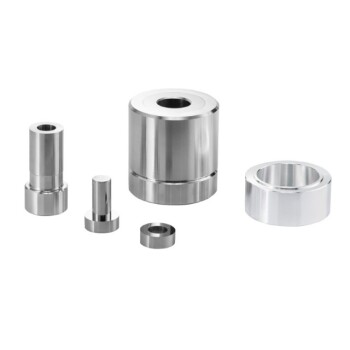
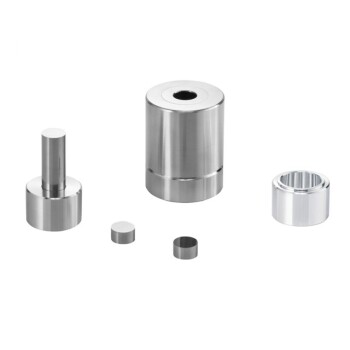
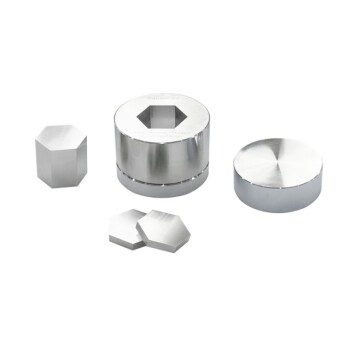
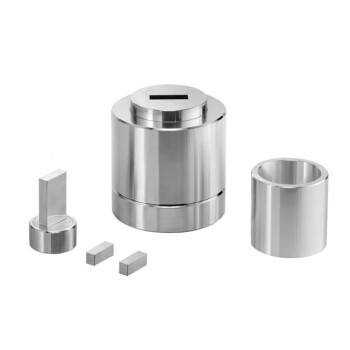
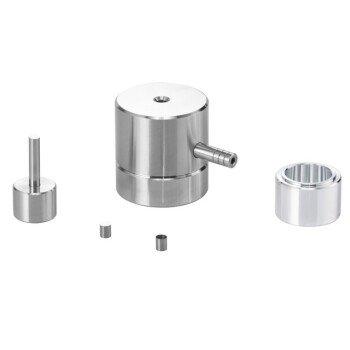
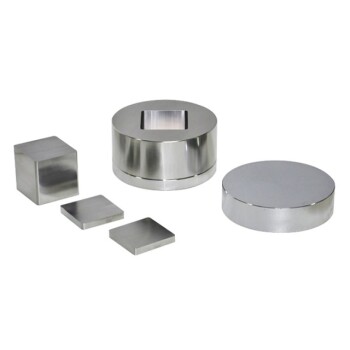
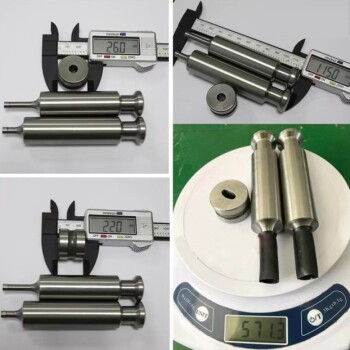
High-strength pressure molds serve two critical functions: they act as robust containment vessels for shaping powder under extreme mechanical loads and as sealed transport capsules. During the transfer phase specifically, they isolate reactive copper nanopowders from atmospheric oxygen as they move from an inert glove box environment to a vacuum hot press.
The core value of these molds lies in their ability to bridge the gap between delicate handling and extreme processing. They protect sensitive nanomaterials from oxidation during transport while possessing the mechanical integrity to withstand GPa-level pressures and high temperatures during the densification phase.
The Role in Material Protection and Transfer
Maintaining an Inert Environment
The primary challenge with nanostructured copper powders is their high reactivity to air.
High-strength molds are designed to be hermetically sealed. This feature allows them to function as a protective vehicle, transporting the powder from the safety of an inert glove box to the processing equipment without exposure to the atmosphere.
Preventing Contamination
By isolating the powder, the mold ensures that the material properties remain unaltered before processing begins.
If the copper nanopowders were to contact air during the transfer to the vacuum hot press, oxidation would occur, compromising the purity and performance of the final bulk material.
Mechanics of Densification and Shaping
Withstanding Extreme Processing Conditions
Once inside the press, the function of the mold shifts from protection to structural containment.
The mold material must exhibit exceptional mechanical strength. It is required to withstand pressures ranging from 0.250 GPa to 1.000 GPa, often at elevated temperatures, without fracturing or deforming.
Directing Compaction Forces
The mold restricts the lateral displacement of the powder.
By confining the powder horizontally, the mold forces the vertical pressure applied by the hydraulic press to convert entirely into compaction force. This drives the plastic deformation and rearrangement of the copper nanoparticles.
Ensuring Geometric Uniformity
Proper molding is essential for creating high-quality green pellets.
The mold ensures even pressure distribution throughout the powder mass. This uniformity prevents the formation of density gradients, which can lead to delamination or warping, ensuring the final product has a regular geometric shape and consistent size.
Understanding the Trade-offs
Material Limitations
The requirement for high strength at high temperatures severely limits the choice of materials for the mold itself.
The mold must be harder and more heat-resistant than the copper powder being processed. If the mold material yields or creeps under the GPa-level pressure, the geometric accuracy of the final component will be lost.
Complexity of Sealing
Integrating a sealing mechanism into a mold designed for extreme pressure adds mechanical complexity.
A standard open die cannot protect the powder during transfer. Therefore, the design must accommodate sealing components that do not compromise the mold's structural integrity under load.
Ensuring Process Integrity
To maximize the quality of your bulk nanostructured materials, consider the following based on your specific processing goals:
- If your primary focus is material purity: Prioritize the sealing capability of the mold design to ensure zero air exposure during the transfer from the glove box to the press.
- If your primary focus is maximum density: Ensure the mold material has a high yield strength to tolerate pressures up to 1.000 GPa, facilitating the plastic deformation necessary to reach relative densities above 96%.
Success depends on a mold that is as impermeable to air as it is resistant to crushing force.
Summary Table:
| Function | Key Benefit | Requirement |
|---|---|---|
| Material Containment | Prevents atmospheric oxidation and contamination | Hermetic sealing and inert transfer capability |
| Structural Support | Withstands extreme pressures (0.250 - 1.000 GPa) | High yield strength and heat resistance |
| Force Direction | Ensures uniform compaction and prevents warping | Precision lateral confinement |
| Geometric Shaping | Produces uniform green pellets without density gradients | High-tolerance machining and durability |
Elevate Your Materials Research with KINTEK
Precise control over nanostructured powder processing requires equipment that can handle extreme mechanical loads without compromising material purity. KINTEK specializes in advanced laboratory solutions, including high-performance hydraulic presses (pellet, hot, isostatic) and custom-engineered crushing and milling systems designed for sensitive materials.
Whether you are working with reactive copper nanopowders or developing high-performance ceramics, our portfolio—from high-temperature furnaces (muffle, vacuum, CVD) to isostatic presses and specialized consumables like crucibles and PTFE products—ensures your research meets the highest standards of density and uniformity.
Ready to optimize your densification process? Contact KINTEK experts today to find the perfect mold and press configuration for your laboratory needs.
Related Products
- Anti-Cracking Press Mold for Lab Use
- Special Shape Press Mold for Lab
- Round Bidirectional Press Mold for Lab
- Square Bidirectional Pressure Mold for Lab Use
- Isostatic Molding Pressing Molds for Lab
People Also Ask
- What is the press mould method? A Guide to Consistent, Detailed Ceramic Forms
- How to use a press mold? Master the Art of Creating Consistent Ceramic Forms
- What is the function of press molds during the preparation of SiCf/Ti-43Al-9V composites? Achieve Structural Precision
- What is a press mold used for? Achieve Repeatable Precision and Efficiency
- What is the purpose of specialized pressure devices in sulfide solid-state batteries? Ensure Chemo-Mechanical Stability