Knowledge What is the function of metal titanium chips used as getters in corrosion experiment reaction cells? Ensure Data Purity
Author avatar

Tech Team · Kintek Solution

Updated 16 hours ago

What is the function of metal titanium chips used as getters in corrosion experiment reaction cells? Ensure Data Purity


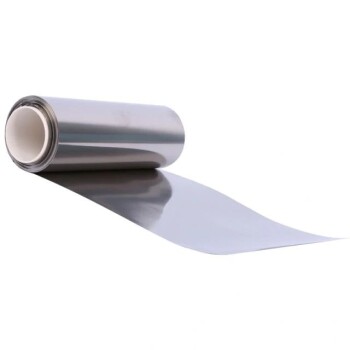
Metal titanium chips function as critical deoxidizing agents within high-temperature corrosion experiment reaction cells. These chips are strategically positioned in the upper section of the cell to actively capture and neutralize trace oxygen impurities present in the argon gas stream. By intercepting these impurities, the titanium prevents them from reaching the metal samples, ensuring the test environment remains strictly inert.

Core Takeaway: Even high-purity gases contain trace contaminants that can skew experimental results. Titanium chips act as a chemical "getter," sacrificing themselves to strip oxygen from the atmosphere, ensuring that any corrosion observed on the sample is caused solely by the intended variables, not by atmospheric pollution.

The Mechanics of Deoxidation

The Chemical "Getter" Effect

Titanium is highly reactive with oxygen, particularly at elevated temperatures. In this context, the chips serve as a "getter"—a material added specifically to remove impurities.

As the argon gas flows into the cell, the titanium chips chemically react with any residual oxygen molecules. This reaction binds the oxygen to the titanium, effectively scrubbing the gas stream clean.

Strategic Placement for Maximum Efficiency

The primary reference notes that these chips are placed in the upper part of the sealed reaction cell.

This placement is intentional. It positions the titanium chips upstream of the test sample, allowing them to purify the gas before it ever contacts the material being tested.

Why a Strictly Inert Atmosphere Matters

Eliminating Unintended Variables

The primary goal of a corrosion experiment is to observe how a specific material reacts to a specific corrosive environment.

If oxygen is present in the background gas (argon), the sample may undergo unintended oxidation. This creates a "false positive," where the material degrades due to the atmosphere rather than the corrosive agents you are trying to study.

Enhancing High-Purity Standards

While researchers typically use "high-purity" argon, absolute purity is difficult to maintain during gas transfer.

Titanium chips act as a final safeguard. They compensate for microscopic impurities that may remain in the gas cylinder or enter through the delivery system, creating a pristine environment for the experiment.

Operational Considerations

Temperature Dependency

It is important to recognize that titanium's effectiveness as a getter is linked to the high-temperature nature of these experiments.

Titanium becomes significantly more reactive with oxygen as it heats up. In a cold reaction cell, the chips would be far less effective at scrubbing the gas stream.

Saturation Limits

Titanium chips have a finite capacity for absorption. They are designed to handle trace impurities, not massive leaks.

If the reaction cell is not properly sealed or if the gas quality is extremely poor, the chips will eventually become saturated (fully oxidized). Once saturated, they can no longer protect the sample.

Ensuring Data Integrity in Your Experiments

If your primary focus is Data Accuracy:

  • Always utilize getter materials like titanium when working with reactive samples to eliminate the variable of atmospheric oxidation.

If your primary focus is Experimental Setup:

  • Ensure the chips are placed in the gas flow path before the gas reaches your sample to maximize the purification effect.

By treating the atmosphere as a variable that must be controlled, you ensure that your corrosion data reflects the true properties of the material, not the quality of your gas supply.

Summary Table:

Feature Description
Primary Role Deoxidizing agent / Chemical "getter"
Target Impurity Trace oxygen in argon gas streams
Strategic Placement Upper section of the cell (upstream of the sample)
Optimal Condition High-temperature environments (increases reactivity)
Primary Benefit Prevents unintended oxidation and ensures data integrity

Secure the Integrity of Your High-Temperature Research with KINTEK

Don't let trace contaminants compromise your experimental results. KINTEK specializes in advanced laboratory solutions designed for the most demanding research environments. Whether you are conducting sensitive corrosion studies in high-temperature high-pressure reactors or performing material synthesis in our precision CVD and atmosphere furnaces, we provide the tools necessary for absolute control.

From high-purity ceramics and crucibles to specialized crushing, milling, and hydraulic press systems, KINTEK is your partner in achieving repeatable, high-accuracy data. Our comprehensive portfolio also includes cutting-edge electrolytic cells, battery research tools, and cooling solutions tailored for modern material science.

Ready to elevate your lab's performance? Contact our technical experts today to discover how our high-performance equipment and consumables can optimize your next project.

References

  1. Aleksander V. Abramov, Ilya B. Polovov. Corrosion of Molybdenum-Based and Ni–Mo Alloys in Liquid Bismuth–Lithium Alloy. DOI: 10.3390/met13020366

This article is also based on technical information from Kintek Solution Knowledge Base .

Related Products

People Also Ask

Related Products

Hemispherical Bottom Tungsten Molybdenum Evaporation Boat

Hemispherical Bottom Tungsten Molybdenum Evaporation Boat

Used for gold plating, silver plating, platinum, palladium, suitable for a small amount of thin film materials. Reduce the waste of film materials and reduce heat dissipation.

Aluminized Ceramic Evaporation Boat for Thin Film Deposition

Aluminized Ceramic Evaporation Boat for Thin Film Deposition

Vessel for depositing thin films; has an aluminum-coated ceramic body for improved thermal efficiency and chemical resistance. making it suitable for various applications.

Custom PTFE Teflon Parts Manufacturer for Culture Dish and Evaporation Dish

Custom PTFE Teflon Parts Manufacturer for Culture Dish and Evaporation Dish

The PTFE culture dish evaporating dish is a versatile laboratory tool known for its chemical resistance and high-temperature stability. PTFE, a fluoropolymer, offers exceptional non-stick properties and durability, making it ideal for various applications in research and industry, including filtration, pyrolysis, and membrane technology.

Ultra-Vacuum Electrode Feedthrough Connector Flange Power Electrode Lead for High-Precision Applications

Ultra-Vacuum Electrode Feedthrough Connector Flange Power Electrode Lead for High-Precision Applications

Discover the Ultra-Vacuum Electrode Feedthrough Connector Flange, perfect for high-precision applications. Ensure reliable connections in ultra-vacuum environments with advanced sealing and conductive technology.

Vacuum Hot Press Furnace Machine for Lamination and Heating

Vacuum Hot Press Furnace Machine for Lamination and Heating

Experience clean and precise lamination with Vacuum Lamination Press. Perfect for wafer bonding, thin-film transformations, and LCP lamination. Order now!

High Purity Pure Graphite Crucible for Electron Beam Evaporation

High Purity Pure Graphite Crucible for Electron Beam Evaporation

A technology mainly used in the field of power electronics. It is a graphite film made of carbon source material by material deposition using electron beam technology.

Copper Foam

Copper Foam

Copper foam has good thermal conductivity and can be widely used for heat conduction and heat dissipation of motors/electrical appliances and electronic components.

Metallographic Specimen Mounting Machine for Laboratory Materials and Analysis

Metallographic Specimen Mounting Machine for Laboratory Materials and Analysis

Precision metallographic mounting machines for labs—automated, versatile, and efficient. Ideal for sample prep in research and quality control. Contact KINTEK today!

Custom PTFE Teflon Parts Manufacturer for Acid and Alkali Resistant Chemical Powder Material Scoops

Custom PTFE Teflon Parts Manufacturer for Acid and Alkali Resistant Chemical Powder Material Scoops

Known for its excellent thermal stability, chemical resistance and electrical insulating properties, PTFE is a versatile thermoplastic material.

CVD Diamond Domes for Industrial and Scientific Applications

CVD Diamond Domes for Industrial and Scientific Applications

Discover CVD diamond domes, the ultimate solution for high-performance loudspeakers. Made with DC Arc Plasma Jet technology, these domes deliver exceptional sound quality, durability, and power handling.

Graphite Vacuum Furnace Negative Material Graphitization Furnace

Graphite Vacuum Furnace Negative Material Graphitization Furnace

Graphitization furnace for battery production has uniform temperature and low energy consumption. Graphitization furnace for negative electrode materials: an efficient graphitization solution for battery production and advanced functions to enhance battery performance.

Electrode Polishing Material for Electrochemical Experiments

Electrode Polishing Material for Electrochemical Experiments

Looking for a way to polish your electrodes for electrochemical experiments? Our polishing materials are here to help! Follow our easy instructions for best results.

E Beam Crucibles Electron Gun Beam Crucible for Evaporation

E Beam Crucibles Electron Gun Beam Crucible for Evaporation

In the context of electron gun beam evaporation, a crucible is a container or source holder used to contain and evaporate the material to be deposited onto a substrate.

Conductive Carbon Cloth Carbon Paper Carbon Felt for Electrodes and Batteries

Conductive Carbon Cloth Carbon Paper Carbon Felt for Electrodes and Batteries

Conductive carbon cloth, paper, and felt for electrochemical experiments. High-quality materials for reliable and accurate results. Order now for customization options.

Molybdenum Vacuum Heat Treat Furnace

Molybdenum Vacuum Heat Treat Furnace

Discover the benefits of a high-configuration molybdenum vacuum furnace with heat shield insulation. Ideal for high-purity, vacuum environments like sapphire crystal growth and heat treatment.

Conductive Boron Nitride BN Ceramics Composite for Advanced Applications

Conductive Boron Nitride BN Ceramics Composite for Advanced Applications

Due to the characteristics of boron nitride itself, the dielectric constant and dielectric loss are very small, so it is an ideal electrical insulating material.

Vacuum Hot Press Furnace Machine Heated Vacuum Press

Vacuum Hot Press Furnace Machine Heated Vacuum Press

Discover the advantages of Vacuum Hot Press Furnace! Manufacture dense refractory metals & compounds, ceramics, and composites under high temp and pressure.

Graphite Vacuum Furnace High Thermal Conductivity Film Graphitization Furnace

Graphite Vacuum Furnace High Thermal Conductivity Film Graphitization Furnace

The high thermal conductivity film graphitization furnace has uniform temperature, low energy consumption and can operate continuously.

Ultra-High Temperature Graphite Vacuum Graphitization Furnace

Ultra-High Temperature Graphite Vacuum Graphitization Furnace

The ultra-high temperature graphitization furnace utilizes medium frequency induction heating in a vacuum or inert gas environment. The induction coil generates an alternating magnetic field, inducing eddy currents in the graphite crucible, which heats up and radiates heat to the workpiece, bringing it to the desired temperature. This furnace is primarily used for graphitization and sintering of carbon materials, carbon fiber materials, and other composite materials.

High Pressure Laboratory Vacuum Tube Furnace Quartz Tubular Furnace

High Pressure Laboratory Vacuum Tube Furnace Quartz Tubular Furnace

KT-PTF High Pressure Tube Furnace: Compact split tube furnace with strong positive pressure resistance. Working temp up to 1100°C and pressure up to 15Mpa. Also works under controller atmosphere or high vacuum.


Leave Your Message