The primary function of three-dimensional motion mixing equipment is to facilitate a completely uniform physical mixture of high-density chromium carbide particles and nickel-based alloy powders. Through continuous tumbling and staggered motion, often maintained for durations up to 24 hours, this process integrates materials of varying densities into a homogeneous blend.
Uniform powder distribution is the absolute prerequisite for coating stability. By preventing particle segregation during the mixing phase, three-dimensional motion ensures the final laser cladding layer exhibits consistent chemical composition and hardness, avoiding critical performance fluctuations.
The Mechanics of Uniformity
Overcoming Density Disparities
Chromium carbide particles are described as high-density, which distinguishes them from the nickel-based alloy matrix.
Standard mixing methods often fail to keep heavier particles suspended, leading to separation. Three-dimensional motion actively combats this natural tendency for segregation.
Continuous Staggered Motion
The equipment does not simply rotate; it utilizes continuous tumbling and staggered motion.
This multidirectional movement forces the powder particles into a chaotic trajectory. This ensures that every particle, regardless of weight or size, is constantly redistributed throughout the container.
The Role of Duration
Achieving true homogeneity is not instantaneous; the reference highlights a duration of 24 hours.
This extended timeframe allows the mixture to reach a state of equilibrium. It ensures that the distribution of carbides within the nickel matrix is statistically uniform across the entire batch.
Impact on Laser Cladding Performance
Stabilizing Chemical Composition
The ultimate goal of this rigorous mixing is to ensure the stability of the chemical composition in high-speed laser cladding layers.
If the powder is not mixed uniformly, the chemical makeup of the melt pool will vary as the laser scans. Uniform mixing guarantees that the alloy composition remains constant throughout the process.
Eliminating Hardness Gradients
A major risk in composite coatings is the presence of hardness gradients.
Without thorough mixing, some areas of the coating would be rich in hard carbides while others would be soft nickel alloy. Three-dimensional mixing prevents this, creating a consistent hardness profile across the workpiece.
Preventing Performance Fluctuations
Reliability is key for industrial coatings.
By eliminating "hot spots" or weak zones caused by poor mixing, the equipment ensures the coating avoids performance fluctuations. This leads to predictable wear resistance and mechanical lifespan.
Critical Considerations and Trade-offs
Process Efficiency vs. Quality
The requirement for long mixing durations (e.g., 24 hours) introduces a significant production bottleneck.
While this timeframe guarantees uniformity, it reduces the volume of powder that can be prepared daily. Manufacturers must weigh the need for absolute homogeneity against production throughput requirements.
Energy and Equipment wear
Running heavy machinery continuously for 24-hour cycles increases energy consumption and operational costs.
This extensive runtime also increases wear on the mixing equipment itself, requiring robust maintenance schedules to prevent downtime.
Making the Right Choice for Your Goal
When integrating powder preparation into your workflow, consider your specific performance requirements:
- If your primary focus is coating reliability: strictly adhere to the extended mixing durations (e.g., 24 hours) to eliminate hardness gradients and ensure chemical stability.
- If your primary focus is process efficiency: investigate if shorter cycles can achieve acceptable uniformity, but be aware that reducing time directly increases the risk of particle segregation and coating failure.
Consistent powder preparation is the silent variable that determines the success or failure of high-performance laser cladding.
Summary Table:
| Key Feature | Functional Benefit | Impact on Coating |
|---|---|---|
| 3D Staggered Motion | Prevents particle segregation | Consistent chemical composition |
| Continuous Tumbling | Homogeneous physical blending | Elimination of hardness gradients |
| 24-Hour Duration | Reaches powder equilibrium | Avoids performance fluctuations |
| Density Management | Integrates high-density carbides | Uniform melt pool properties |
Elevate Your Material Consistency with KINTEK
Precision in laser cladding begins with a perfectly homogeneous powder. KINTEK specializes in advanced laboratory equipment, including robust crushing and milling systems and high-performance shakers, designed to overcome density disparities in complex metal powders.
Whether you are developing chromium carbide reinforced coatings or researching next-generation alloys, our solutions ensure your materials meet the strictest standards of stability and reliability. Beyond mixing, we offer a comprehensive suite of high-temperature furnaces, hydraulic presses, and PTFE consumables to support your entire R&D workflow.
Ready to eliminate performance fluctuations in your coatings? Contact KINTEK today to discover how our expert equipment can optimize your laboratory or production efficiency.
References
- Jari Tuominen, Pasi Peura. High-speed laser cladding of chromium carbide reinforced Ni-based coatings. DOI: 10.1007/s40194-023-01557-9
This article is also based on technical information from Kintek Solution Knowledge Base .
Related Products
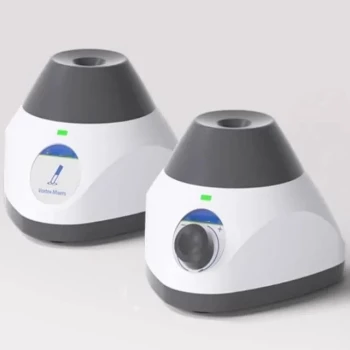
- Laboratory Vortex Mixer Orbital Shaker Multifunctional Rotation Oscillation Mixer
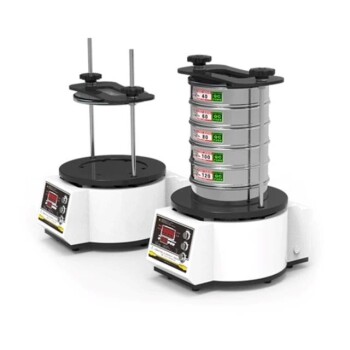
- Laboratory Wet Three-Dimensional Vibratory Sieve Shaker Machine
- Laboratory Oscillating Orbital Shaker
- Laboratory Disc Rotary Mixer for Efficient Sample Mixing and Homogenization
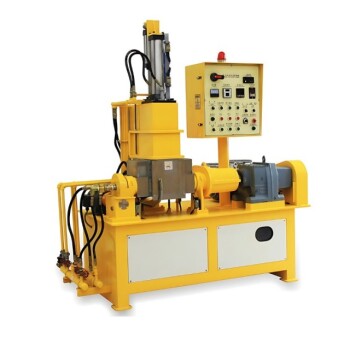
- Lab Internal Rubber Mixer Rubber Kneader Machine for Mixing and Kneading
People Also Ask
- What is the role of a laboratory orbital shaker in copper recovery? Optimize Industrial Waste Liquid Processing
- What is the role of a laboratory orbital shaker in activated carbon synthesis? Maximize Pore Depth & Surface Area
- What is a laboratory mixer used for? Choose the Right Tool for Liquids or Solids
- What is a laboratory mixer? A Guide to Achieving Perfect Sample Homogeneity
- What are laboratory mixers used for? Achieve Perfect Sample Homogeneity and Reliable Results