Knowledge What is the importance of using a vacuum brazing furnace for High-Entropy Alloys? Ensure Joint Integrity & Strength
Author avatar

Tech Team · Kintek Solution

Updated 2 days ago

What is the importance of using a vacuum brazing furnace for High-Entropy Alloys? Ensure Joint Integrity & Strength


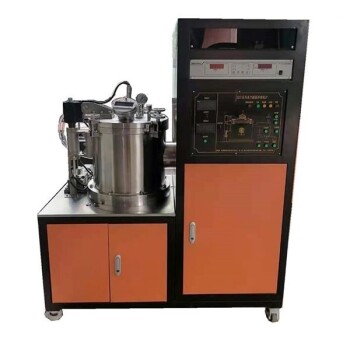
A controlled environment is the determining factor in the structural integrity of brazed High-Entropy Alloys (HEAs). While infrared technology provides the necessary rapid, localized heat, the presence of a vacuum or protective atmosphere (such as high-purity argon) is strictly required to prevent oxidation of both the HEA substrate and the filler metal.

Core Takeaway The success of infrared brazing for High-Entropy Alloys relies not just on heat, but on atmospheric purity. By eliminating oxygen and controlling the diffusion of chemical elements, a vacuum or inert environment prevents the formation of brittle compounds and voids, ensuring the joint achieves maximum tensile strength.

The Critical Role of Oxidation Prevention

Protecting Substrate and Filler

At the elevated temperatures required for brazing, HEAs are highly susceptible to reacting with oxygen. A vacuum or high-purity argon atmosphere creates a barrier that prevents the substrate and filler metal from oxidizing.

Facilitating Wetting and Flow

Oxides act as a physical barrier that stops molten filler metal from bonding with the base material. By maintaining a pristine environment, you ensure the filler metal can wet the surface effectively and diffuse properly into the joint interface.

Eliminating the Need for Flux

A significant advantage of using these controlled environments is the ability to braze without chemical flux. This results in cleaner joints and eliminates the risk of corrosive flux residues entrapment, often resulting in parts that emerge brighter than before the process.

Managing Metallurgical Integrity

Controlling Melting Point Depressants (MPDs)

HEAs often utilize filler metals containing MPDs like boron or phosphorus. A controlled atmosphere is essential to manage the migration of these elements during the rapid heating cycle of infrared brazing.

Preventing Brittle Phases

If MPDs are not managed correctly due to environmental impurities or improper diffusion, they can lead to the formation of brittle intermetallic compounds. A stable vacuum or inert environment mitigates this risk.

Reducing Voids for Higher Strength

Proper atmospheric control prevents gas entrapment and chemical reactions that generate voids within the joint. Minimizing these defects is directly correlated to increasing the tensile strength of the final assembly.

Understanding the Trade-offs

Process Complexity vs. Joint Quality

Infrared brazing is prized for its speed and localized heating. Introducing a vacuum chamber adds a layer of equipment complexity and cycle time compared to open-air processing. However, for HEAs, this trade-off is unavoidable; open-air brazing will almost invariably lead to joint failure.

Thermal Management

While vacuum furnaces typically rely on slow, even heating to reduce stress, infrared brazing is rapid. When combining IR with a vacuum, you must carefully monitor the heating rate to ensure the rapid temperature rise does not induce thermal shock in the complex microstructure of the HEA.

Making the Right Choice for Your Goal

To achieve the best results with High-Entropy Alloys, align your atmospheric choice with your specific engineering requirements:

  • If your primary focus is maximum mechanical strength: Prioritize a high-vacuum environment to ensure precise control over MPD migration and the elimination of brittle phases.
  • If your primary focus is minimizing oxidation and post-process cleaning: Utilize a high-purity argon atmosphere to ensure complete wetting and a flux-free, bright surface finish.

In the context of High-Entropy Alloys, the atmosphere is just as critical as the temperature; treat the vacuum or inert gas as an active component of your joining process.

Summary Table:

Feature Vacuum/Controlled Atmosphere Benefit Impact on HEA Brazing
Oxidation Control Eliminates oxygen and impurities Prevents brittle oxides; ensures superior wetting
Surface Quality Flux-free processing Produces cleaner, brighter joints without corrosion
Microstructure Controlled element diffusion Prevents brittle intermetallic phases (IMCs)
Joint Strength Minimizes gas entrapment Reduces voids and maximizes tensile strength

Elevate Your HEA Joining Precision with KINTEK

Unlock the full potential of High-Entropy Alloys by integrating KINTEK’s advanced thermal technology into your workflow. As specialists in high-performance laboratory equipment, KINTEK offers a comprehensive range of vacuum brazing furnaces, atmosphere-controlled tube and muffle furnaces, and high-temperature reactors designed to meet the rigorous demands of advanced materials research.

Whether you are managing complex diffusion cycles or seeking flux-free, pristine joint finishes, our expert-engineered solutions—including crushing systems, hydraulic presses, and high-purity ceramic consumables—provide the reliability your lab requires.

Ready to optimize your brazing results? Contact KINTEK today to discuss your custom furnace needs!

Related Products

People Also Ask

Related Products

Mesh belt controlled atmosphere furnace

Mesh belt controlled atmosphere furnace

Discover our KT-MB mesh belt sintering furnace - perfect for high-temperature sintering of electronic components & glass insulators. Available for open air or controlled atmosphere environments.

1200℃ Controlled Atmosphere Furnace Nitrogen Inert Atmosphere Furnace

1200℃ Controlled Atmosphere Furnace Nitrogen Inert Atmosphere Furnace

Discover our KT-12A Pro Controlled atmosphere furnace - high precision, heavy duty vacuum chamber, versatile smart touch screen controller, and excellent temperature uniformity up to 1200C. Ideal for both laboratory and industrial application.

Vacuum Heat Treat Furnace with Ceramic Fiber Liner

Vacuum Heat Treat Furnace with Ceramic Fiber Liner

Vacuum furnace with polycrystalline ceramic fiber insulation liner for excellent heat insulation and uniform temperature field. Choose from 1200℃ or 1700℃ max. working temperature with high vacuum performance and precise temperature control.

High Pressure Laboratory Vacuum Tube Furnace Quartz Tubular Furnace

High Pressure Laboratory Vacuum Tube Furnace Quartz Tubular Furnace

KT-PTF High Pressure Tube Furnace: Compact split tube furnace with strong positive pressure resistance. Working temp up to 1100°C and pressure up to 15Mpa. Also works under controller atmosphere or high vacuum.

Vacuum Heat Treat Sintering Brazing Furnace

Vacuum Heat Treat Sintering Brazing Furnace

A vacuum brazing furnace is a type of industrial furnace used for brazing, a metalworking process that joins two pieces of metal using a filler metal that melts at a lower temperature than the base metals. Vacuum brazing furnaces are typically used for high-quality applications where a strong, clean joint is required.

Vacuum Heat Treat and Molybdenum Wire Sintering Furnace for Vacuum Sintering

Vacuum Heat Treat and Molybdenum Wire Sintering Furnace for Vacuum Sintering

A vacuum molybdenum wire sintering furnace is a vertical or bedroom structure, which is suitable for withdrawal, brazing, sintering and degassing of metal materials under high vacuum and high temperature conditions. It is also suitable for dehydroxylation treatment of quartz materials.

Molybdenum Vacuum Heat Treat Furnace

Molybdenum Vacuum Heat Treat Furnace

Discover the benefits of a high-configuration molybdenum vacuum furnace with heat shield insulation. Ideal for high-purity, vacuum environments like sapphire crystal growth and heat treatment.

1700℃ Controlled Atmosphere Furnace Nitrogen Inert Atmosphere Furnace

1700℃ Controlled Atmosphere Furnace Nitrogen Inert Atmosphere Furnace

KT-17A Controlled atmosphere furnace: 1700℃ heating, vacuum sealing technology, PID temperature control, and versatile TFT smart touch screen controller for laboratory and industrial use.

Laboratory Vacuum Tilt Rotary Tube Furnace Rotating Tube Furnace

Laboratory Vacuum Tilt Rotary Tube Furnace Rotating Tube Furnace

Discover the versatility of Laboratory Rotary Furnace: Ideal for calcination, drying, sintering, and high-temperature reactions. Adjustable rotating and tilting functions for optimal heating. Suitable for vacuum and controlled atmosphere environments. Learn more now!

Vacuum Hot Press Furnace Heated Vacuum Press Machine Tube Furnace

Vacuum Hot Press Furnace Heated Vacuum Press Machine Tube Furnace

Reduce forming pressure & shorten sintering time with Vacuum Tube Hot Press Furnace for high-density, fine-grain materials. Ideal for refractory metals.

Controlled Nitrogen Inert Hydrogen Atmosphere Furnace

Controlled Nitrogen Inert Hydrogen Atmosphere Furnace

KT-AH Hydrogen atmosphere furnace - induction gas furnace for sintering/annealing with built-in safety features, dual housing design, and energy-saving efficiency. Ideal for lab and industrial use.

Vacuum Hot Press Furnace Machine Heated Vacuum Press

Vacuum Hot Press Furnace Machine Heated Vacuum Press

Discover the advantages of Vacuum Hot Press Furnace! Manufacture dense refractory metals & compounds, ceramics, and composites under high temp and pressure.

1700℃ Laboratory High Temperature Tube Furnace with Alumina Tube

1700℃ Laboratory High Temperature Tube Furnace with Alumina Tube

Looking for a high-temperature tube furnace? Check out our 1700℃ Tube Furnace with Alumina Tube. Perfect for research and industrial applications up to 1700C.

2200 ℃ Tungsten Vacuum Heat Treat and Sintering Furnace

2200 ℃ Tungsten Vacuum Heat Treat and Sintering Furnace

Experience the ultimate refractory metal furnace with our Tungsten vacuum furnace. Capable of reaching 2200℃, perfect for sintering advanced ceramics and refractory metals. Order now for high-quality results.

Graphite Vacuum Furnace High Thermal Conductivity Film Graphitization Furnace

Graphite Vacuum Furnace High Thermal Conductivity Film Graphitization Furnace

The high thermal conductivity film graphitization furnace has uniform temperature, low energy consumption and can operate continuously.

Ultra-High Temperature Graphite Vacuum Graphitization Furnace

Ultra-High Temperature Graphite Vacuum Graphitization Furnace

The ultra-high temperature graphitization furnace utilizes medium frequency induction heating in a vacuum or inert gas environment. The induction coil generates an alternating magnetic field, inducing eddy currents in the graphite crucible, which heats up and radiates heat to the workpiece, bringing it to the desired temperature. This furnace is primarily used for graphitization and sintering of carbon materials, carbon fiber materials, and other composite materials.

Horizontal High Temperature Graphite Vacuum Graphitization Furnace

Horizontal High Temperature Graphite Vacuum Graphitization Furnace

Horizontal Graphitization Furnace: This type of furnace is designed with the heating elements placed horizontally, allowing for uniform heating of the sample. It's well-suited for graphitizing large or bulky samples that require precise temperature control and uniformity.

Vacuum Dental Porcelain Sintering Furnace

Vacuum Dental Porcelain Sintering Furnace

Get precise and reliable results with KinTek's Vacuum Porcelain Furnace. Suitable for all porcelain powders, it features hyperbolic ceramic furnace function, voice prompt, and automatic temperature calibration.

1400℃ Laboratory High Temperature Tube Furnace with Alumina Tube

1400℃ Laboratory High Temperature Tube Furnace with Alumina Tube

Looking for a tube furnace for high-temperature applications? Our 1400℃ Tube Furnace with Alumina Tube is perfect for research and industrial use.

600T Vacuum Induction Hot Press Furnace for Heat Treat and Sintering

600T Vacuum Induction Hot Press Furnace for Heat Treat and Sintering

Discover the 600T Vacuum Induction Hot Press Furnace, designed for high-temperature sintering experiments in vacuum or protected atmospheres. Its precise temperature and pressure control, adjustable working pressure, and advanced safety features make it ideal for nonmetal materials, carbon composites, ceramics, and metal powders.


Leave Your Message