Knowledge What is the necessity of using sieving equipment? Optimize Powder Metallurgy & Prevent Defects
Author avatar

Tech Team · Kintek Solution

Updated 2 days ago

What is the necessity of using sieving equipment? Optimize Powder Metallurgy & Prevent Defects


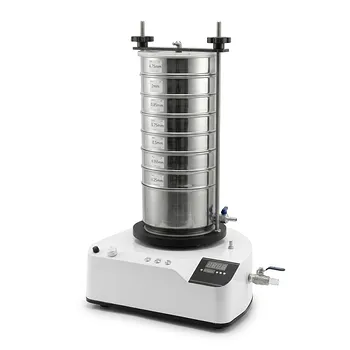
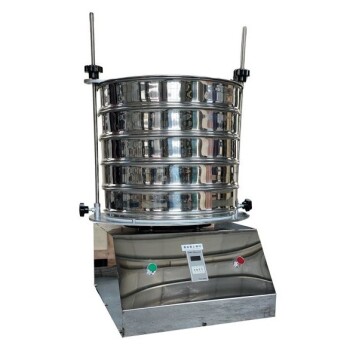
The necessity of sieving lies in neutralizing the physical side effects of the drying process. Drying mixed powders inevitably causes particles to bind together into large, irregular granules or "hard agglomerates." Using sieving equipment (typically utilizing a mesh size such as 100-mesh) is essential to crush or remove these agglomerations, thereby standardizing particle size to optimize bulk density and flowability for the manufacturing steps that follow.

Core Takeaway The drying process creates structural inconsistencies in powder mixes that, if left untreated, lead to permanent component failure. Sieving is the corrective mechanism that restores particle uniformity, ensuring the powder flows smoothly into molds and compresses into a defect-free "green body."

Managing the Physical State of the Powder

The Formation of Agglomerates

While drying is essential for removing moisture from mixed powders, it creates a secondary problem: particle bonding. As moisture evaporates, the powder particles tend to cluster, forming large, hard granules.

The Role of Mechanical Separation

Sieving equipment functions as a reset button for the material's physical state. By passing the dried material through a specific screen (e.g., 100-mesh), you mechanically break down these clusters. This ensures the material returns to a chemically and physically homogeneous state rather than a mixture of fine dust and hard rocks.

Optimizing Processing Characteristics

Enhancing Flowability

For a manufacturing process to be efficient, powder must behave somewhat like a fluid. Large, irregular agglomerates act as obstructions, causing friction and clogging. Sieving removes these obstacles, granting the powder excellent flowability. This is critical when the powder must be poured precisely into complex molds or die cavities.

Stabilizing Bulk Density

To produce consistent parts, the volume of powder entering a mold must correspond to a specific weight. Agglomerates create air gaps, throwing off this ratio. Sieving ensures bulk density uniformity, allowing manufacturers to predict exactly how much material is required for each part.

Preventing Defects in the "Green Body"

Eliminating Internal Voids

The "green body" refers to the compacted powder part before it is sintered (heated). If large granules remain in the mix during pressing, they often resist compaction. This leads to internal voids—tiny air pockets that compromise the structural integrity of the final product.

Preventing Density Gradients

When a press applies force to a powder mix containing unsieved agglomerates, the force is not distributed evenly. This results in density variation or density gradients. Some areas of the part will be dense and strong, while adjacent areas may be porous and weak. Sieving ensures the pressure is transmitted uniformly throughout the part.

Understanding the Trade-offs

Mesh Size Selection

Not all powders require the same level of refinement. The choice of sieve size is a trade-off between the required fineness and processing efficiency.

Balancing Granule Size and Material Type

  • Standard Processing (Primary Context): A 100-mesh sieve is often the baseline for general mixed powders to ensure adequate density and flow.
  • Coarse Agglomerates: For robust materials like Silicon Carbide (SiC), a 60-mesh sieve may be sufficient to crush hard agglomerates without over-processing.
  • High-Precision Mixes: For complex composites like TiB2-TiN-WC, a finer 200-mesh sieve is necessary to ensure supreme uniformity and prevent defects in the microstructure.

Making the Right Choice for Your Goal

To determine the strictness of your sieving protocol, consider the specific requirements of your final component:

  • If your primary focus is preventing structural failure: Prioritize removing hard agglomerates to eliminate internal voids and density gradients in the green body.
  • If your primary focus is automated manufacturing: Prioritize flowability to ensure consistent, jam-free mold loading.
  • If your primary focus is high-performance composites: Utilize finer mesh sizes (e.g., 200-mesh) to achieve maximum particle size uniformity.

Sieving transforms a chemically correct mixture into a physically workable material, bridging the gap between raw ingredients and a high-performance component.

Summary Table:

Feature Impact of Sieving Benefit to Process
Agglomerate Control Breaks down hard granules formed during drying Ensures material homogeneity
Flowability Removes irregular obstacles and friction Enables precise, jam-free mold loading
Bulk Density Eliminates air gaps caused by large clusters Ensures consistent part weight and volume
Structural Integrity Prevents internal voids and density gradients Eliminates weak spots in the final component
Particle Uniformity Standardizes size (e.g., 60 to 200 mesh) Optimizes performance for specific composites

Precision in powder metallurgy starts with the right equipment. KINTEK specializes in advanced sieving equipment, crushing and milling systems, and hydraulic presses designed to eliminate density gradients and structural voids. Whether you are working with standard powders or high-performance composites, our laboratory solutions—including high-temperature furnaces, planetary ball mills, and isostatic presses—ensure your materials meet the most rigorous standards. Contact KINTEK today to enhance your lab's efficiency and achieve superior material uniformity!

Related Products

People Also Ask

Related Products

Laboratory Single Horizontal Jar Mill

Laboratory Single Horizontal Jar Mill

KT-JM3000 is a mixing and grinding instrument for placing a ball milling tank with a volume of 3000ml or less. It adopts frequency conversion control to realize timing, constant speed, direction change, overload protection and other functions.

High Energy Planetary Ball Mill for Laboratory Horizontal Tank Type Milling Machine

High Energy Planetary Ball Mill for Laboratory Horizontal Tank Type Milling Machine

KT-P4000H uses the unique Y-axis planetary motion trajectory, and utilizes the collision, friction and gravity between the sample and the grinding ball to have a certain anti-sinking ability, which can obtain better grinding or mixing effects and further improve the sample output.

Manual High Temperature Heated Hydraulic Press Machine with Heated Plates for Lab

Manual High Temperature Heated Hydraulic Press Machine with Heated Plates for Lab

The High Temperature Hot Press is a machine specifically designed for pressing, sintering and processing materials in a high temperature environment. It is capable of operating in the range of hundreds of degrees Celsius to thousands of degrees Celsius for a variety of high temperature process requirements.

Small Vacuum Heat Treat and Tungsten Wire Sintering Furnace

Small Vacuum Heat Treat and Tungsten Wire Sintering Furnace

The small vacuum tungsten wire sintering furnace is a compact experimental vacuum furnace specially designed for universities and scientific research institutes. The furnace features a CNC welded shell and vacuum piping to ensure leak-free operation. Quick-connect electrical connections facilitate relocation and debugging, and the standard electrical control cabinet is safe and convenient to operate.

Benchtop Laboratory Freeze Dryer for Lab Use

Benchtop Laboratory Freeze Dryer for Lab Use

Premium benchtop laboratory freeze dryer for lyophilization, preserving samples with ≤ -60°C cooling. Ideal for pharmaceuticals & research.

Lab Blown Film Extrusion Three Layer Co-Extrusion Film Blowing Machine

Lab Blown Film Extrusion Three Layer Co-Extrusion Film Blowing Machine

Lab blown film extrusion is mainly used to detect the feasibility of film blowing of polymer materials and the colloid condition in the materials, as well as the dispersion of colored dispersions, controlled mixtures, and extrudates;

Vacuum Hot Press Furnace Machine for Lamination and Heating

Vacuum Hot Press Furnace Machine for Lamination and Heating

Experience clean and precise lamination with Vacuum Lamination Press. Perfect for wafer bonding, thin-film transformations, and LCP lamination. Order now!

VHP Sterilization Equipment Hydrogen Peroxide H2O2 Space Sterilizer

VHP Sterilization Equipment Hydrogen Peroxide H2O2 Space Sterilizer

A hydrogen peroxide space sterilizer is a device that uses vaporized hydrogen peroxide to decontaminate enclosed spaces. It kills microorganisms by damaging their cellular components and genetic material.

High Pressure Laboratory Vacuum Tube Furnace Quartz Tubular Furnace

High Pressure Laboratory Vacuum Tube Furnace Quartz Tubular Furnace

KT-PTF High Pressure Tube Furnace: Compact split tube furnace with strong positive pressure resistance. Working temp up to 1100°C and pressure up to 15Mpa. Also works under controller atmosphere or high vacuum.

Electric Rotary Kiln Continuous Working Small Rotary Furnace Heating Pyrolysis Plant

Electric Rotary Kiln Continuous Working Small Rotary Furnace Heating Pyrolysis Plant

Efficiently calcine and dry bulk powder and lump fluid materials with an electric heating rotary furnace. Ideal for processing lithium ion battery materials and more.

Custom PTFE Teflon Parts Manufacturer for PTFE Buchner Funnel and Triangular Funnel

Custom PTFE Teflon Parts Manufacturer for PTFE Buchner Funnel and Triangular Funnel

The PTFE funnel is a piece of laboratory equipment used primarily for filtration processes, particularly in the separation of solid and liquid phases in a mixture. This setup allows for efficient and rapid filtration, making it indispensable in various chemical and biological applications.

Small Injection Molding Machine for Lab Use

Small Injection Molding Machine for Lab Use

The small injection molding machinehas fast and stable movements; good controllability and repeatability, super energy saving; the product can be automatically dropped and formed; the machine body is low, convenient for feeding, easy to maintain, and no height restrictions on the installation site.

Graphite Vacuum Furnace IGBT Experimental Graphitization Furnace

Graphite Vacuum Furnace IGBT Experimental Graphitization Furnace

IGBT experimental graphitization furnace, a tailored solution for universities and research institutions, with high heating efficiency, user-friendliness, and precise temperature control.

HFCVD Machine System Equipment for Drawing Die Nano-Diamond Coating

HFCVD Machine System Equipment for Drawing Die Nano-Diamond Coating

The nano-diamond composite coating drawing die uses cemented carbide (WC-Co) as the substrate, and uses the chemical vapor phase method ( CVD method for short ) to coat the conventional diamond and nano-diamond composite coating on the surface of the inner hole of the mold.

Custom PTFE Teflon Parts Manufacturer Corrosion Resistant Cleaning Rack Flower Basket

Custom PTFE Teflon Parts Manufacturer Corrosion Resistant Cleaning Rack Flower Basket

The PTFE cleaning rack, also known as the PTFE flower basket cleaning flower basket, is a specialized laboratory tool designed for the efficient cleaning of PTFE materials. This cleaning rack ensures thorough and safe cleaning of PTFE items, maintaining their integrity and performance in laboratory settings.

Custom PTFE Teflon Parts Manufacturer for Conductive Glass Substrate Cleaning Rack

Custom PTFE Teflon Parts Manufacturer for Conductive Glass Substrate Cleaning Rack

The PTFE conductive glass substrate cleaning rack is used as the carrier of the square solar cell silicon wafer to ensure efficient and pollution-free handling during the cleaning process.

Platinum Sheet Electrode for Battery Lab Applications

Platinum Sheet Electrode for Battery Lab Applications

Platinum sheet is composed of platinum, which is also one of the refractory metals. It is soft and can be forged, rolled and drawn into rod, wire, plate, tube and wire.

Electric button battery sealing machine

Electric button battery sealing machine

The electric button battery sealing machine is a high-performance packaging equipment designed for mass production of button batteries (such as CR series, LR series, SR series, etc.), suitable for electronic manufacturing, new energy research and development, and industrial automation production lines.

CVD Diamond Cutting Tool Blanks for Precision Machining

CVD Diamond Cutting Tool Blanks for Precision Machining

CVD Diamond Cutting Tools: Superior Wear Resistance, Low Friction, High Thermal Conductivity for Non-Ferrous Materials, Ceramics, Composites Machining

Precision Machined Zirconia Ceramic Ball for Engineering Advanced Fine Ceramics

Precision Machined Zirconia Ceramic Ball for Engineering Advanced Fine Ceramics

zirconia ceramic ball have the characteristics of high strength, high hardness, PPM wear level, high fracture toughness, good wear resistance, and high specific gravity.


Leave Your Message