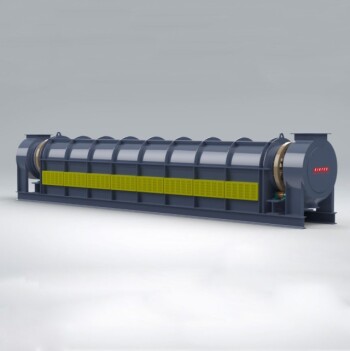
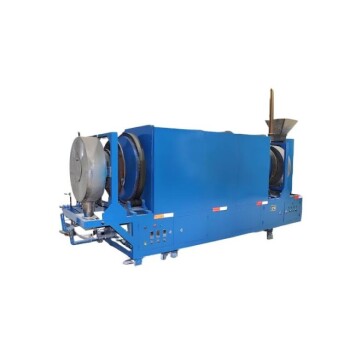
The primary objective of using this specific equipment combination is to reset the alloy's microstructure into a uniform, supersaturated solid solution. The high-temperature furnace dissolves alloying elements and carbides into the matrix, while water quenching "freezes" this state instantly to prevent premature precipitation.
Core Takeaway This process is effectively a "system reset" for the material. By fully dissolving solutes at high heat and locking them in via rapid cooling, you ensure that any future strengthening phases (specifically M2C nano-carbides) form exclusively during controlled aging, rather than randomly during cooling.
The Role of High-Temperature Heating
Achieving Complete Dissolution
The electric furnace heats the GH3535 alloy to a precise temperature of 1180°C. At this specific thermal threshold, the primary eutectic M2C carbides within the alloy decompose completely.
Homogenizing the Matrix
Once the carbides decompose, key solute elements—specifically molybdenum, silicon, chromium, and carbon—dissolve fully into the nickel-base matrix. This creates a uniform chemical distribution throughout the material, which is critical for consistent performance.
Preventing Microstructural Defects
The use of high-precision thermal fields is vital during this stage. Precise control prevents local temperature fluctuations, which protects the alloy from overheating or grain coarsening while ensuring the solution process is thorough.
The Critical Function of Water Quenching
Suppressing Secondary Precipitation
After heating, the material must be cooled rapidly using water quenching equipment. This high cooling rate is necessary to suppress the precipitation of secondary carbides that would naturally form during a slower cooling process.
Preserving the Supersaturated State
The rapid drop to room temperature preserves the high-temperature structure, trapping the dissolved elements within the lattice. This creates a "supersaturated solid solution" where the matrix is temporarily free of precipitate phases.
Ensuring Controlled Aging
By preventing uncontrolled precipitation during cooling, you dictate exactly when and how strengthening phases form. This creates a "clean slate" that ensures subsequent M2C nano-carbide precipitation (typically at 650°C) is driven purely by your intended heat treatment parameters.
Common Pitfalls to Avoid
Inadequate Quench Rate
If the cooling rate is insufficient (e.g., air cooling instead of water quenching), solute atoms will have time to migrate and form precipitates. This results in an uncontrolled microstructure that compromises the alloy's mechanical properties.
Temperature Imprecision
Failing to maintain the target temperature of 1180°C carries significant risks. Too low, and the carbides will not fully dissolve; too high or unstable, and you risk irreversible grain coarsening that degrades the material's durability.
Making the Right Choice for Your Goal
To maximize the performance of GH3535 alloy, ensure your equipment capabilities align with your metallurgical objectives:
- If your primary focus is microstructural uniformity: Prioritize furnace precision to ensure complete decomposition of primary M2C carbides without overheating the grain boundaries.
- If your primary focus is precipitation control: Ensure your quenching setup provides a drastic enough cooling rate to instantly lock the solute atoms into the matrix.
Ultimately, the success of this treatment relies on the balance between total high-temperature dissolution and instantaneous low-temperature preservation.
Summary Table:
| Stage | Action | Objective |
|---|---|---|
| Heating | 1180°C in Electric Furnace | Complete dissolution of M2C carbides & matrix homogenization |
| Quenching | Rapid Water Cooling | Suppressing secondary precipitation & freezing supersaturated state |
| Outcome | Controlled Microstructure | Prevention of grain coarsening and preparation for aging |
Elevate Your Material Research with KINTEK Precision
Achieving the perfect supersaturated solid solution for GH3535 and other advanced alloys requires uncompromising thermal control and rapid cooling capabilities. KINTEK specializes in high-performance laboratory equipment designed to meet the rigorous demands of metallurgical research and industrial heat treatment.
By choosing KINTEK, you gain access to:
- Advanced High-Temperature Furnaces: Including muffle, tube, and vacuum systems that provide the precise 1180°C environment needed to prevent grain coarsening.
- Comprehensive Thermal Solutions: From induction melting and crushing systems to essential consumables like high-purity ceramics and crucibles.
- End-to-End Support: Our range of cooling solutions, hydraulic presses, and battery research tools ensure your lab is equipped for every stage of material development.
Ready to optimize your solution treatment process? Contact our technical experts today to find the perfect furnace or quenching setup for your specific research goals.
References
- Sachin L. Shrestha, L. Edwards. Creep resistance and material degradation of a candidate Ni–Mo–Cr corrosion resistant alloy. DOI: 10.1016/j.msea.2016.07.032
This article is also based on technical information from Kintek Solution Knowledge Base .
Related Products
- High Temperature Muffle Oven Furnace for Laboratory Debinding and Pre Sintering
- 1700℃ Muffle Oven Furnace for Laboratory
- 1400℃ Muffle Oven Furnace for Laboratory
- 1400℃ Controlled Atmosphere Furnace with Nitrogen and Inert Atmosphere
- 1700℃ Controlled Atmosphere Furnace Nitrogen Inert Atmosphere Furnace
People Also Ask
- Why is the annealing treatment in a high-temperature muffle furnace critical for the preparation of an Sb-SnO2 interlayer?
- What role does a high-temperature muffle furnace play in the synthesis of manganese/cobalt-modified ceramic catalysts?
- What are the main components of a high-temperature muffle furnace? A Guide to the Core Systems
- What conditions does a muffle furnace provide for molten salt energy storage? Expert Simulation for CSP Environments
- What role does a calcination furnace play in preparing hollow core-shell particles? Achieve Perfect Nano-Structures