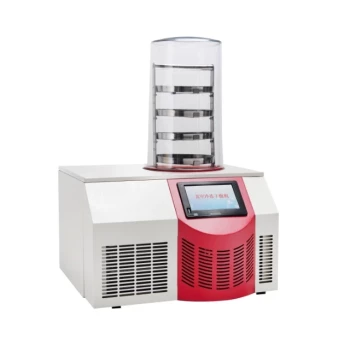
The primary function of a vacuum or blast drying oven in LiFePO4 electrode preparation is to systematically remove solvents, specifically N-Methyl-2-pyrrolidone (NMP), from the slurry immediately after it is coated onto the current collector. By applying consistent, controlled heat—often starting around 80°C—the oven evaporates the liquid carrier, transforming the wet mixture into a solid, cohesive electrode film.
Core Takeaway: The drying phase is the critical transition from a liquid slurry to a structural component. Its success is defined not just by dryness, but by the formation of a uniform, strongly adherent film that is free of residual solvents and moisture that would otherwise degrade the battery's electrochemical performance.
The Mechanism of Electrode Stabilization
Evaporation of Carrier Solvents
The immediate goal of the drying oven is the removal of the NMP solvent used to create the electrode slurry.
This is not a passive drying process; it requires sustained heat to ensure the solvent evaporates completely from the depths of the coating, not just the surface.
Formation of the Electrode Film
As the solvent evaporates, the remaining solid components—active materials (LiFePO4), conductive agents, and binders—must solidify into a unified structure.
The drying process activates the binder, locking these materials together and adhering them firmly to the metal current collector.
Ensuring Structural Uniformity
The application of heat must be consistent to prevent defects.
Uneven drying can lead to cracking or delamination, whereas uniform heating ensures the film remains smooth and mechanically stable.
Why Thorough Drying is Critical
Preventing Electrochemical Degradation
If residual solvents remain trapped within the electrode, they act as contaminants inside the finished battery.
These residues can trigger side reactions during battery operation, leading to a breakdown in electrochemical performance and reduced cycle life.
Eliminating Trace Moisture (Vacuum Specific)
While standard blast ovens remove bulk solvents, vacuum drying ovens play a secondary, crucial role in removing trace moisture.
By lowering the pressure, the vacuum environment lowers the boiling point of liquids, allowing for the removal of stubborn moisture and volatiles that standard heating might miss.
Protection Against Oxidation
High temperatures can sometimes degrade sensitive electrode materials through oxidation.
Vacuum ovens mitigate this risk by creating an oxygen-depleted environment, protecting the LiFePO4 and conductive additives from reacting with air during the heating cycle.
Understanding the Trade-offs
Temperature Management
Applying heat is a balance between efficiency and material safety.
While higher temperatures (up to 120°C) accelerate drying, excessive heat without vacuum protection can oxidize materials or cause the binder to migrate to the surface, weakening adhesion.
Vacuum vs. Blast Drying
Blast drying (convection) is highly effective for the initial, rapid removal of bulk solvents due to efficient heat transfer.
Vacuum drying is less efficient at heat transfer but is superior for the final "deep dry" to remove trace moisture and prevent oxidation.
Attempting to do everything with just one method often results in either residual contamination (if skipping vacuum) or inefficient processing times (if relying solely on vacuum).
Making the Right Choice for Your Goal
To optimize your electrode preparation process, match the drying method to your specific stability requirements:
- If your primary focus is bulk solvent removal: Prioritize consistent thermal application (around 80°C) to evaporate NMP without causing film cracking or binder migration.
- If your primary focus is long-term cycle stability: Implement a vacuum drying stage (potentially at higher temperatures like 100°C–120°C) to eliminate trace moisture and prevent material oxidation.
Ultimately, the drying oven functions as the gatekeeper of electrode quality, ensuring the chemical purity and mechanical strength required for a high-performance battery.
Summary Table:
| Feature | Blast (Convection) Drying | Vacuum Drying |
|---|---|---|
| Primary Purpose | Rapid bulk solvent (NMP) removal | Deep removal of trace moisture & volatiles |
| Mechanism | Consistent thermal heat transfer | Low pressure to reduce boiling points |
| Oxidation Risk | Higher (exposure to air) | Minimal (oxygen-depleted environment) |
| Adhesion Quality | Uniform film formation | Prevents binder migration & surface defects |
| Target Result | Solid, cohesive electrode film | High electrochemical stability & cycle life |
Elevate Your Battery Research with KINTEK Precision Drying Solutions
Achieving the perfect LiFePO4 cathode requires precise thermal control and specialized environments. KINTEK specializes in advanced laboratory equipment designed for the rigorous demands of battery research. From high-performance vacuum and blast drying ovens for solvent removal to crushing systems, hydraulic pellet presses, and high-temperature furnaces, we provide the tools you need for superior electrode stability.
Our value to you:
- Unmatched Purity: Eliminate trace moisture and prevent oxidation with our vacuum technology.
- Total Support: Comprehensive range of consumables including PTFE products, ceramics, and crucibles.
- Efficiency: Optimized heating systems to prevent binder migration and film cracking.
Ready to optimize your electrode preparation process? Contact KINTEK today for a consultation and quote!
Related Products
- 56L Vertical Laboratory Vacuum Drying Oven
- 23L Laboratory Vacuum Drying Oven
- Laboratory Scientific Electric Heating Blast Drying Oven
- Benchtop Laboratory Vacuum Freeze Dryer
- Vacuum Heat Treat Sintering Brazing Furnace
People Also Ask
- Why is a laboratory vacuum drying oven recommended for rice straw residues? Protect Your Biomass Integrity
- What role does a laboratory vacuum drying oven play in the preparation of modified multi-walled carbon nanotubes?
- What is the importance of using a laboratory vacuum drying oven? Preserving Slow-Release Microcapsule Integrity
- Why is a Laboratory Vacuum Drying Oven recommended for PBAT microspheres? Protect Sensitive Polymer Integrity
- What role does a laboratory vacuum drying oven play in processing nanoparticle powder samples? Protect Sample Integrity