The primary function of the electric resistance furnace is to provide a precise, stable, and controllable high-temperature environment essential for the thermal cyclic treatment (TCT) of 12Kh18N10T steel. By maintaining the material within a strict temperature window of 300°C to 400°C, the furnace forces the specimen to undergo repeated thermal expansion and contraction, which is the physical driver for microstructural changes.
Ideally, this equipment acts as a precision tool for defect engineering rather than a simple heat source. By inducing controlled micro-stresses through thermal cycling, the furnace facilitates the annihilation of radiation-induced defects, leading to the local recovery of the steel's mechanical and corrosion resistance.
The Mechanics of Thermal Cyclic Treatment
To understand the furnace's role, one must look beyond the heat and understand the stress dynamics it creates within the metal.
Precision Temperature Control
The effectiveness of TCT relies entirely on staying within a specific thermal band. The electric resistance furnace must ensure the steel remains strictly between 300°C and 400°C.
Any deviation outside this range compromises the cycle. The furnace provides the stability required to repeat these conditions consistently over multiple cycles.
Inducing Micro-Stresses
The expansion and contraction caused by this specific temperature range generate internal forces. These are known as micro-stresses.
The furnace acts as the engine for these stresses. Without the controlled thermal cycling provided by the furnace, the material would remain static, and the necessary internal pressures would not generate.
Impact on Microstructure and Properties
The ultimate goal of using this specific furnace setup is to repair damage caused by radiation.
Promoting Quenching Vacancies
The micro-stresses induced by the furnace promote the formation of quenching vacancies. These are essential empty spaces within the crystal lattice of the steel.
These vacancies eventually aggregate to form defect channels. This restructuring is impossible without the precise thermal environment the furnace provides.
Annihilating Radiation Defects
The defect channels serve a critical restorative function. They assist in the annihilation of radiation defects previously accumulated in the material.
As these defects are removed, the material undergoes a "healing" process. This leads to the local recovery of critical properties, specifically mechanical strength and corrosion resistance.
Critical Operational Constraints
While the electric resistance furnace is the enabler of this process, it introduces specific requirements that must be managed to avoid failure.
The Necessity of Stability
The process assumes the furnace can hold the 300°C to 400°C range without fluctuation.
If the furnace creates thermal spikes or drops below the threshold, the formation of quenching vacancies may be inconsistent.
Reliance on Cycle Repetition
The treatment is not a single-pass heating event. The furnace must be capable of sustaining the cyclic nature of the treatment.
Inconsistent cycling can fail to generate sufficient micro-stresses. This results in incomplete defect annihilation, leaving the material with compromised mechanical properties.
Applying This to Material Recovery
When utilizing an electric resistance furnace for TCT on 12Kh18N10T steel, your operational focus should align with your specific material goals.
- If your primary focus is Defect Elimination: Ensure the furnace controller is calibrated to strictly maintain the 300°C–400°C window to maximize the formation of defect channels.
- If your primary focus is Property Restoration: Prioritize the consistency of the thermal cycles to ensure uniform micro-stress induction for reliable corrosion resistance recovery.
The electric resistance furnace is the fundamental driver of the microstructural rehabilitation mechanism in irradiated steel.
Summary Table:
| Feature | Role in TCT (12Kh18N10T Steel) |
|---|---|
| Temperature Range | Strict control between 300°C and 400°C |
| Physical Driver | Induces repeated thermal expansion and contraction |
| Internal Impact | Generates micro-stresses and quenching vacancies |
| Primary Goal | Annihilation of radiation-induced defects |
| Outcome | Recovery of mechanical and corrosion resistance |
Elevate Your Materials Research with KINTEK Precision
Unlock the full potential of your thermal cyclic treatments with KINTEK’s high-performance electric resistance furnaces. Whether you are focused on defect annihilation in 12Kh18N10T steel or complex microstructural rehabilitation, our equipment delivers the thermal stability and precision control required for critical laboratory research.
Our comprehensive laboratory portfolio includes:
- High-Temperature Furnaces: Muffle, tube, vacuum, and atmosphere furnaces designed for exact thermal windows.
- Advanced Processing: Crushing, milling, and hydraulic presses (pellet, hot, isostatic) for sample preparation.
- Specialized Systems: High-temperature high-pressure reactors, autoclaves, and electrolytic cells.
- Support & Consumables: From ULT freezers and freeze dryers to high-purity ceramics and crucibles.
Ready to optimize your material recovery process? Contact KINTEK today to consult with our experts and find the perfect heating solution for your lab's specific needs.
References
- A. V. Yarovchuk, Kira V. Tsay. Effect of Low-Cycle Thermocycling Treatment on Corrosion and Mechanical Properties of Corrosion-Resistant Steel 12Kh18N10T Irradiated with Neutrons. DOI: 10.1007/s11041-017-0170-5
This article is also based on technical information from Kintek Solution Knowledge Base .
Related Products
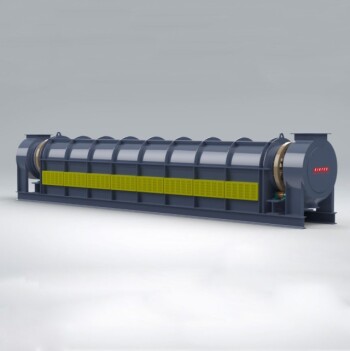
- Electric Rotary Kiln Pyrolysis Furnace Plant Machine Calciner Small Rotary Kiln Rotating Furnace
- Electric Rotary Kiln Small Rotary Furnace for Activated Carbon Regeneration
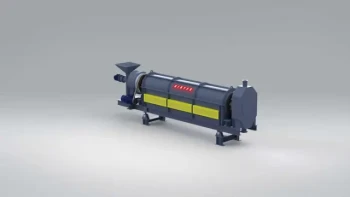
- Electric Rotary Kiln Continuous Working Small Rotary Furnace Heating Pyrolysis Plant
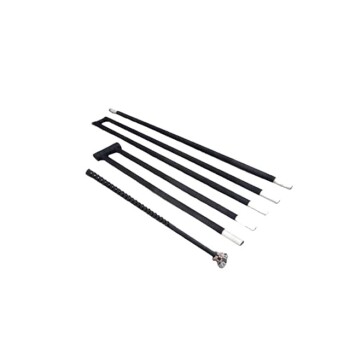
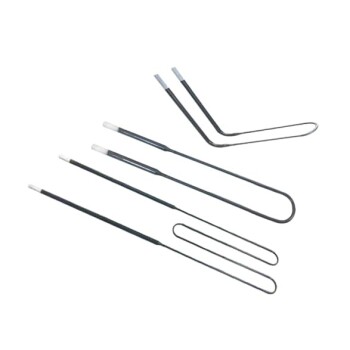
- Silicon Carbide SiC Thermal Heating Elements for Electric Furnace
- Electric Rotary Kiln Small Rotary Furnace Biomass Pyrolysis Plant
People Also Ask
- What is a rotary kiln electric furnace? Achieve Superior Uniform Heating for Your Materials
- What are the characteristics of the slipping, slumping, and rolling modes of bed motion? Optimize Your Rotary Process
- What are the advantages of rotary kiln furnace? Achieve Superior Uniformity & Efficiency
- What is the temperature of a rotating kiln? It Depends on Your Material and Process Goal
- What are the principles of a rotary kiln? Master the Mechanics of High-Temperature Processing