Knowledge What is the primary function of crushing and sieving systems in biomass torrefaction? Ensure Uniform Heat Transfer
Author avatar

Tech Team · Kintek Solution

Updated 18 hours ago

What is the primary function of crushing and sieving systems in biomass torrefaction? Ensure Uniform Heat Transfer


The primary function of crushing and sieving systems in biomass torrefaction is to reduce raw materials into uniform particles with a diameter typically less than 10mm.

In the raw material preparation stage, these systems process feedstocks such as giant miscanthus or wheat straw. By mechanically standardizing the particle size, this equipment ensures that the physical dimensions of the biomass are suitable for the thermal demands of the subsequent pyrolysis process.

By controlling particle size, you drastically increase the specific surface area of the material. This ensures heat penetrates rapidly and uniformly during pyrolysis, guaranteeing a complete reaction and consistent product properties.

The Mechanics of Pretreatment

Achieving Particle Uniformity

Raw biomass often arrives in irregular shapes and sizes that are unsuitable for consistent thermal processing. Crushing and sieving systems act as the initial quality control gate.

They mechanically reduce materials to a specific threshold, cited in industry standards as less than 10mm for effective torrefaction. This creates a homogeneous feedstock stream, which is critical for the stability of the entire system.

Maximizing Specific Surface Area

The reduction in particle diameter serves a crucial physical function: it significantly increases the material's specific surface area.

This increased surface area is the primary interface for heat exchange. By maximizing this exposure, the system prepares the biomass to accept thermal energy more efficiently in the reactor.

Why Particle Size Dictates Torrefaction Quality

Optimizing Heat Transfer

In torrefaction, the core challenge is getting heat to the center of the biomass particle before the outside over-processes.

Properly sized particles allow heat to penetrate rapidly and uniformly into the interior structure. This overcomes the natural insulating properties of biomass, ensuring the material reaches the target temperature simultaneously throughout its volume.

Ensuring Reaction Completeness

If heat transfer is uneven, the torrefaction reaction remains incomplete.

Uniform particle size guarantees that the chemical changes associated with torrefaction—such as the breakdown of hemicellulose—occur thoroughly. This prevents "cold cores" within particles where raw, untreated biomass might remain.

Consistency of the Final Product

The ultimate goal of torrefaction is to produce a fuel with predictable energy density and grindability.

By strictly controlling the input size through sieving, you ensure the output properties are consistent. This reliability is essential for the end-users of the torrefied fuel, who require stable combustion characteristics.

Common Pitfalls to Avoid

The Risks of Oversized Particles

Failing to sieve materials to the required specification (e.g., allowing particles larger than 10mm) leads to uneven heating.

This results in incomplete carbonization, where the inner core of the particle retains moisture and volatile matter. This compromises the energy value of the final product and invalidates the consistency required for industrial applications.

Inconsistent Feedstock Blends

Using crushing systems that yield a wide distribution of particle sizes can lead to unpredictable reaction kinetics.

A mixture of fine dust and large chunks will roast at different rates. This inconsistency makes it nearly impossible to maintain stable operating conditions within the torrefaction reactor.

Making the Right Choice for Your Goal

To optimize your torrefaction process, align your crushing and sieving strategy with your specific output requirements:

  • If your primary focus is Process Efficiency: Prioritize sieving systems that strictly enforce the 10mm limit to ensure rapid heat transfer and minimize residence time in the reactor.
  • If your primary focus is Product Quality: Focus on crushing technologies that produce a narrow particle size distribution to guarantee uniform carbonization and consistent fuel properties.

Ultimately, precise mechanical pretreatment is the single most effective method to ensure the thermal reliability and commercial value of torrefied biomass.

Summary Table:

Feature Impact on Torrefaction Process
Target Particle Size Typically < 10mm for optimal thermal penetration
Surface Area Increased specific surface area maximizes heat exchange efficiency
Heat Transfer Rapid, uniform penetration to prevent untreated "cold cores"
Reaction Quality Ensures complete hemicellulose breakdown and uniform carbonization
Final Product Consistent energy density, grindability, and combustion stability

Maximize Your Biomass Processing Efficiency with KINTEK

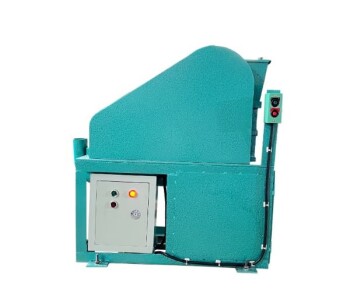
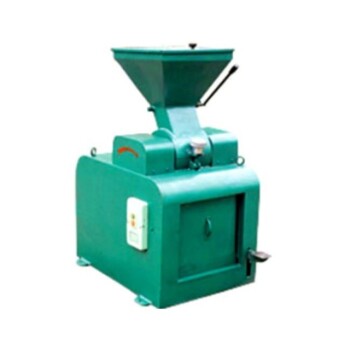
Precise mechanical pretreatment is the foundation of high-quality torrefaction. KINTEK specializes in advanced crushing and milling systems and sieving equipment designed to deliver the exact particle uniformity your research or production requires.

From achieving the perfect 10mm threshold to ensuring stable thermal reactions, our laboratory and industrial solutions—including high-temperature furnaces, hydraulic presses, and specialized reactors—empower you to produce superior torrefied fuels.

Ready to optimize your feedstock preparation? Contact our experts today to find the perfect equipment for your laboratory or industrial application.

References

  1. Marcin Bajcar, Józef Gorzelany. Torrefaction as a Way to Remove Chlorine and Improve the Energy Properties of Plant Biomass. DOI: 10.3390/en16217365

This article is also based on technical information from Kintek Solution Knowledge Base .

Related Products

People Also Ask

Related Products

Laboratory Test Sieves and Vibratory Sieve Shaker Machine

Laboratory Test Sieves and Vibratory Sieve Shaker Machine

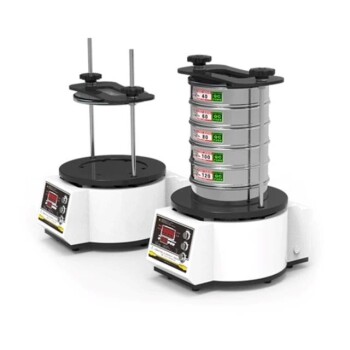
Efficiently process powders, granules, and small blocks with a high-frequency vibration sieve. Control vibration frequency, screen continuously or intermittently, and achieve accurate particle size determination, separation, and classification.

Laboratory Wet Three-Dimensional Vibratory Sieve Shaker Machine

Laboratory Wet Three-Dimensional Vibratory Sieve Shaker Machine

The wet three-dimensional vibrating sieving instrument focuses on solving the sieving tasks of dry and wet samples in the laboratory. It is suitable for sieving 20g - 3kg dry, wet or liquid samples.

Three-dimensional electromagnetic sieving instrument

Three-dimensional electromagnetic sieving instrument

KT-VT150 is a desktop sample processing instrument for both sieving and grinding. Grinding and sieving can be used both dry and wet. The vibration amplitude is 5mm and the vibration frequency is 3000-3600 times/min.

Laboratory Vibratory Sieve Shaker Machine for Dry and Wet Three-Dimensional Sieving

Laboratory Vibratory Sieve Shaker Machine for Dry and Wet Three-Dimensional Sieving

KT-VD200 can be used for sieving tasks of dry and wet samples in the laboratory. The screening quality is 20g-3kg. The product is designed with a unique mechanical structure and an electromagnetic vibrating body with a vibration frequency of 3000 times per minute.

Vibratory Sieve Shaker Machine Dry Three-Dimensional Vibrating Sieve

Vibratory Sieve Shaker Machine Dry Three-Dimensional Vibrating Sieve

The KT-V200 product focuses on solving common sieving tasks in the laboratory. It is suitable for sieving 20g-3kg dry samples.

Cold Isostatic Pressing Machine CIP for Small Workpiece Production 400Mpa

Cold Isostatic Pressing Machine CIP for Small Workpiece Production 400Mpa

Produce uniformly high-density materials with our Cold Isostatic Press. Ideal for compacting small workpieces in production settings. Widely used in powder metallurgy, ceramics, and biopharmaceutical fields for high-pressure sterilization and protein activation.

Electric Split Lab Cold Isostatic Press CIP Machine for Cold Isostatic Pressing

Electric Split Lab Cold Isostatic Press CIP Machine for Cold Isostatic Pressing

Split cold isostatic presses are capable of providing higher pressures, making them suitable for testing applications that require high pressure levels.

Metallographic Specimen Mounting Machine for Laboratory Materials and Analysis

Metallographic Specimen Mounting Machine for Laboratory Materials and Analysis

Precision metallographic mounting machines for labs—automated, versatile, and efficient. Ideal for sample prep in research and quality control. Contact KINTEK today!

Single Punch Tablet Press Machine and Mass Production Rotary Tablet Punching Machine for TDP

Single Punch Tablet Press Machine and Mass Production Rotary Tablet Punching Machine for TDP

Rotary tablet punching machine is an automatic rotating and continuous tableting machine. It is mainly used for tablet manufacturing in the pharmaceutical industry, and is also suitable for industrial sectors such as food, chemicals, batteries, electronics, ceramics, etc. to compress granular raw materials into tablets.

Lab Internal Rubber Mixer Rubber Kneader Machine for Mixing and Kneading

Lab Internal Rubber Mixer Rubber Kneader Machine for Mixing and Kneading

Lab internal rubber mixer is suitable for mixing, kneading and dispersing various chemical raw materials such as plastics, rubber, synthetic rubber, hot melt adhesive and various low-viscosity materials.

Laboratory Sterilizer Lab Autoclave Herbal Powder Sterilization Machine for Plant

Laboratory Sterilizer Lab Autoclave Herbal Powder Sterilization Machine for Plant

The herbal powder sterilization autoclave machine for Chinese medicine uses saturated steam for effective sterilization. It utilizes the heat and penetrative properties of steam, achieves sterilization after heat preservation, and maintains a good drying effect with a dedicated drying system.

Automatic Lab Cold Isostatic Press CIP Machine Cold Isostatic Pressing

Automatic Lab Cold Isostatic Press CIP Machine Cold Isostatic Pressing

Efficiently prepare samples with our Automatic Lab Cold Isostatic Press. Widely used in material research, pharmacy, and electronic industries. Provides greater flexibility and control compared to electric CIPs.

Single Punch Electric Tablet Press Machine TDP Tablet Punching Machine

Single Punch Electric Tablet Press Machine TDP Tablet Punching Machine

The electric tablet punching machine is a laboratory equipment designed for pressing various granular and powdery raw materials into discs and other geometric shapes. It is commonly used in pharmaceutical, healthcare products, food, and other industries for small batch production and processing. The machine is compact, lightweight, and easy to operate, making it suitable for use in clinics, schools, laboratories, and research units.

Warm Isostatic Press WIP Workstation 300Mpa for High Pressure Applications

Warm Isostatic Press WIP Workstation 300Mpa for High Pressure Applications

Discover Warm Isostatic Pressing (WIP) - A cutting-edge technology that enables uniform pressure to shape and press powdered products at a precise temperature. Ideal for complex parts and components in manufacturing.

Laboratory manual slicer

Laboratory manual slicer

Manual microtome is a high-precision cutting device designed for laboratories, industry and medical fields. It is suitable for the preparation of thin slices of various materials such as paraffin samples, biological tissues, battery materials, food, etc.

Engineering Advanced Fine Ceramics Head Tweezers with Pointed Elbow Zirconia Ceramic Tip

Engineering Advanced Fine Ceramics Head Tweezers with Pointed Elbow Zirconia Ceramic Tip

Zirconia ceramic tweezers are a high-precision tool made of advanced ceramic materials, especially suitable for operating environments that require high precision and corrosion resistance. This type of tweezers not only has excellent physical properties, but is also popular in the medical and laboratory fields because of its biocompatibility.

Lab Blown Film Extrusion Three Layer Co-Extrusion Film Blowing Machine

Lab Blown Film Extrusion Three Layer Co-Extrusion Film Blowing Machine

Lab blown film extrusion is mainly used to detect the feasibility of film blowing of polymer materials and the colloid condition in the materials, as well as the dispersion of colored dispersions, controlled mixtures, and extrudates;

Automatic Heated Hydraulic Press Machine with Heated Plates for Laboratory Hot Press 25T 30T 50T

Automatic Heated Hydraulic Press Machine with Heated Plates for Laboratory Hot Press 25T 30T 50T

Efficiently prepare your samples with our Automatic Heated Lab Press. With a pressure range up to 50T and precise control, it's perfect for various industries.

Small Injection Molding Machine for Lab Use

Small Injection Molding Machine for Lab Use

The small injection molding machinehas fast and stable movements; good controllability and repeatability, super energy saving; the product can be automatically dropped and formed; the machine body is low, convenient for feeding, easy to maintain, and no height restrictions on the installation site.

Heated Hydraulic Press Machine with Integrated Manual Heated Plates for Lab Use

Heated Hydraulic Press Machine with Integrated Manual Heated Plates for Lab Use

Efficiently process heat-pressing samples with our Integrated Manual Heated Lab Press. With a heating range up to 500°C, it's perfect for various industries.


Leave Your Message