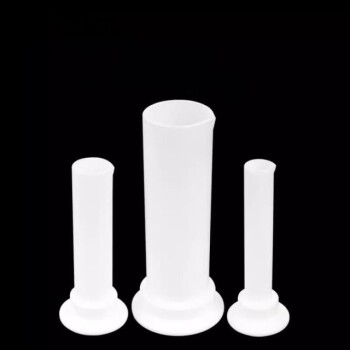
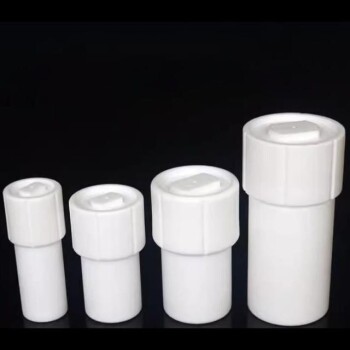
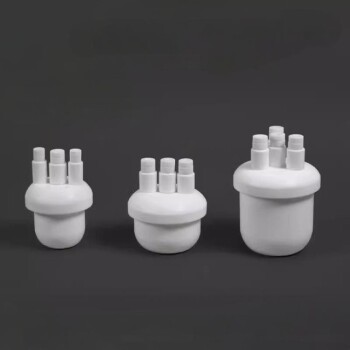
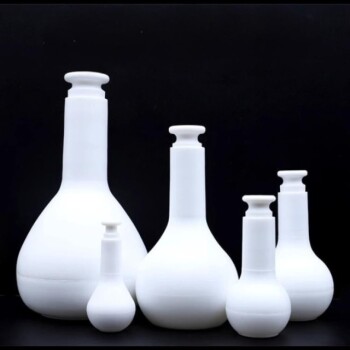
Knowledge What is the primary reason for using an FEP reaction vessel for FG? Ensure Purity & Chemical Inertness
Author avatar

Tech Team · Kintek Solution

Updated 1 day ago

What is the primary reason for using an FEP reaction vessel for FG? Ensure Purity & Chemical Inertness


The primary reason is exceptional chemical inertness.

A Fluorinated Ethylene Propylene (FEP) reaction vessel is utilized specifically for its ability to withstand the highly active and aggressive fluorination reactions required to synthesize Fluorinated Reduced Graphene Oxide (FG). Unlike standard glassware, FEP offers superior corrosion resistance, ensuring the vessel does not degrade when exposed to harsh fluorinating reagents.

The synthesis of fluorinated graphene involves chemical environments that can rapidly degrade standard laboratory materials. FEP is essential because its non-reactive nature prevents vessel failure and eliminates the risk of leaching impurities into the final nanomaterial.

The Critical Role of Material Selection

Resisting Aggressive Fluorination

The chemical process used to create Fluorinated Reduced Graphene Oxide involves highly active fluorinating reagents. These agents are designed to chemically modify the graphene structure, but they are equally effective at attacking the walls of a reaction vessel.

Standard vessels cannot withstand this aggressive environment. FEP is selected because it remains stable and intact, providing a robust barrier against chemical attack during the synthesis.

Preventing Sample Contamination

Beyond physical survival, the vessel must not alter the chemistry of the sample. When reaction vessels degrade—even microscopically—they release impurities into the solution.

Using an inert material like FEP prevents the leaching of ions or impurities from the container walls. This is critical for maintaining the high purity of the final fluorinated graphene, ensuring that the material's properties are defined solely by the intended chemical modification.

Ensuring Operational Safety

The degradation of a reaction vessel during a chemical process poses a significant safety risk. If the container material reacts with the reagents, it can lead to structural failure, leaks, or uncontrolled side reactions.

FEP ensures the safety of the reaction process by maintaining its structural integrity. It allows researchers to work with potent fluorinating agents without the risk of the containment vessel failing.

Understanding the Trade-offs

Thermal Limitations

While FEP is chemically superior for this application, it often has lower thermal limits compared to other fluoropolymers like PTFE or ceramic alternatives.

If the synthesis requires extremely high temperatures in addition to chemical resistance, the operating limits of FEP must be carefully monitored to prevent softening or deformation.

Cost vs. Necessity

FEP reaction vessels are specialized equipment and typically cost more than standard borosilicate glass.

However, this cost is a necessary investment. Attempting to save money by using standard glass can result in wasted reagents, ruined samples due to contamination, and potential safety hazards.

Making the Right Choice for Your Goal

Selecting the correct reaction vessel is not just about holding liquid; it is about preserving the integrity of your chemical synthesis.

  • If your primary focus is high purity: Rely on FEP to eliminate the introduction of foreign impurities or leached ions that could compromise the electronic or mechanical properties of the graphene.
  • If your primary focus is process safety: Use FEP to ensure the containment system can withstand aggressive fluorinating agents without degrading or failing.

By matching the chemical resistance of your vessel to the aggressiveness of your reagents, you ensure a safe process and a pure, high-quality final product.

Summary Table:

Feature FEP Reaction Vessel Standard Borosilicate Glass
Chemical Inertness Exceptional (Resists aggressive fluorination) Low (Prone to etching/degradation)
Contamination Risk Extremely Low (Zero leaching of ions) High (Risk of silica/ion impurities)
Durability High impact resistance Brittle/Fragile
Primary Application Aggressive chemical synthesis (FG, HF) General lab procedures
Safety High structural integrity during reaction Risk of failure/leaks with corrosive agents

Elevate Your Nanomaterial Synthesis with KINTEK

Precise research requires materials that won't compromise your results. KINTEK specializes in high-performance laboratory solutions, providing a comprehensive range of chemical-resistant consumables, including PTFE and FEP products, high-temperature high-pressure reactors, and autoclaves designed to withstand the most aggressive chemical environments.

Whether you are synthesizing fluorinated graphene or developing next-generation battery materials, our portfolio—from crushing and milling systems to advanced cooling solutions—ensures your lab operates with maximum safety and purity.

Don't let vessel degradation ruin your samples. Contact our specialists today to find the perfect equipment for your specific research needs!

References

  1. Jernej Bobnar, Robert Dominko. Fluorinated reduced graphene oxide as a protective layer on the metallic lithium for application in the high energy batteries. DOI: 10.1038/s41598-018-23991-2

This article is also based on technical information from Kintek Solution Knowledge Base .

Related Products

People Also Ask

Related Products

Electrode Polishing Material for Electrochemical Experiments

Electrode Polishing Material for Electrochemical Experiments

Looking for a way to polish your electrodes for electrochemical experiments? Our polishing materials are here to help! Follow our easy instructions for best results.

Automatic Laboratory Hydraulic Pellet Press Machine for Lab Use

Automatic Laboratory Hydraulic Pellet Press Machine for Lab Use

Experience efficient sample preparation with our Automatic Lab Press Machine. Ideal for material research, pharmacy, ceramics, and more. Features a compact size and hydraulic press functionality with heating plates. Available in various sizes.

Laboratory Sealed Hammer Crusher for Efficient Sample Preparation

Laboratory Sealed Hammer Crusher for Efficient Sample Preparation

Discover the Laboratory Sealed Hammer Crusher for efficient sample preparation. Ideal for coal, metallurgy, and research, this crusher ensures high production efficiency and environmental friendliness.

Laboratory Disc Rotary Mixer for Efficient Sample Mixing and Homogenization

Laboratory Disc Rotary Mixer for Efficient Sample Mixing and Homogenization

Efficient Laboratory Disc Rotary Mixer for Precise Sample Mixing, Versatile for Various Applications, DC Motor and Microcomputer Control, Adjustable Speed and Angle.

Horizontal High Temperature Graphite Vacuum Graphitization Furnace

Horizontal High Temperature Graphite Vacuum Graphitization Furnace

Horizontal Graphitization Furnace: This type of furnace is designed with the heating elements placed horizontally, allowing for uniform heating of the sample. It's well-suited for graphitizing large or bulky samples that require precise temperature control and uniformity.

Vacuum Heat Treat Furnace with Ceramic Fiber Liner

Vacuum Heat Treat Furnace with Ceramic Fiber Liner

Vacuum furnace with polycrystalline ceramic fiber insulation liner for excellent heat insulation and uniform temperature field. Choose from 1200℃ or 1700℃ max. working temperature with high vacuum performance and precise temperature control.

Warm Isostatic Press WIP Workstation 300Mpa for High Pressure Applications

Warm Isostatic Press WIP Workstation 300Mpa for High Pressure Applications

Discover Warm Isostatic Pressing (WIP) - A cutting-edge technology that enables uniform pressure to shape and press powdered products at a precise temperature. Ideal for complex parts and components in manufacturing.

Proton Exchange Membrane for Batteries Lab Applications

Proton Exchange Membrane for Batteries Lab Applications

Thin proton exchange membrane with low resistivity; high proton conductivity; low hydrogen permeation current density; long life; suitable for electrolyte separators in hydrogen fuel cells and electrochemical sensors.

Automatic Lab Cold Isostatic Press CIP Machine Cold Isostatic Pressing

Automatic Lab Cold Isostatic Press CIP Machine Cold Isostatic Pressing

Efficiently prepare samples with our Automatic Lab Cold Isostatic Press. Widely used in material research, pharmacy, and electronic industries. Provides greater flexibility and control compared to electric CIPs.

Desktop Fast Laboratory Autoclave Sterilizer 35L 50L 90L for Lab Use

Desktop Fast Laboratory Autoclave Sterilizer 35L 50L 90L for Lab Use

The desktop fast steam sterilizer is a compact and reliable device used for rapid sterilization of medical, pharmaceutical, and research items. It efficiently sterilizes surgical instruments, glassware, medicines, and resistant materials, making it suitable for various applications.

Ultra-High Temperature Graphite Vacuum Graphitization Furnace

Ultra-High Temperature Graphite Vacuum Graphitization Furnace

The ultra-high temperature graphitization furnace utilizes medium frequency induction heating in a vacuum or inert gas environment. The induction coil generates an alternating magnetic field, inducing eddy currents in the graphite crucible, which heats up and radiates heat to the workpiece, bringing it to the desired temperature. This furnace is primarily used for graphitization and sintering of carbon materials, carbon fiber materials, and other composite materials.

Graphite Vacuum Furnace Bottom Discharge Graphitization Furnace for Carbon Materials

Graphite Vacuum Furnace Bottom Discharge Graphitization Furnace for Carbon Materials

Bottom-out graphitization furnace for carbon materials, ultra-high temperature furnace up to 3100°C, suitable for graphitization and sintering of carbon rods and carbon blocks. Vertical design, bottom discharging, convenient feeding and discharging, high temperature uniformity, low energy consumption, good stability, hydraulic lifting system, convenient loading and unloading.

Anion Exchange Membrane for Laboratory Use

Anion Exchange Membrane for Laboratory Use

Anion exchange membranes (AEMs) are semipermeable membranes, usually made of ionomers, designed to conduct anions but reject gases such as oxygen or hydrogen.

Graphite Vacuum Furnace Negative Material Graphitization Furnace

Graphite Vacuum Furnace Negative Material Graphitization Furnace

Graphitization furnace for battery production has uniform temperature and low energy consumption. Graphitization furnace for negative electrode materials: an efficient graphitization solution for battery production and advanced functions to enhance battery performance.

Graphite Vacuum Continuous Graphitization Furnace

Graphite Vacuum Continuous Graphitization Furnace

High-temperature graphitization furnace is a professional equipment for graphitization treatment of carbon materials. It is a key equipment for the production of high-quality graphite products. It has high temperature, high efficiency and uniform heating. It is suitable for various high-temperature treatments and graphitization treatments. It is widely used in metallurgy, electronics, aerospace, etc. industry.

Lab Sterile Slapping Type Homogenizer for Tissue Mashing and Dispersing

Lab Sterile Slapping Type Homogenizer for Tissue Mashing and Dispersing

The slapping sterile homogenizer can effectively separate the particles contained in and on the surface of solid samples, ensuring that the mixed samples in the sterile bag are fully representative.

Automatic Heated Hydraulic Press Machine with Heated Plates for Laboratory Hot Press 25T 30T 50T

Automatic Heated Hydraulic Press Machine with Heated Plates for Laboratory Hot Press 25T 30T 50T

Efficiently prepare your samples with our Automatic Heated Lab Press. With a pressure range up to 50T and precise control, it's perfect for various industries.

Advanced Engineering Fine Ceramics Low Temperature Alumina Granulation Powder

Advanced Engineering Fine Ceramics Low Temperature Alumina Granulation Powder

Low temperature alumina granulation powder is a kind of alumina particles produced by a special low temperature process, designed to meet the needs of temperature sensitive applications. This material has excellent low temperature performance and good processing characteristics, suitable for a variety of industries that require low temperature processing and treatment.

Platinum Sheet Electrode for Laboratory and Industrial Applications

Platinum Sheet Electrode for Laboratory and Industrial Applications

Elevate your experiments with our Platinum Sheet Electrode. Crafted with quality materials, our safe and durable models can be tailored to fit your needs.

Vacuum Hot Press Furnace Machine for Lamination and Heating

Vacuum Hot Press Furnace Machine for Lamination and Heating

Experience clean and precise lamination with Vacuum Lamination Press. Perfect for wafer bonding, thin-film transformations, and LCP lamination. Order now!


Leave Your Message