Knowledge What is the protective function of high-purity ceramic crucibles? Secure the Chemical Integrity of Your SA508 Alloys
Author avatar

Tech Team · Kintek Solution

Updated 1 day ago

What is the protective function of high-purity ceramic crucibles? Secure the Chemical Integrity of Your SA508 Alloys


High-purity ceramic crucibles act as a chemical firewall. During the vacuum induction melting of experimental alloys like SA508, these vessels prevent the molten metal from reacting with the container walls. This isolation ensures the alloy remains free of external impurities and maintains its precise chemical design.

In experimental metallurgy, the crucible is not merely a container; it is a critical control variable. High-purity ceramics ensure that the final alloy’s properties are derived solely from its intended composition, not from accidental contamination by the melting vessel.

Preserving Chemical Integrity

The Mechanism of Inertness

The primary function of materials like high-purity alumina or zirconia is to provide a chemically inert environment. By resisting reaction at high temperatures, these ceramics prevent the container material from leaching into the melt. This creates a "clean" zone essential for the vacuum induction melting process.

Protecting Sensitive Elemental Ratios

Experimental alloys often rely on a delicate balance of specific components. For alloys like SA508, maintaining the exact ratio of sensitive elements, such as manganese and nickel, is crucial. A reactive crucible would alter these ratios, effectively ruining the experiment before the alloy is even cast.

Preventing Oxide Contamination

Standard ceramics may introduce oxides or other impurities into the molten matrix. High-purity variants are manufactured specifically to eliminate this risk. This ensures the alloy electrode remains uncontaminated during the liquid phase.

Impact on Downstream Data Validity

Ensuring Accurate Mechanical Baselines

The protective function of the crucible directly correlates to the reliability of mechanical testing. If the melt is contaminated, data regarding hardness (HRC) and yield strength (YS) will be skewed. Using high-purity ceramics ensures these metrics reflect the true properties of the alloy design.

Validating Irradiation Studies

For nuclear-grade or experimental alloys, subsequent tests often involve irradiation hardening. Impurities introduced during melting can fundamentally alter how a material responds to radiation. A pure melt is the only way to generate scientifically valid data for these advanced applications.

Critical Considerations for Success

The Importance of Temperature Resistance

Chemical inertness is useless if the vessel cannot withstand the thermal load. High-purity alumina is selected not just for cleanliness, but for its excellent high-temperature resistance. If the material degrades thermally, it will inevitably contaminate the melt regardless of its initial purity.

The Limits of Material Selection

While ceramics are excellent for many applications, they must be matched to the alloy's melting point. The goal is to avoid erosion of the inner wall. If the alloy requires temperatures exceeding the ceramic's stability, the protective function fails, leading to the very contamination the crucible is meant to prevent.

Ensuring Data Integrity in Your Project

To ensure your experimental results are legally and scientifically defensible, consider the following regarding your melting equipment:

  • If your primary focus is Chemical Composition: Select high-purity alumina or zirconia to lock in precise ratios of volatile elements like manganese and nickel.
  • If your primary focus is Mechanical Testing: Verify the crucible's inertness to ensure Hardness and Yield Strength data are not artifacts of contamination.
  • If your primary focus is Irradiation Research: Prioritize melt purity above all else to prevent impurities from masking the true hardening effects of radiation.

The quality of your data is defined by the purity of your melt.

Summary Table:

Feature Protective Function Benefit to SA508 Alloy
Chemical Inertness Prevents leaching of container material Maintains precise elemental ratios (Mn, Ni)
High-Temp Resistance Resists thermal degradation and erosion Prevents oxide contamination in the melt
Material Purity Eliminates external impurity introduction Ensures accurate hardness (HRC) & yield strength (YS)
Inert Environment Creates a "clean zone" during induction Validates subsequent irradiation & mechanical studies

Elevate Your Metallurgical Precision with KINTEK

Don't let crucible contamination compromise your experimental data. KINTEK specializes in high-performance laboratory solutions, providing high-purity ceramics, alumina, and zirconia crucibles designed to withstand the rigors of vacuum induction melting.

Whether you are refining nuclear-grade alloys like SA508 or conducting advanced irradiation studies, our premium consumables ensure your mechanical baselines—from yield strength to hardness—are scientifically defensible. Beyond crucibles, explore our comprehensive range of high-temperature furnaces, crushing systems, and hydraulic presses tailored for the most demanding research environments.

Protect your melt and secure your results. Contact our specialists at KINTEK today to find the perfect ceramic solution for your project!

References

  1. Muhammad Raies Abdullah, Liang Fang. Strategies Regarding High-Temperature Applications w.r.t Strength, Toughness, and Fatigue Life for SA508 Alloy. DOI: 10.3390/ma14081953

This article is also based on technical information from Kintek Solution Knowledge Base .

Related Products

People Also Ask

Related Products

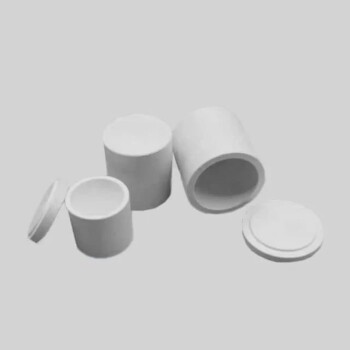
Engineering Advanced Fine Ceramics Alumina Al2O3 Crucible With Lid Cylindrical Laboratory Crucible

Engineering Advanced Fine Ceramics Alumina Al2O3 Crucible With Lid Cylindrical Laboratory Crucible

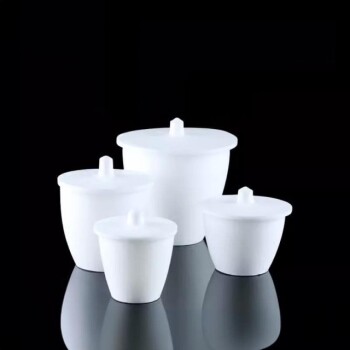
Cylindrical Crucibles Cylindrical crucibles are one of the most common crucible shapes, suitable for melting and processing a wide variety of materials, and are easy to handle and clean.

Arc-Shaped Alumina Ceramic Crucible High Temperature Resistant for Engineering Advanced Fine Ceramics

Arc-Shaped Alumina Ceramic Crucible High Temperature Resistant for Engineering Advanced Fine Ceramics

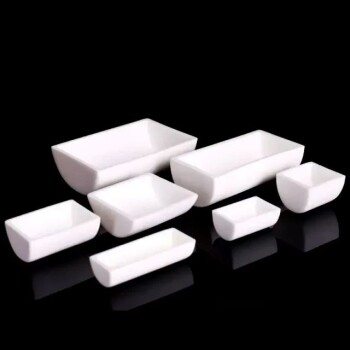
In the journey of scientific exploration and industrial production, every detail is crucial. Our arc-shaped alumina ceramic crucibles, with their excellent high temperature resistance and stable chemical properties, have become a powerful assistant in laboratories and industrial fields. They are made of high-purity alumina materials and manufactured through precision processes to ensure excellent performance in extreme environments.

Alumina Al2O3 Ceramic Crucible Semicircle Boat with Lid for Engineering Advanced Fine Ceramics

Alumina Al2O3 Ceramic Crucible Semicircle Boat with Lid for Engineering Advanced Fine Ceramics

Crucibles are containers widely used for melting and processing various materials, and semicircular boat-shaped crucibles are suitable for special smelting and processing requirements. Their types and uses vary by material and shape.

Engineering Advanced Fine Alumina Al2O3 Ceramic Crucible for Laboratory Muffle Furnace

Engineering Advanced Fine Alumina Al2O3 Ceramic Crucible for Laboratory Muffle Furnace

Alumina ceramic crucibles are used in some materials and metal melting tools, and flat-bottomed crucibles are suitable for melting and processing larger batches of materials with better stability and uniformity.

Engineering Advanced Fine Ceramics Alumina Crucibles (Al2O3) for Thermal Analysis TGA DTA

Engineering Advanced Fine Ceramics Alumina Crucibles (Al2O3) for Thermal Analysis TGA DTA

TGA/DTA thermal analysis vessels are made of aluminum oxide (corundum or aluminum oxide). It can withstand high temperature and is suitable for analyzing materials that require high temperature testing.

Custom Machined and Molded PTFE Teflon Parts Manufacturer with PTFE Crucible and Lid

Custom Machined and Molded PTFE Teflon Parts Manufacturer with PTFE Crucible and Lid

PTFE crucibles, made from pure Teflon, offer chemical inertness and resistance from -196°C to 280°C, ensuring compatibility with a wide range of temperatures and chemicals. These crucibles feature machine-finished surfaces for easy cleaning and prevention of contamination, making them ideal for precise laboratory applications.

Boron Nitride (BN) Crucible for Phosphorous Powder Sintered

Boron Nitride (BN) Crucible for Phosphorous Powder Sintered

Phosphorus powder sintered boron nitride (BN) crucible has a smooth surface, dense, pollution-free and long service life.

Evaporation Crucible for Organic Matter

Evaporation Crucible for Organic Matter

An evaporation crucible for organic matter, referred to as an evaporation crucible, is a container for evaporating organic solvents in a laboratory environment.

Electron Beam Evaporation Coating Tungsten Crucible and Molybdenum Crucible for High Temperature Applications

Electron Beam Evaporation Coating Tungsten Crucible and Molybdenum Crucible for High Temperature Applications

Tungsten and molybdenum crucibles are commonly used in electron beam evaporation processes due to their excellent thermal and mechanical properties.

Electron Beam Evaporation Coating Gold Plating Tungsten Molybdenum Crucible for Evaporation

Electron Beam Evaporation Coating Gold Plating Tungsten Molybdenum Crucible for Evaporation

These crucibles act as containers for the gold material evaporated by the electron evaporation beam while precisely directing the electron beam for precise deposition.

Electron Beam Evaporation Coating Conductive Boron Nitride Crucible BN Crucible

Electron Beam Evaporation Coating Conductive Boron Nitride Crucible BN Crucible

High-purity and smooth conductive boron nitride crucible for electron beam evaporation coating, with high temperature and thermal cycling performance.

E Beam Crucibles Electron Gun Beam Crucible for Evaporation

E Beam Crucibles Electron Gun Beam Crucible for Evaporation

In the context of electron gun beam evaporation, a crucible is a container or source holder used to contain and evaporate the material to be deposited onto a substrate.

Carbon Graphite Boat -Laboratory Tube Furnace with Cover

Carbon Graphite Boat -Laboratory Tube Furnace with Cover

Covered Carbon Graphite Boat Laboratory Tube Furnaces are specialized vessels or vessels made of graphite material designed to withstand extreme high temperatures and chemically aggressive environments.

Electron Beam Evaporation Coating Oxygen-Free Copper Crucible and Evaporation Boat

Electron Beam Evaporation Coating Oxygen-Free Copper Crucible and Evaporation Boat

Electron Beam Evaporation Coating Oxygen-Free Copper Crucible enables precise co-deposition of various materials. Its controlled temperature and water-cooled design ensure pure and efficient thin film deposition.

Laboratory Jaw Crusher

Laboratory Jaw Crusher

Discover the small jaw crusher for efficient, flexible, and affordable crushing in labs and small mines. Ideal for coal, ores, and rocks. Learn more now!

Desktop Fast Laboratory Autoclave Sterilizer 35L 50L 90L for Lab Use

Desktop Fast Laboratory Autoclave Sterilizer 35L 50L 90L for Lab Use

The desktop fast steam sterilizer is a compact and reliable device used for rapid sterilization of medical, pharmaceutical, and research items. It efficiently sterilizes surgical instruments, glassware, medicines, and resistant materials, making it suitable for various applications.

Precision Machined Yttrium Stabilized Zirconia Ceramic Rod for Engineering Advanced Fine Ceramics

Precision Machined Yttrium Stabilized Zirconia Ceramic Rod for Engineering Advanced Fine Ceramics

Zirconia ceramic rods are prepared by isostatic pressing, and a uniform, dense and smooth ceramic layer and transition layer are formed at high temperature and high speed.

Laboratory High Pressure Horizontal Autoclave Steam Sterilizer for Lab Use

Laboratory High Pressure Horizontal Autoclave Steam Sterilizer for Lab Use

The horizontal autoclave steam sterilizer adopts the gravity displacement method to remove the cold air in the inner chamber, so that the inner steam and cold air content is less, and the sterilization is more reliable.

Laboratory Multifunctional Small Speed-Adjustable Horizontal Mechanical Shaker for Lab

Laboratory Multifunctional Small Speed-Adjustable Horizontal Mechanical Shaker for Lab

The laboratory multifunctional speed-regulating oscillator is a constant-speed experimental equipment specially developed for modern bioengineering production units.

Laboratory Oscillating Orbital Shaker

Laboratory Oscillating Orbital Shaker

Mixer-OT orbital shaker uses brushless motor, which can run for a long time. It is suitable for vibration tasks of culture dishes, flasks and beakers.


Leave Your Message