Knowledge What is the purpose of the double-layer crucible structure? Ensure Safe & Reliable Dynamic Corrosion Testing
Author avatar

Tech Team · Kintek Solution

Updated 1 day ago

What is the purpose of the double-layer crucible structure? Ensure Safe & Reliable Dynamic Corrosion Testing


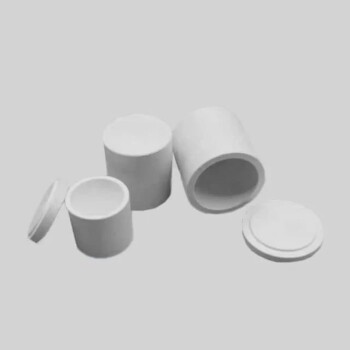
The double-layer crucible structure functions primarily as a fail-safe containment system. By nesting a "working crucible" inside a "protective sleeve," this design isolates high-temperature, corrosive glass melts from the rest of the equipment. Its specific purpose is to capture any leakage caused by thermal shock or erosion, preventing catastrophic damage to the furnace's internal components.

High-temperature dynamic corrosion testing subjects materials to extreme stress. The double-layer crucible provides a critical defense line, ensuring that unexpected vessel failure does not escalate into extensive equipment damage or safety hazards.

The Mechanics of the Dual-Layer System

The Role of the Working Crucible

The inner vessel, known as the working crucible, is the primary contact point for the test materials. It is responsible for directly containing the highly corrosive glass melt during the dynamic testing process.

The Function of the Protective Sleeve

Surrounding the inner vessel is the external protective crucible or sleeve. This secondary layer acts as a safety catch basin designed specifically to contain fluids should the primary vessel fail.

Mitigating High-Temperature Risks

Handling Thermal Shock

Rapid temperature changes can cause the inner working crucible to crack or fracture. The double-layer structure ensures that if thermal shock breaches the inner wall, the molten contents are immediately trapped by the outer sleeve.

Counteracting Chemical Erosion

Corrosive glass melts can aggressively erode the walls of the working crucible over time. If the chemical erosion penetrates the inner crucible, the protective layer prevents the liquid from spilling into the furnace chamber.

Preserving Furnace Integrity

The ultimate goal of this design is to protect the furnace's vital infrastructure. By preventing high-temperature glass liquid from escaping, the system protects sensitive heating elements and fibrous linings from destruction.

Understanding the Operational Stakes

The Cost of Leakage

Without a protective layer, a single leak can compromise the entire heating system. Molten glass contact often results in permanent damage to heating elements, necessitating expensive repairs and significant downtime.

Ensuring Long-Term Reliability

The double-layer configuration is not just about immediate safety; it is about long-term operational reliability. It allows for rigorous testing without the constant risk of ruining the testing apparatus.

Making the Right Choice for Your Goal

To ensure your dynamic corrosion testing remains safe and cost-effective, consider the following:

  • If your primary focus is Equipment Longevity: Prioritize the double-layer design to shield heating elements and linings from unavoidable material failures.
  • If your primary focus is Safety: Rely on the protective sleeve to act as a mandatory containment barrier against hazardous high-temperature leaks.

By implementing a double-layer crucible strategy, you convert potential catastrophic failures into manageable, contained events.

Summary Table:

Component Primary Function Key Benefit
Working Crucible Direct containment of corrosive melts Resists chemical erosion during testing
Protective Sleeve Fail-safe containment & catch basin Prevents leakage into furnace chamber
Dual-Layer System Redundant barrier protection Shields heating elements from thermal shock

Secure Your Lab Equipment with KINTEK Expertise

Don't let crucible failure compromise your high-temperature operations. KINTEK provides advanced laboratory solutions, including high-temperature furnaces, ceramics, and crucibles designed to withstand the most demanding dynamic corrosion environments. Whether you need specialized high-temperature reactors, muffle furnaces, or durable PTFE and ceramic consumables, our team is ready to help you optimize your testing safety and efficiency.

Protect your investment and ensure long-term reliability—Contact KINTEK today for a consultation!

References

  1. S. M. Shaydullin, Sergey A. Lukin. Corrosion testing of prospective chrome refractory materials in borosilicate glass melts. DOI: 10.15826/elmattech.2024.3.031

This article is also based on technical information from Kintek Solution Knowledge Base .

Related Products

People Also Ask

Related Products

Engineering Advanced Fine Ceramics Alumina Al2O3 Crucible With Lid Cylindrical Laboratory Crucible

Engineering Advanced Fine Ceramics Alumina Al2O3 Crucible With Lid Cylindrical Laboratory Crucible

Cylindrical Crucibles Cylindrical crucibles are one of the most common crucible shapes, suitable for melting and processing a wide variety of materials, and are easy to handle and clean.

Custom Machined and Molded PTFE Teflon Parts Manufacturer with PTFE Crucible and Lid

Custom Machined and Molded PTFE Teflon Parts Manufacturer with PTFE Crucible and Lid

PTFE crucibles, made from pure Teflon, offer chemical inertness and resistance from -196°C to 280°C, ensuring compatibility with a wide range of temperatures and chemicals. These crucibles feature machine-finished surfaces for easy cleaning and prevention of contamination, making them ideal for precise laboratory applications.

Engineering Advanced Fine Ceramics Alumina Crucibles (Al2O3) for Thermal Analysis TGA DTA

Engineering Advanced Fine Ceramics Alumina Crucibles (Al2O3) for Thermal Analysis TGA DTA

TGA/DTA thermal analysis vessels are made of aluminum oxide (corundum or aluminum oxide). It can withstand high temperature and is suitable for analyzing materials that require high temperature testing.

Arc-Shaped Alumina Ceramic Crucible High Temperature Resistant for Engineering Advanced Fine Ceramics

Arc-Shaped Alumina Ceramic Crucible High Temperature Resistant for Engineering Advanced Fine Ceramics

In the journey of scientific exploration and industrial production, every detail is crucial. Our arc-shaped alumina ceramic crucibles, with their excellent high temperature resistance and stable chemical properties, have become a powerful assistant in laboratories and industrial fields. They are made of high-purity alumina materials and manufactured through precision processes to ensure excellent performance in extreme environments.

Alumina Al2O3 Ceramic Crucible Semicircle Boat with Lid for Engineering Advanced Fine Ceramics

Alumina Al2O3 Ceramic Crucible Semicircle Boat with Lid for Engineering Advanced Fine Ceramics

Crucibles are containers widely used for melting and processing various materials, and semicircular boat-shaped crucibles are suitable for special smelting and processing requirements. Their types and uses vary by material and shape.

Engineering Advanced Fine Alumina Al2O3 Ceramic Crucible for Laboratory Muffle Furnace

Engineering Advanced Fine Alumina Al2O3 Ceramic Crucible for Laboratory Muffle Furnace

Alumina ceramic crucibles are used in some materials and metal melting tools, and flat-bottomed crucibles are suitable for melting and processing larger batches of materials with better stability and uniformity.

Electron Beam Evaporation Coating Gold Plating Tungsten Molybdenum Crucible for Evaporation

Electron Beam Evaporation Coating Gold Plating Tungsten Molybdenum Crucible for Evaporation

These crucibles act as containers for the gold material evaporated by the electron evaporation beam while precisely directing the electron beam for precise deposition.

Electron Beam Evaporation Coating Tungsten Crucible and Molybdenum Crucible for High Temperature Applications

Electron Beam Evaporation Coating Tungsten Crucible and Molybdenum Crucible for High Temperature Applications

Tungsten and molybdenum crucibles are commonly used in electron beam evaporation processes due to their excellent thermal and mechanical properties.

Evaporation Crucible for Organic Matter

Evaporation Crucible for Organic Matter

An evaporation crucible for organic matter, referred to as an evaporation crucible, is a container for evaporating organic solvents in a laboratory environment.

Electron Beam Evaporation Coating Conductive Boron Nitride Crucible BN Crucible

Electron Beam Evaporation Coating Conductive Boron Nitride Crucible BN Crucible

High-purity and smooth conductive boron nitride crucible for electron beam evaporation coating, with high temperature and thermal cycling performance.

Electron Beam Evaporation Coating Oxygen-Free Copper Crucible and Evaporation Boat

Electron Beam Evaporation Coating Oxygen-Free Copper Crucible and Evaporation Boat

Electron Beam Evaporation Coating Oxygen-Free Copper Crucible enables precise co-deposition of various materials. Its controlled temperature and water-cooled design ensure pure and efficient thin film deposition.

Boron Nitride (BN) Crucible for Phosphorous Powder Sintered

Boron Nitride (BN) Crucible for Phosphorous Powder Sintered

Phosphorus powder sintered boron nitride (BN) crucible has a smooth surface, dense, pollution-free and long service life.

Square Lab Press Mold for Laboratory Applications

Square Lab Press Mold for Laboratory Applications

Create uniform samples easily with Square Lab Press Mold - available in various sizes. Ideal for battery, cement, ceramics, and more. Custom sizes available.

Glassy Carbon Electrochemical Electrode

Glassy Carbon Electrochemical Electrode

Upgrade your experiments with our Glassy Carbon Electrode. Safe, durable, and customizable to fit your specific needs. Discover our complete models today.

Custom PTFE Teflon Parts Manufacturer for PTFE Mesh F4 Sieve

Custom PTFE Teflon Parts Manufacturer for PTFE Mesh F4 Sieve

PTFE mesh sieve is a specialized test sieve designed for particle analysis in various industries, featuring a non-metallic mesh woven from PTFE filament. This synthetic mesh is ideal for applications where metal contamination is a concern . PTFE sieves are crucial for maintaining the integrity of samples in sensitive environments, ensuring accurate and reliable results in particle size distribution analysis.

Filter Testing Machine FPV for Dispersion Properties of Polymers and Pigments

Filter Testing Machine FPV for Dispersion Properties of Polymers and Pigments

The filter testing machine (FPV) is suitable for testing the dispersion properties of polymers such as pigments, additives and masterbatches by extrusion and filtration.

Metal Disc Electrode Electrochemical Electrode

Metal Disc Electrode Electrochemical Electrode

Elevate your experiments with our Metal Disk Electrode. High-quality, acid and alkali resistant, and customizable to fit your specific needs. Discover our complete models today.

Desktop Fast Laboratory Autoclave Sterilizer 35L 50L 90L for Lab Use

Desktop Fast Laboratory Autoclave Sterilizer 35L 50L 90L for Lab Use

The desktop fast steam sterilizer is a compact and reliable device used for rapid sterilization of medical, pharmaceutical, and research items. It efficiently sterilizes surgical instruments, glassware, medicines, and resistant materials, making it suitable for various applications.

Glassy Carbon Sheet RVC for Electrochemical Experiments

Glassy Carbon Sheet RVC for Electrochemical Experiments

Discover our Glassy Carbon Sheet - RVC. Perfect for your experiments, this high-quality material will elevate your research to the next level.

Graphite Disc Rod and Sheet Electrode Electrochemical Graphite Electrode

Graphite Disc Rod and Sheet Electrode Electrochemical Graphite Electrode

High-quality graphite electrodes for electrochemical experiments. Complete models with acid and alkali resistance, safety, durability, and customization options.


Leave Your Message