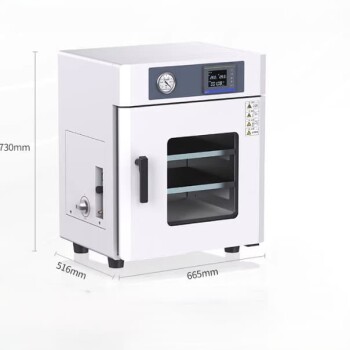
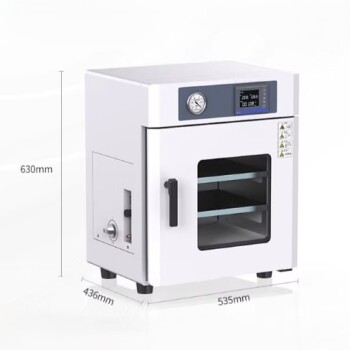
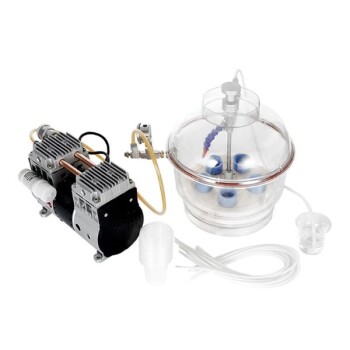
The primary purpose of using a vacuum drying oven during the preparation of Na3V2(PO4)3 (NVP) cathode electrodes is to rigorously remove volatile solvents, specifically N-methyl-2-pyrrolidone (NMP), and residual moisture from the coated electrode slurry.
This process generally involves baking the electrodes at 120°C under vacuum for approximately 12 hours. This controlled environment ensures contaminants are extracted from deep within the electrode's micropores without damaging the active material.
Core Takeaway The vacuum drying process is not merely about drying; it is a critical purification step that eliminates moisture and solvents from micropores to prevent internal side reactions. This step is the "gatekeeper" for ensuring the long-term cycling stability and electrochemical performance of the final battery.
Achieving Chemical Purity
Complete Solvent Evaporation
The primary operational goal is the removal of the organic solvent used in the slurry, typically NMP.
While NMP is excellent for dispersing active materials, it affects battery performance if left behind. The vacuum environment lowers the boiling point of the solvent, ensuring thoroughly evaporated residues that standard air drying might miss.
Extraction from Micropores
Surface drying is insufficient for high-performance cathodes.
The vacuum pressure forces volatile organic compounds and trapped moisture out of the electrode micropores. Cleaning these microscopic structures is essential to maximize the surface area available for the electrochemical reaction.
Protecting Electrode Integrity
Preventing Oxidation
Heating materials to 120°C in an oxygen-rich environment (like air) carries risks.
The vacuum creates a negative pressure environment that removes oxygen. This prevents the NVP active material and current collectors from oxidizing at high temperatures, preserving their chemical stability before the battery is even assembled.
Mitigating Side Reactions
Residual moisture is a poison to sodium-ion batteries.
If moisture remains in the electrode, it can react with the electrolyte during battery operation. This leads to internal side reactions, increased impedance, and rapid degradation of the battery's cycling life.
Common Pitfalls to Avoid
The Risk of Rushing
A common error is shortening the drying time to increase throughput.
The recommended duration is approximately 12 hours. Shortening this cycle often leaves trace solvents deep within the coating, which compromises adhesion and leads to delamination during cycling.
Thermal Stress vs. Drying Efficiency
While heat accelerates drying, excessive temperature can damage the electrode components.
The standard 120°C set point is a careful balance. Exceeding this temperature risks degrading the polymeric binder (often PVDF) or altering the crystal structure of the active material, rendering the electrode brittle or less conductive.
Making the Right Choice for Your Goal
To ensure your NVP electrodes perform as expected, tailor your drying protocol to your specific objectives:
- If your primary focus is Cycle Life: strictly adhere to the 12-hour duration to ensure absolute minimum moisture content, preventing long-term degradation.
- If your primary focus is Electrode Adhesion: prioritize the vacuum level to lower solvent boiling points, allowing NMP to evaporate gently without causing film cracking or peeling.
Ultimately, the vacuum oven is your safeguard against chemical contamination, ensuring the electrode is chemically inert and physically robust before it ever touches the electrolyte.
Summary Table:
| Feature | Recommended Parameter | Purpose in NVP Preparation |
|---|---|---|
| Temperature | 120°C | Balances solvent evaporation with binder integrity |
| Environment | Vacuum (Negative Pressure) | Prevents oxidation and extracts solvents from micropores |
| Duration | ~12 Hours | Ensures complete removal of deep-seated volatile residues |
| Solvent Target | N-methyl-2-pyrrolidone (NMP) | Eliminates organic residues to prevent side reactions |
Maximize Your Battery Research Precision with KINTEK
Don't let residual moisture or solvents compromise your sodium-ion battery performance. KINTEK specializes in high-performance laboratory equipment tailored for advanced material science. Our precision vacuum drying ovens and high-temperature furnaces are engineered to provide the stable, oxygen-free environments necessary for perfecting Na3V2(PO4)3 cathode electrodes.
From battery research tools and electrolytic cells to hydraulic pellet presses for electrode preparation, KINTEK offers a comprehensive ecosystem of solutions to ensure your materials achieve peak electrochemical stability.
Ready to elevate your lab's output? Contact us today to find the perfect equipment for your research goals!
Related Products
- 56L Vertical Laboratory Vacuum Drying Oven
- 23L Laboratory Vacuum Drying Oven
- Laboratory Scientific Electric Heating Blast Drying Oven
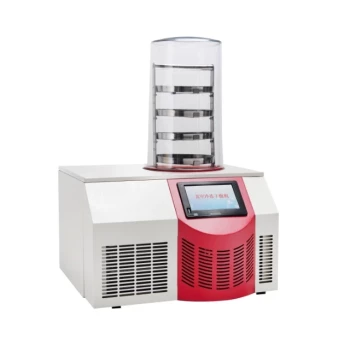
- Benchtop Laboratory Vacuum Freeze Dryer
- Dental Porcelain Zirconia Sintering Ceramic Vacuum Press Furnace
People Also Ask
- Why is a laboratory vacuum drying oven recommended for rice straw residues? Protect Your Biomass Integrity
- What role does a laboratory vacuum drying oven play in the preparation of modified multi-walled carbon nanotubes?
- What is the importance of using a laboratory vacuum drying oven? Preserving Slow-Release Microcapsule Integrity
- Why is a Laboratory Vacuum Drying Oven recommended for PBAT microspheres? Protect Sensitive Polymer Integrity
- What role does a laboratory vacuum drying oven play in processing nanoparticle powder samples? Protect Sample Integrity