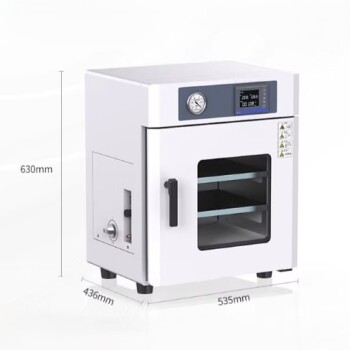
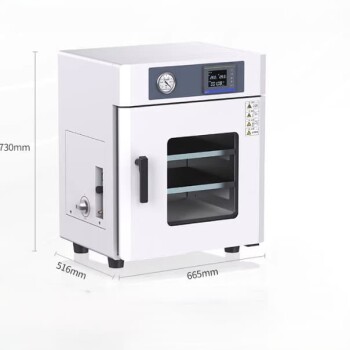
The critical purpose of this step is solvent evaporation and layer stabilization. After covering the TiZrN coating with a carbon powder slurry, constant temperature drying equipment—operated at 80 °C—is used to completely remove organic solvents, specifically 1-methyl-2-pyrrolidone. This prepares the surface for the high-energy demands of the subsequent laser treatment.
The drying phase serves as a vital safeguard against surface defects, ensuring that volatile solvents do not explosively gasify during laser irradiation and compromise the coating's structural integrity.
The Mechanics of Layer Stabilization
Controlled Solvent Evaporation
The carbon slurry applied to the TiZrN coating contains organic solvents, such as 1-methyl-2-pyrrolidone, to maintain fluidity during application.
Before any high-temperature processing can occur, these solvents must be fully extracted. The constant temperature drying equipment provides a stable thermal environment at 80 °C, which is optimized to evaporate these volatiles efficiently without thermal shock.
Solidifying the Precursor Layer
As the solvent evaporates, the physical state of the carbon source changes.
The drying process effectively solidifies the carbon powder, transforming it from a wet slurry into a stable, fixed layer. This stabilization is essential to ensure the carbon remains in place, providing a uniform foundation for the carburizing process.
Preventing Defects During Laser Carburizing
Avoiding Sudden Gasification
Laser carburizing involves the application of intense, rapid energy.
If liquid solvents remain trapped within the carbon layer, the laser's heat will cause them to undergo sudden gasification. This rapid expansion of gas acts like a microscopic explosion within the coating layer.
Eliminating Surface Pores
The primary defect caused by sudden gasification is the formation of surface pores.
By ensuring the slurry is completely dry, you prevent the creation of these voids. This results in a dense, uniform surface rather than one riddled with pockets caused by escaping gas, ensuring even carbon distribution throughout the TiZrN structure.
Understanding the Trade-offs
The Risk of Residual Moisture
Skipping or shortening this drying phase introduces a high risk of failure.
Even trace amounts of solvent can disrupt the laser interaction. While it may be tempting to accelerate the process, "almost dry" is insufficient; the layer must be chemically stable to withstand laser irradiation without outgassing.
Thermal Precision vs. Speed
The specific temperature of 80 °C is a calculated balance.
It is high enough to drive off the organic solvents effectively but controlled enough to avoid the aggressive thermal degradation seen in higher-temperature treatments. Excessively high heat could disrupt the carbon structure or oxidize the surface prematurely, while insufficient heat fails to remove the solvent burden.
Making the Right Choice for Your Goal
To optimize your TiZrN coating results, apply the drying step based on these priorities:
- If your primary focus is Surface Homogeneity: Ensure the drying duration is sufficient to remove all traces of 1-methyl-2-pyrrolidone, eliminating the root cause of pore formation.
- If your primary focus is Carbon Distribution: Maintain the drying temperature strictly at 80 °C to solidify the carbon layer evenly, preventing shifting or bunching during the laser phase.
By strictly controlling this pre-treatment drying phase, you ensure the carbon source is a stable, reliable medium for high-performance laser carburizing.
Summary Table:
| Process Phase | Primary Goal | Key Parameters | Outcome |
|---|---|---|---|
| Drying Step | Solvent Evaporation | 80 °C Constant Temp | Solidified, stable carbon layer |
| Solvent Removal | Eliminate 1-methyl-2-pyrrolidone | Complete extraction | Prevention of sudden gasification |
| Laser Prep | Layer Stabilization | Uniform foundation | Dense, pore-free surface finish |
| Risk Control | Avoid Thermal Shock | Controlled heating | High-integrity structural coating |
Elevate Your Coating Precision with KINTEK
Achieving a flawless, pore-free finish on TiZrN coatings requires more than just high-energy lasers—it demands precise thermal control and high-performance equipment. At KINTEK, we specialize in providing the advanced constant temperature drying ovens, high-temperature furnaces, and milling systems necessary to stabilize your precursor layers and optimize your carburizing workflow.
Whether you are refining battery research, developing advanced dental materials, or perfecting thin-film coatings, our comprehensive portfolio—including PTFE consumables, crucibles, and vacuum furnaces—ensures your lab maintains the highest standards of structural integrity.
Ready to eliminate surface defects and enhance your material performance?
Contact KINTEK Experts Today to find the perfect equipment solution for your laboratory needs.
References
- Seonghoon Kim, Hee Soo Lee. The Bonding State and Surface Roughness of Carbon-Doped TiZrN Coatings for Hydrogen Permeation Barriers. DOI: 10.3390/nano13212905
This article is also based on technical information from Kintek Solution Knowledge Base .
Related Products
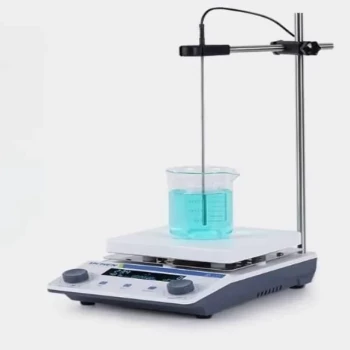
- Laboratory Small Constant Temperature Heated Magnetic Stirrer Heater and Stirrer
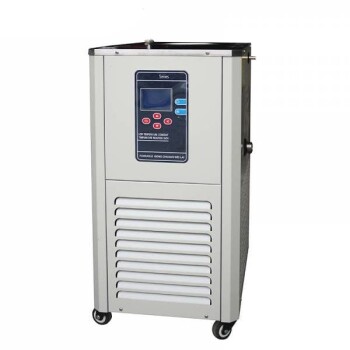
- 50L Chiller Water Bath Cooling Circulator Low Temperature Constant Temperature Reaction Bath
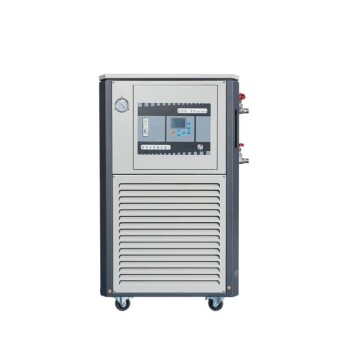
- 30L Chiller Water Bath Cooling Circulator Low Temperature Constant Temperature Reaction Bath
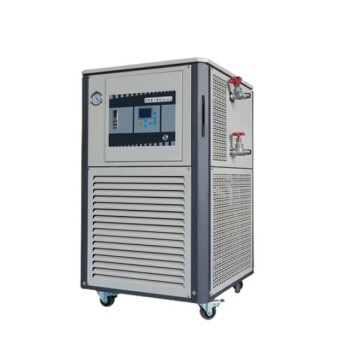
- 10L Chilling Circulator Cooling Water Bath Low Temperature Constant Temperature Reaction Bath
- 10L Heating Chilling Circulator Cooling Water Bath Circulator for High and Low Temperature Constant Temperature Reaction
People Also Ask
- What role does a magnetic stirrer with heating play in ZnO nanoparticle synthesis? Precision Control for Quality Results
- What role does a constant temperature heating magnetic stirrer play in MFC-HAp synthesis? Achieve Material Homogeneity
- What is the function of a laboratory magnetic stirrer in Ni–Cr–P electrodeposition? Optimize Ion Transport & Coating
- Why is a laboratory magnetic stirrer required for benzoic acid esters? Boost Reaction Speed & Yield with High RPM
- What role does a laboratory magnetic stirrer play in TiO2 and TiO2-Ag sol preparation? Master Chemical Kinetics