Precision particle size control is the foundational step in preparing Ni/AlCeO3 catalysts for glycerol steam reforming.
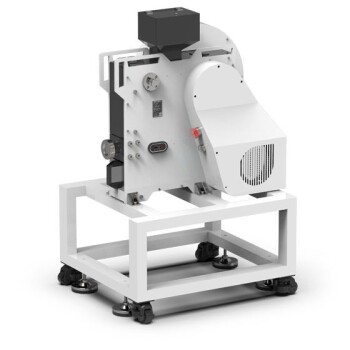
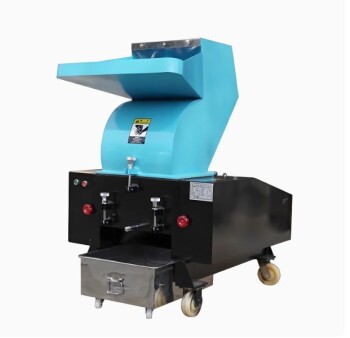
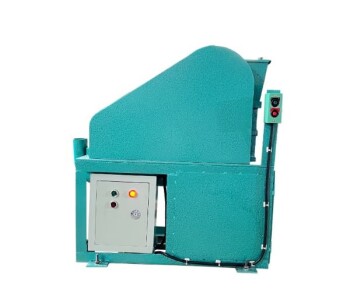
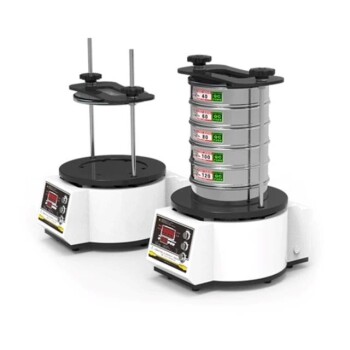
The primary purpose of using crushing and sieving systems during this pretreatment phase is to mechanically process alumina and AlCeO3 supports into a specific particle size range, typically 350 to 500 µm. This physical standardization is critical for ensuring the reactor operates predictably and that the data collected reflects true chemical kinetics rather than physical limitations.
Core Insight Crushing and sieving are not merely about reducing size; they are about eliminating variables. By standardizing particle geometry, you remove physical barriers—such as internal diffusion limitations and uneven flow—ensuring that the observed catalytic performance is accurate, reproducible, and scalable.
Optimizing Reactor Hydrodynamics
For a fixed-bed reactor to function correctly, the physical bed of catalyst must be uniform.
Ensuring Uniform Packing
When catalyst particles vary wildly in size, they pack unpredictably.
Crushing and sieving create a narrow size distribution (350–500 µm). This allows the catalyst to settle uniformly into the reactor bed, preventing "channeling" where reactants bypass the catalyst through path of least resistance.
Managing Pressure Drops
Inconsistent particle sizes can lead to dangerous or inefficient pressure fluctuations.
If particles are too fine, they block flow; if they are too large, they create void spaces. Sizing the material specifically for the reactor dimensions prevents excessive pressure drops that could destabilize the glycerol steam reforming process.
Guaranteeing Kinetic Accuracy
The most critical scientific reason for this process is to ensure the validity of your experimental data.
Eliminating Internal Diffusion Limitations
In larger particles, reactants may struggle to penetrate to the center of the catalyst grain before reacting.
This phenomenon, known as internal diffusion limitation, distorts data. It makes the reaction look slower than it actually is. By sieving to 350–500 µm, you ensure the particle is small enough that reactants can access the entire active surface area instantly.
Validating Reaction Rate Data
When diffusion limitations are removed, the data you measure reflects the intrinsic chemical reaction rate.
Without this step, your kinetic models would be flawed because they would be measuring the speed of diffusion, not the speed of the chemical catalysis.
Enhancing Physical Consistency
While the primary focus is on kinetics and hydrodynamics, the physical properties of the material are also optimized.
Maximizing Effective Surface Area
Standardized size reduction exposes the internal structure of the material.
Similar to principles seen in biomass and ore processing, reducing particle size increases the specific surface area available for the reaction. This facilitates more thorough contact between the glycerol vapor and the active nickel sites.
Improving Heat Transfer
Catalytic reforming reactions often involve significant heat exchange.
A uniformly packed bed with controlled particle size ensures consistent heat transfer across the reactor. This prevents "hot spots" that could deactivate the catalyst or "cold spots" that reduce efficiency.
Understanding the Trade-offs
It is vital to understand that "smaller" is not always better. There is a specific functional window you must hit.
The Risk of "Fines" (Particles < 350 µm)
If you crush the material too aggressively and fail to sieve out the dust (fines), you risk clogging the reactor. This leads to massive pressure spikes and can physically plug the system, halting the experiment.
The Risk of Oversized Particles (> 500 µm)
If you are lax with the upper limit of the sieve, you reintroduce diffusion limitations. Your conversion rates will drop, not because the catalyst is bad, but because the reactants cannot reach the active sites in the center of the large pellets.
Making the Right Choice for Your Goal
The stringency of your sieving process depends on your ultimate objective.
- If your primary focus is Kinetic Modeling: Prioritize the lower end of the size range (closer to 350 µm) to guarantee that internal mass transfer resistance is negligible.
- If your primary focus is Process Stability: Prioritize removing fines strictly, as preserving a stable pressure drop is more critical for long-term operation than marginal gains in kinetic accuracy.
Success in catalyst evaluation depends less on the chemistry of the mix and more on the geometry of the particle.
Summary Table:
| Factor | Target Specification (350–500 µm) | Impact of Deviation |
|---|---|---|
| Hydrodynamics | Uniform Bed Packing | Irregular sizes cause channeling and flow bypass |
| Pressure Control | Balanced Flow Resistance | Fines (<350 µm) cause clogging and pressure spikes |
| Kinetic Accuracy | Removed Internal Diffusion | Large particles (>500 µm) distort reaction rate data |
| Heat Transfer | Consistent Thermal Gradient | Non-uniform beds create efficiency-reducing hot/cold spots |
Elevate Your Catalyst Research with KINTEK Precision
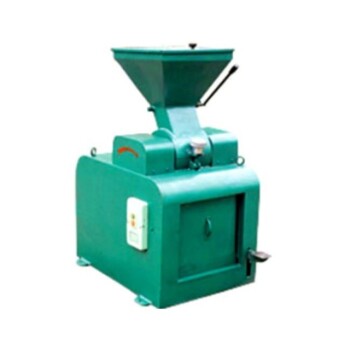
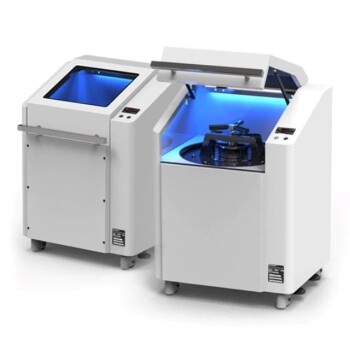
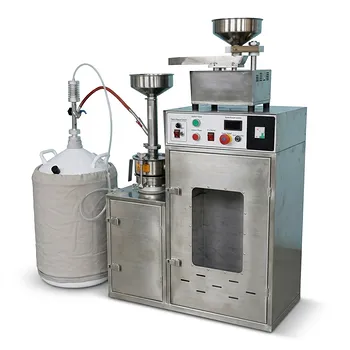
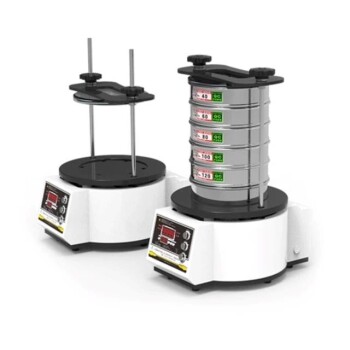
At KINTEK, we understand that successful catalyst evaluation depends on the geometry of your particles. Our high-performance crushing and milling systems and precision sieving equipment are engineered to provide the strict 350–500 µm control required for Ni/AlCeO3 research.
Beyond pretreatment, we offer a comprehensive laboratory suite including:
- High-Temperature Furnaces (CVD, Vacuum, and Muffle) for catalyst calcination.
- High-Pressure Reactors and Autoclaves for steam reforming experiments.
- Pellet and Isostatic Presses for specialized material shaping.
Eliminate physical variables and focus on your chemistry. Contact our specialists today to equip your lab with the tools needed for reproducible, scalable, and kinetically accurate results.
References
- Nikolaos D. Charisiou, Maria A. Goula. Nickel Supported on AlCeO3 as a Highly Selective and Stable Catalyst for Hydrogen Production via the Glycerol Steam Reforming Reaction. DOI: 10.3390/catal9050411
This article is also based on technical information from Kintek Solution Knowledge Base .
Related Products
- Laboratory Test Sieves and Sieving Machines
- Laboratory Vibratory Sieve Shaker Machine for Dry and Wet Three-Dimensional Sieving
- Three-dimensional electromagnetic sieving instrument
- Laboratory Jaw Crusher
- Powerful Plastic Crusher Machine
People Also Ask
- What are laboratory test sieves used for? A Guide to Particle Size Analysis
- How do you calculate the sieve test? Master Particle Size Distribution for Quality Control
- How does a lab test sieve contribute to biomass charcoal powder preparation? Achieve Uniform Particle Size
- What are the specifications for test sieves? A Guide to ASTM & ISO Standards for Accurate Particle Analysis
- What materials are required for sieving? Achieve Accurate Particle Size Analysis