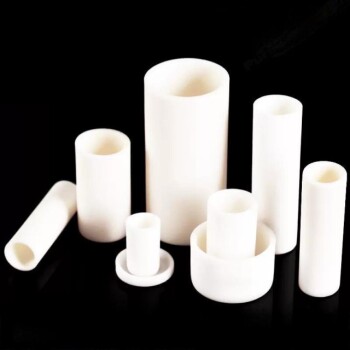
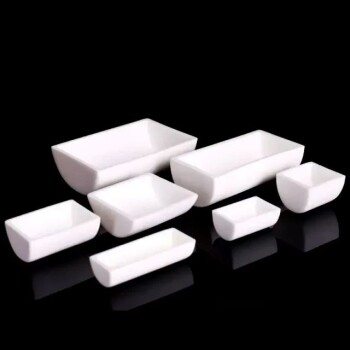
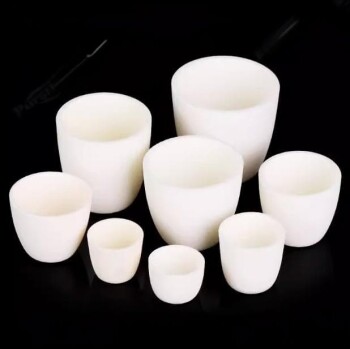
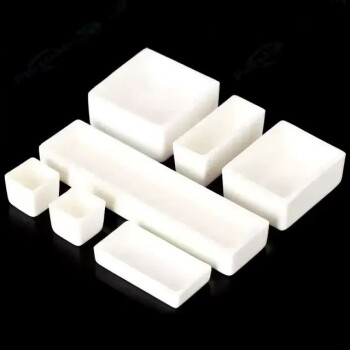
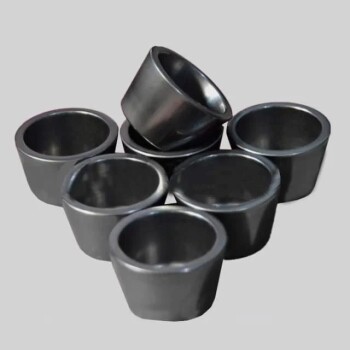
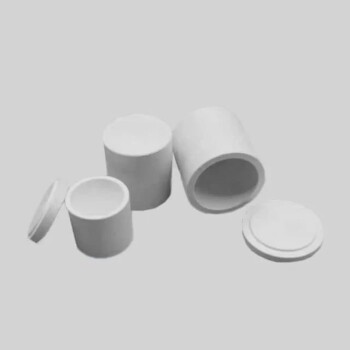
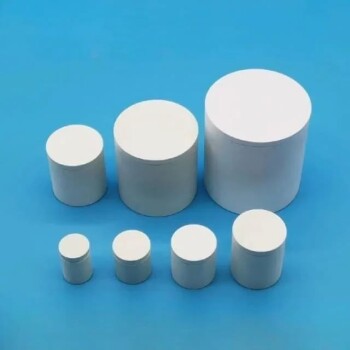
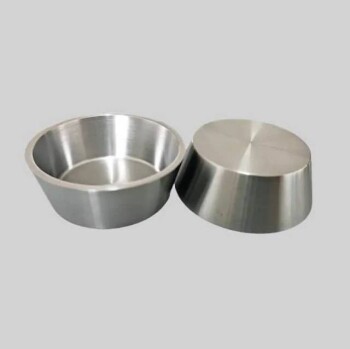
High-purity alumina crucibles with matching lids are essential for creating an isolated, chemically stable micro-environment. During the synthesis of C12A7:e- (mayenite electride) via aluminothermic reduction, these components serve to maintain a localized reducing atmosphere and shield the powder from oxidative contaminants. This setup is critical for protecting the sensitive trapped electrons within the C12A7 framework from reacting with residual furnace gases.
Using high-purity alumina crucibles with lids ensures phase purity by isolating the reaction from the furnace environment and stabilizing the necessary reducing conditions. This configuration prevents the re-oxidation of electrons within the C12A7 framework, which is essential for successful electride synthesis.
Maintaining the Localized Reaction Environment
Establishing a Reducing Micro-Atmosphere
The primary function of the alumina lid is to act as a physical barrier that traps the reducing gases generated during the aluminothermic process. This ensures that the immediate atmosphere surrounding the C12A7:e- powder remains highly reductive, even if the bulk furnace atmosphere contains trace impurities.
Preventing Gas-Phase Contamination
Even when using high-purity flowing inert gases, residual oxygen or moisture can persist within a furnace chamber. The lid prevents these residual gases from interacting with the sample during the high-temperature calcination process, which would otherwise degrade the final product.
Preservation of the Electride State
C12A7:e- is defined by the presence of electrons trapped within its sub-nanometer cages. Because these electrons are highly reactive, the isolation provided by the crucible and lid is necessary to prevent oxidative quenching, which would convert the electride back into a non-conductive oxide.
Chemical and Thermal Stability
Matching Chemical Profiles
High-purity alumina is used because its composition is identical to the natural oxide film found on aluminum particles. By matching the chemistry of the container to the surface of the reactants, researchers eliminate unwanted chemical interference between the crucible walls and the metallic melt.
Resistance to High-Temperature Reactions
The aluminothermic reduction method involves intense heat and aggressive reducing agents. High-purity alumina possesses exceptional chemical inertness, ensuring it does not react with the aluminum powder or the resulting C12A7:e- at temperatures exceeding 1100°C.
Ensuring Sample Purity
Using a high-purity vessel prevents the introduction of exogenous impurities, such as silica or iron, into the powder. This maintains the precise stoichiometry required for the formation of the C12A7 crystal phase and ensures high electrical conductivity in the final electride.
Understanding the Trade-offs and Limitations
Vulnerability to Thermal Shock
While alumina is chemically robust, it is a ceramic material sensitive to rapid temperature fluctuations. Heating or cooling the crucible too quickly can lead to structural cracking, which would breach the localized atmosphere and ruin the synthesis.
The Precision of Lid Seating
The effectiveness of the localized atmosphere depends entirely on the mechanical fit between the crucible and the lid. If the lid is warped or poorly seated, the reducing environment may leak, leading to inconsistent electron concentrations across the sample batch.
Material Cost and Reusability
High-purity alumina (typically >99%) is significantly more expensive than standard labware. Over time, repeated exposure to molten aluminum can cause surface etching, eventually requiring the replacement of the vessel to prevent cross-contamination between different synthesis runs.
How to Apply This to Your Synthesis Project
Recommendations for Implementation
- If your primary focus is maximizing electron concentration: Ensure the lid is perfectly flush with the crucible rim to minimize the diffusion of residual oxygen into the reaction zone.
- If your primary focus is preventing crucible failure: Implement a controlled heating and cooling rate (typically 5°C/min or less) to manage thermal stress on the alumina material.
- If your primary focus is ensuring phase purity: Use the highest grade of alumina available (99.7% or higher) to prevent trace elements from migrating into the C12A7 lattice during the reduction.
Proper utilization of high-purity alumina vessels transforms a standard furnace into a precision reactor capable of stabilizing the delicate electride state.
Summary Table:
| Feature | Benefit in C12A7:e- Synthesis | Purpose |
|---|---|---|
| Matching Lid | Localized Micro-environment | Traps reducing gases and blocks residual oxygen/moisture. |
| 99%+ Alumina | High Chemical Inertness | Prevents reaction with molten aluminum or the final electride. |
| Thermal Stability | High-Temp Resistance | Withstands synthesis temperatures exceeding 1100°C. |
| Physical Barrier | Preservation of Electrons | Prevents oxidative quenching of sensitive trapped electrons. |
| Purity Grade | Stoichiometric Integrity | Eliminates exogenous impurities like silica or iron. |
Elevate Your Material Synthesis with KINTEK Precision
Achieving the delicate balance required for C12A7:e- electride synthesis demands equipment that offers uncompromising purity and atmosphere control. KINTEK specializes in high-performance laboratory solutions tailored for advanced materials research. From high-purity alumina crucibles and ceramic consumables to precision muffle, tube, and vacuum furnaces, we provide the tools necessary to maintain stable reducing environments and ensure phase purity.
Whether you are a researcher focused on maximizing electron concentration or a laboratory manager seeking reliable, high-temperature hardware, KINTEK delivers the durability and chemical inertness your projects require.
Ready to optimize your synthesis results? Contact our experts today to discuss our range of high-temperature furnaces, hydraulic presses, and specialized ceramic labware.
References
- Xiangyu Zhang, Tian‐Nan Ye. Recent progress and prospects in active anion-bearing C12A7-mediated chemical reactions. DOI: 10.1039/d3ta02422a
This article is also based on technical information from Kintek Solution Knowledge Base .
Related Products
- Engineering Advanced Fine Ceramics Alumina Al2O3 Crucible With Lid Cylindrical Laboratory Crucible
- Alumina Al2O3 Ceramic Crucible Semicircle Boat with Lid for Engineering Advanced Fine Ceramics
- Arc-Shaped Alumina Ceramic Crucible High Temperature Resistant for Engineering Advanced Fine Ceramics
- Engineering Advanced Fine Alumina Al2O3 Ceramic Crucible for Laboratory Muffle Furnace
- Engineering Advanced Fine Ceramics Alumina Crucibles (Al2O3) for Thermal Analysis TGA DTA
People Also Ask
- Why are high-purity alumina crucibles used for liquid lead corrosion experiments? Ensure Data Accuracy at 550°C
- Why are alumina crucibles and mother powder essential for LATP sintering? Optimize Your Solid Electrolyte Performance
- What is the primary purpose of using alumina crucibles for LLTO ceramics? Optimize Your High-Temperature Sintering
- Why Use Alumina Crucibles & Powder Burial for NaSICON? Ensure Phase Purity and Prevent Elemental Volatilization
- Why are alumina crucibles used as containers during the tungsten diffusion coating process on diamond surfaces?