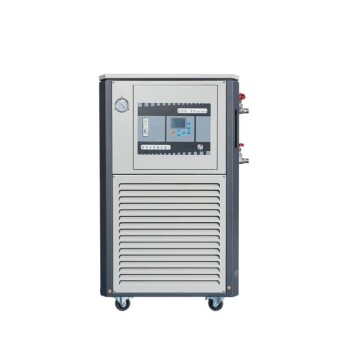
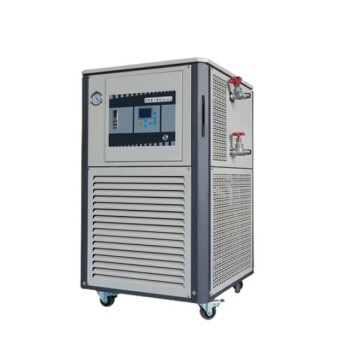
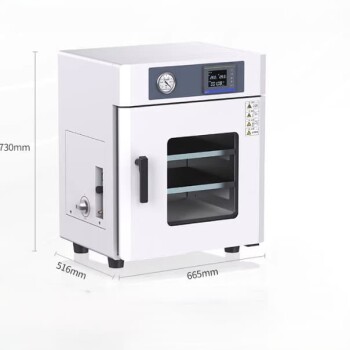
The heating reactor with a vacuum system serves as the critical processing environment for synthesizing silicone flame retardant cable materials. It facilitates the homogeneous integration of the polydimethylsiloxane (PDMS) matrix with essential fillers while simultaneously eliminating volatile defects that would compromise the cable's safety.
By combining thermal energy with negative pressure, this system ensures a structurally sound mixture free of microscopic voids. This integrity is the foundational requirement for maintaining the high electrical insulation standards necessary for flame retardant cables.
The Mechanics of the Mixing Process
Achieving Homogeneity via Thermal Mixing
The primary function of the reactor is to blend the liquid polymer matrix with solid additives through forced stirring.
The process typically operates at temperatures around 120°C. This thermal energy lowers the viscosity of the mix, allowing for smoother incorporation of solids.
Common fillers used in this process include carbon black, calcium carbonate, and phosphorus-based flame retardants.
Ensuring Uniform Dispersion
Without adequate heat and agitation, these fillers can clump or settle unevenly.
The reactor ensures that the flame retardant properties are evenly distributed throughout the PDMS matrix, rather than concentrated in specific pockets.
The Critical Function of Vacuum De-aeration
Eliminating Internal Defects
Mechanical mixing at high speeds inevitably traps air bubbles within the viscous silicone compound.
The vacuum system creates a negative pressure environment that forcefully extracts these trapped air pockets before the material sets.
If these bubbles are not removed, they become permanent voids in the cured insulation layer, mechanically weakening the cable coating.
Moisture Removal and Insulation Integrity
Raw materials and fillers often harbor trace moisture absorbed from the environment.
The combination of the reactor's heat and the vacuum system effectively vaporizes and extracts this water content.
Removing moisture is vital to prevent steam pockets from forming during curing. These pockets are catastrophic to electrical insulation performance, serving as pathways for electrical failure.
Understanding the Risks of Process Deviation
The Consequence of Incomplete De-gassing
It is a common pitfall to underestimate the time required for the vacuum phase.
If the vacuum process is terminated too early, microscopic voids will remain invisible to the naked eye but fatal to high-voltage performance.
These voids act as weak points for partial discharge, significantly reducing the lifespan of the cable.
Thermal Management Challenges
While 120°C is cited as the typical operating temperature, deviations can cause quality issues.
Excessive heat may degrade specific phosphorus-based additives, while insufficient heat results in poor mixing and high viscosity.
Ensuring Material Quality and Performance
To maximize the reliability of your silicone cable materials, prioritize the following operational parameters based on your specific requirements:
- If your primary focus is electrical insulation reliability: Ensure the vacuum cycle is maintained until all evidence of outgassing ceases to prevent dielectric breakdown caused by internal voids.
- If your primary focus is consistent flame retardancy: Maintain strict temperature control at 120°C to guarantee the uniform dispersion of carbon black and phosphorus additives throughout the matrix.
The vacuum heating reactor is not merely a mixing vessel; it is the primary safeguard against the microscopic defects that cause macroscopic cable failures.
Summary Table:
| Feature | Role in Silicone Cable Material Processing | Impact on Quality |
|---|---|---|
| Thermal Mixing (120°C) | Lowers PDMS viscosity for even filler integration | Ensures uniform flame retardant distribution |
| Forced Stirring | Blends solids like carbon black & phosphorus additives | Prevents clumping and uneven material properties |
| Vacuum De-aeration | Removes trapped air bubbles and microscopic voids | Prevents mechanical failure and dielectric breakdown |
| Moisture Extraction | Vaporizes and removes trace water from raw fillers | Eliminates steam pockets to maintain insulation integrity |
Elevate Your Material Integrity with KINTEK Advanced Reactor Solutions
Don't let microscopic voids compromise your high-voltage cable safety. KINTEK specializes in high-performance laboratory and industrial equipment designed for precision material science. Our state-of-the-art high-temperature high-pressure reactors and autoclaves provide the exact thermal control and vacuum stability required for flawless silicone compounding.
Whether you are optimizing silicone flame retardant cables or developing next-generation battery components, KINTEK offers a comprehensive range of solutions, including:
- Crushing and Milling Systems for filler preparation.
- Vacuum & Atmosphere Furnaces for advanced material curing.
- Hydraulic Presses for sample preparation.
- Homogenizers & Cooling Solutions for consistent chemical processing.
Maximize your lab's reliability today. Contact our technical experts at KINTEK to find the perfect reactor system for your specific cable material requirements.
References
- Wei Wang, Caiqin Qin. Application of Magnesium Hydroxide/Diphenoxy Phosphate in Silicone Rubber Flame Retardant Cable Material. DOI: 10.3390/coatings13050934
This article is also based on technical information from Kintek Solution Knowledge Base .
Related Products
- Electric Heated Hydraulic Vacuum Heat Press for Lab
- Vacuum Heat Treat Furnace with Ceramic Fiber Liner
- Molybdenum Vacuum Heat Treat Furnace
- Small Vacuum Heat Treat and Tungsten Wire Sintering Furnace
- 2200 ℃ Graphite Vacuum Heat Treat Furnace
People Also Ask
- How does a laboratory vacuum hot press influence the microstructure of AlFeTiCrZnCu high-entropy alloys? Guide to VHP
- How does the high-temperature and high-pressure environment provided by vacuum hot press equipment improve the interfacial bonding between Mo fibers and the TiAl matrix?
- What roles do graphite molds play in (WC + B4C)p/6063Al composite fabrication? Enhancing Densification & Precision
- What are the process advantages of using a vacuum hot press vs. HIP? Simplify your steel preparation workflow.
- What are the advantages of using a vacuum hot press for ZnS ceramics? Efficiency and Optical Performance Explored