The primary role of a magnetic stirrer in the silver sulfide (Ag2S) rarefaction process is to function as a mechanical catalyst for structural breakdown. Through high-speed rotation, the device generates significant fluid shear force within the mixture. This force drives the silver sulfide particles to collide and generate friction, physically dismantling their original structure to achieve a finer state.
By converting kinetic energy into particle friction, the magnetic stirrer reduces the grain size of silver sulfide from 52 nm down to approximately 10 nm. This physical refinement is the direct cause of the material's significantly enhanced photocatalytic activity.
The Mechanics of Structural Breakdown
Generating Fluid Shear Force
The process relies heavily on the high-speed rotation of the magnetic stirrer.
This rotation is not merely for mixing; it creates a powerful fluid shear force throughout the medium. This force is the primary engine used to manipulate the suspended powder.
Induced Collisions and Friction
The shear force created by the stirrer forces the silver sulfide powder particles into aggressive motion.
As they move, they experience frequent collisions and friction against one another. This mechanical action is what initiates the rarefaction process, rather than a chemical reaction.
Breaking Down Layered Structures
Silver sulfide naturally exists in stacked, layered structures.
The mechanical stress from the stirring overcomes the binding forces holding these layers together. Consequently, the stacked structures are exfoliated and broken apart effectively.
The Impact on Material Performance
Drastic Grain Size Reduction
The measurable outcome of this process is a significant reduction in particle dimensions.
The grain size drops from a starting point of 52 nm to approximately 10 nm. This reduction creates a vastly larger surface area relative to the volume of the material.
Enhancing Photocatalytic Activity
The ultimate goal of using the magnetic stirrer in this context is performance enhancement.
By achieving a 10 nm grain size, the material exhibits significantly higher photocatalytic activity. The stirrer is therefore the critical tool for unlocking the material's potential for chemical reactivity under light.
Critical Process Considerations
Speed is the Defining Variable
The effectiveness of this process is entirely dependent on the rotation speed of the stirrer.
If the speed is too low, the fluid shear force will be insufficient to cause the necessary particle collisions. Without high-speed rotation, the stacked layers will remain intact, and the grain size will not decrease.
Mechanical Action vs. Chemical Reaction
It is important to distinguish that this is a mechanical refinement process.
Unlike other extraction methods that may use stirring for heat distribution or mass transfer, the primary mechanism here is physical impact. The stirrer is acting as a milling agent within the fluid.
Implications for Material Processing
If your primary goal is Structural Refinement:
- Ensure the magnetic stirrer is capable of maintaining high-speed rotation to generate the required fluid shear force for particle breakdown.
If your primary goal is Photocatalytic Efficiency:
- Focus on maximizing the duration and intensity of the stirring process to ensure the grain size reaches the optimal target of approximately 10 nm.
The magnetic stirrer is not just a mixing device in this process; it is the fundamental driver of physical transformation that defines the material's final utility.
Summary Table:
| Feature | Mechanical Impact on Ag2S |
|---|---|
| Primary Mechanism | Fluid Shear Force & Particle Collision |
| Structural Change | Exfoliation of layered structures |
| Grain Size Reduction | From 52 nm down to ~10 nm |
| Performance Gain | Significantly enhanced photocatalytic activity |
| Key Variable | High-speed rotation intensity |
Optimize Your Material Synthesis with KINTEK
Precision in particle refinement requires high-performance laboratory equipment. KINTEK specializes in advanced solutions for research and production, offering a comprehensive range of magnetic stirrers, homogenizers, and shakers designed to deliver the precise shear forces needed for structural breakdown.
Whether you are refining silver sulfide powders or conducting advanced material research, our portfolio supports your entire workflow—from high-temperature furnaces and vacuum systems to crushing and milling equipment. We provide target customers with the reliability needed to achieve consistent results in grain size reduction and photocatalytic enhancement.
Unlock superior material performance today. Contact our technical experts at KINTEK to find the perfect equipment for your laboratory needs.
References
- Zahrah Ramadlan Mubarokah, Petrică Vizureanu. Near-Infrared (NIR) Silver Sulfide (Ag2S) Semiconductor Photocatalyst Film for Degradation of Methylene Blue Solution. DOI: 10.3390/ma16010437
This article is also based on technical information from Kintek Solution Knowledge Base .
Related Products
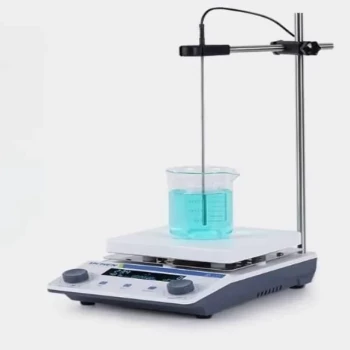
- Laboratory Small Constant Temperature Heated Magnetic Stirrer Heater and Stirrer
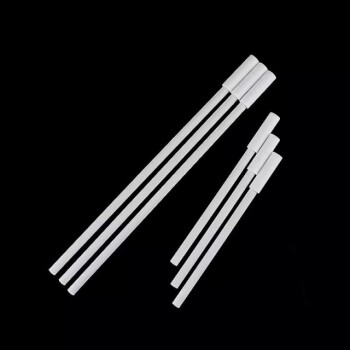
- Custom PTFE Teflon Parts Manufacturer for Magnetic Stirring Bar
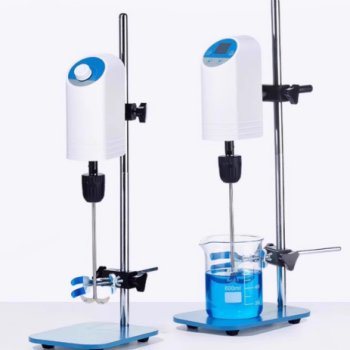
- High Performance Laboratory Stirrers for Diverse Applications
- Three-dimensional electromagnetic sieving instrument
- Custom PTFE Teflon Parts Manufacturer for PTFE Stirring Bar Recovery Rod
People Also Ask
- What role does a magnetic stirrer with heating play in ZnO nanoparticle synthesis? Precision Control for Quality Results
- What role does a constant temperature heating magnetic stirrer play in MFC-HAp synthesis? Achieve Material Homogeneity
- What is the function of a laboratory magnetic stirrer in Ni–Cr–P electrodeposition? Optimize Ion Transport & Coating
- Why is a laboratory magnetic stirrer required for benzoic acid esters? Boost Reaction Speed & Yield with High RPM
- What role does a laboratory magnetic stirrer play in TiO2 and TiO2-Ag sol preparation? Master Chemical Kinetics